
News Highlights
Contact Inga Kiderra, Director of Communications, at ikiderra@ucsd.edu or 858-822-0661
 The Next Chapter: At 96, Memory Research Pioneer and Former UCSD Chancellor Refuses To Let His Mind Retire
The San Diego Union-Tribune profiled Psychology and Cognitive Science professor emeritus Richard Atkinson about the legacy of his groundbreaking memory research, the importance of federal funding in higher education, and his daily routine – golfing, keeping up with scientific advances, and connecting with University of California colleagues. “The private sector is responsible for applied research, but you can’t expect them to invest appropriately in basic research because the payoffs are too uncertain,” Atkinson said. “It’s the responsibility of the government to fund it through a competitive, peer-reviewed process.” Atkinson’s impressive career spans a stint as director of the National Science Foundation under President Carter, 15 years as chancellor of UC San Diego, and eight years as president of the UC system.
 7 UC San Diego Discoveries That Changed the World
UC San Diego Today featured “the cognitive model that laid the foundation for AI” by spotlighting work begun at our university in the 1970s and 80s, when Geoffrey Hinton – now known as the “godfather of AI” for his pioneering work in artificial intelligence – conducted postdoctoral research in the Department of Psychology alongside David Rumelhart and James McClelland. Their work produced the Parallel Distributed Processing (PDP) framework, which became the foundation for modern neural networks, including the large language models that power ChatGPT. Hinton also worked with Terrence Sejnowski on Boltzmann machines and received the 2024 Nobel Prize in Physics.
Miguel Marin Named 2025-26 San Diego County Teacher of the Year
Congratulations to Education Studies graduate-student alum Miguel Marin ’08 on being named San Diego County Teacher of the Year! Each year, only five educators from across the region receive this distinction. Marin, a middle school science teacher, was also named District Teacher of the Year for Sweetwater Union High School District in 2025 and 2017.
7 San Diego Scholars Elected to American Academy of Arts and Sciences
The San Diego Union-Tribune highlighted Social Sciences Dean Carol Padden of Communication, Associate Dean of Social Sciences Amanda Datnow of Education Studies, and James Hamilton of Economics, who are 3 of 6 UC San Diego faculty elected in 2025 to the American Academy of Arts and Sciences.
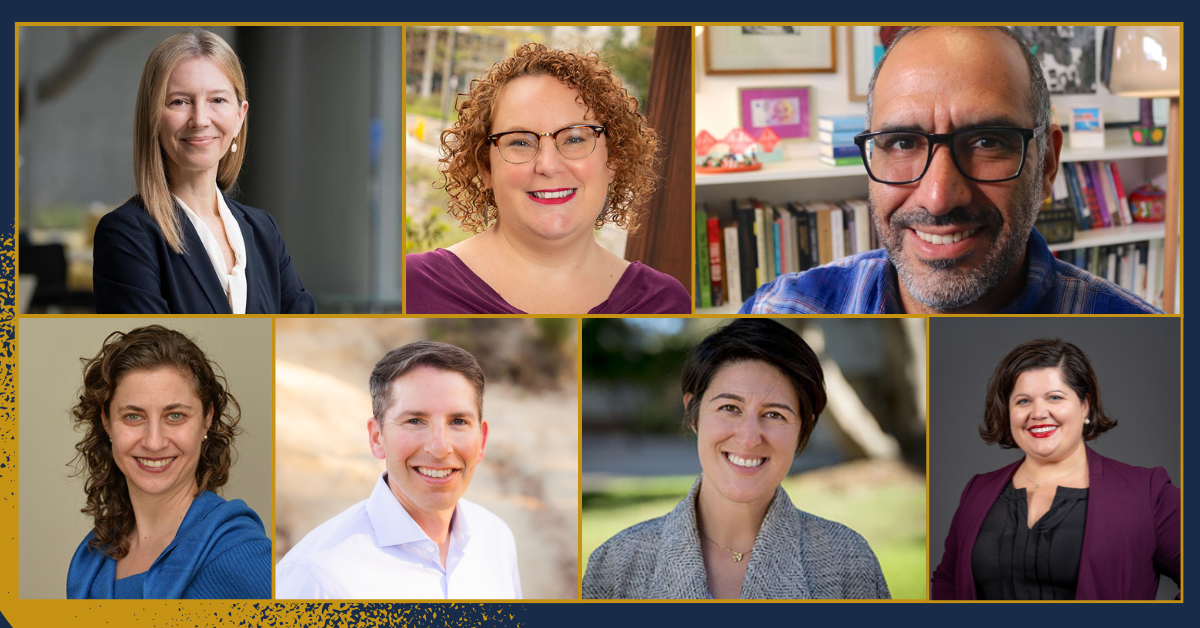 Shaping the Future Together: Announcing the 2025 Convene and Influence Awardees
Five of seven initiatives honored by the 2025 Strategic Convene and Influence Awards are led and/or supported by Social Sciences faculty. Awarded principal investigators (PIs) include Juan Pablo Pardo-Guerra of Sociology, Lilly Irani of Communication, Amy Lerner of Urban Studies & Planning, and Benjamin Bergen of Cognitive Science. Co-PIs include Elana Zilberg and Stuart Geiger of Communication, Abigail Andrews of Urban Studies and Planning, Margaret Roberts of Political Science, Haijun Xia of Cognitive Science, and Satomi Rash-Zeigler of the UC San Diego Labor Center. The focus of each Social Sciences-led project: building global connections to enhance international scholarship; finding inclusive ways to implement AI into workplaces; utilizing the Climate Action Lab to prepare students for climate-related careers; and unpacking the social, economic and ethical impacts of AI.
This Bespoke AI Tutor Helps Students Learn
The Laboratory for Emerging Intelligence (LEI), where Leon Bergen of Linguistics serves as associate director, developed an AI tutor trained on course-relevant materials to provide students with extra learning support, rather than just giving out answers to problems like ChatGPT and other large language models usually do. LEI works to develop and deploy next-generation AI systems to advance applications in science, medicine, business and education.
 Ask a Psychologist: Why Do We Fall for Fake News?
In this Q&A with UC San Diego Today, Nadia Brashier of Psychology shares why we come to believe things that are untrue and how to protect vulnerable populations from misinformation. “When we scroll through our feeds on social media, we are not always thinking about truth,” Brashier explains. “Repeated content feels easier to process than new content, and people misinterpret this subjective ease as evidence of truth.”
The Myth of the Poverty Trap
Paul Niehaus of Economics appeared on The Atlantic’s “Good On Paper” podcast to discuss how the global rate of extreme poverty fell from 44 percent in 1981 to just 9 percent in 2019. “There’s no one story,” Niehaus said. “You see people getting out of poverty while moving to the city. You see a lot of people getting out of poverty while staying where they are. You see a lot of people getting out of poverty while not switching from agriculture into nonagriculture. And also, the stories are different in different countries.”
 SoCal LINK Leverages the Power of a Triangle To Transform Schools
SoCal LINK, a research-practice partnership led by the Department of Education Studies, brings together researchers, educators and community partners to shape the future of PreK-12 education in Southern California. The program was launched by Education Studies faculty Alan Daly and Amanda Datnow, associate dean of Social Sciences, and postdoctoral researcher Marie Lockton, a doctoral alum of the department. “This represents the next generation of partnership work that holds promise for our region and beyond. The future of educational transformation…is about strong and robust ecosystems,” Daly said.
Ralina Joseph Named UCLA’s Vice Provost for Inclusive Excellence
Ethnic Studies doctoral alum Ralina Joseph, currently a professor of communication at the University of Washington, has been named UCLA’s next vice provost for inclusive excellence. Joseph has written several books on race, including the award-winning “Postracial Resistance: Black Women, Media, and the Uses of Strategic Ambiguity.”
How President Trump Impacts San Diegans’ Decisions To Have Babies
Gordon Dahl of Economics spoke to KPBS about his “Trump baby bump” research, explaining why Republicans had more babies than Democrats after the 2016 election. ”There's economic optimism, like where's the future of the economy going? And there's also optimism about where’s society going,” Dahl said. The research was also featured in The Economist.
Honoring the Past, Inspiring the Future
Anthony Harb of Communication and undergraduate student Sana Alkhouli were both speakers at the second annual Arab-American Heritage Month Celebration Dinner. Alkouli shared her appreciation for the event: “Being part of this community reminded me that my culture, my language, my food and my identity had a place at UC San Diego, too.”
California’s Homeless Crisis Could Be Gavin Newsom’s Political Albatross
“It’s tempting to look at every single thing that Gavin Newsom does as part of his presidential aspirations,” Thad Kousser of Political Science told NBC News, commenting on the California governor’s call for communities to clear homeless encampments. “But this is absolutely in line with the direction that he’s been moving in on homelessness throughout his governorship, and also fits long-term parts of his political career.” Separately, Kousser spoke to CalMatters about Newsom’s proposed tax cuts to Hollywood and the Los Angeles Times on Antonio Villaraigosa’s campaign for governor.
It’s Time for Parents and Students To Protect the Public Education Opportunities They Want
“The nation will endanger students’ futures and public schooling itself if we move further in the restriction direction,” Mica Pollock of Education Studies co-wrote in this PEN America opinion piece. Pollock shared findings from her new study on how education restriction policies in Florida are impacting teachers, students and families.
 Do TikTok’s Viral Life Hacks Actually Help Your Mental Health?
Wondering if you should add “manifesting” and “bed rotting” to your wellness routine? In this UC San Diego Today story, E. Nathaniel Chapman and Karen Dobkins of Psychology break down the science behind these self-care trends. “If you have a clear goal and stay focused, your brain will start creating plans – but you have to act on them,” Chapman said. “Sometimes your body really does need a day of rest, and you shouldn’t shame yourself for that,” Dobkins added. “But there are also days your body needs to move…The key is learning to listen.” The story was also featured in Fiat Lux, the University of California-wide newsletter.
Newsom Asks Trump To Work Together on $7.5 Billion Hollywood Tax Credit
“I can’t imagine in such a partisan atmosphere that Trump would want to be seen subsidizing California entertainment workers just as the tariffs are starting to negatively affect U.S. factory workers, farmers, and truckers,” Andrew deWaard of Communication told the Washington Post. “I think Newsom is calling Trump’s bluff. If Trump balks, which is likely, then Newsom can say he tried to be bipartisan.”
Confronting Political Intimidation and Public Bullying
UCTV recently featured this conversation between Akon Rona-Tas of Sociology and Literature professor emeritus Roddey Reid about Reid’s book, “Confronting Political Intimidation and Public Bullying: A Citizen’s Handbook for the Trump Era and Beyond.” The event, held in 2017, was sponsored in part by the School of Social Sciences.
Is the Trump Administration’s Plan To Tax All Chinese-Built Ships a Good Idea?
“It would be hard to find a business or consumer in America who would not be affected through the goods they try to produce, buy or sell by this policy. Any effects on U.S. shipbuilding would be years down the road,” James Hamilton of Economics told the San Diego Union-Tribune as part of its Econometer panel. “And the very long-term investments that are required to build more ships are difficult to influence with policies that come out of nowhere and may have changed by the time these words hit print.” Hamilton also contributed to the expert panels on whether lawmakers should speed up approvals for developing Seaport San Diego, if San Diego should cut its road-repair budget next year, and if Walmart was right to warn customers of price increases.
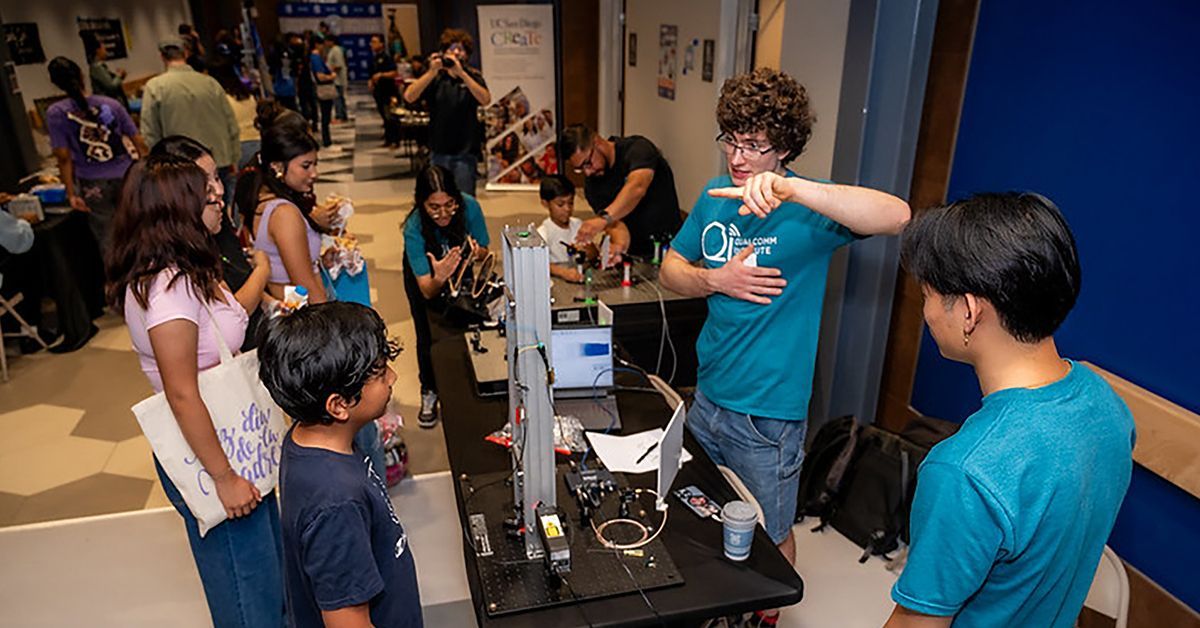 Science, Technology and Mexican Mother’s Day Unite in Festive Imperial Valley STEM Day
CREATE (the Center for Research on Education, Assessment & Teaching Excellence), housed in the School of Social Sciences, organized this STEM fair on the 75th anniversary of the National Science Foundation. The story features Ernesto Zepeda, assistant director of CREATE’s Early Academic Outreach Program, and Victor Minces of Cognitive Science.
Trump Wants To End Birthright Citizenship. Where Do Other Countries Stand?
In this republished BBC article, John Skrentny of Sociology shares expertise on the origins of birthright citizenship.
California’s Economy Ranks 4th in the World
Marc Muendler, chair of the Department of Economics, told Voice of San Diego that inflation and exchange rates can skew global GDP rankings. “Higher prices do not mean that a country is doing better,” he said.
Can Our Pets Tell Us What They Are Thinking?
In this Interspecies Internet lecture, Federico Rossano of Cognitive Science offers an in-depth look at his groundbreaking research on animal communication.
Interested in Finding Your Next (Elevated) Beach Read?
This UC San Diego Magazine story features the latest books by Erik Gartzke of Political Science, Neil Gong of Sociology, Agustina S. Paglayan of Political Science and GPS, and Terrence J. Sejnowski of Salk and Biological Sciences, who also serves as an adjunct professor in Cognitive Science.
 UC San Diego Graduate Programs Recognized Among the Nation’s Best by U.S. News & World Report
Three School of Social Sciences departments were newly ranked and received high marks in this year’s U.S. News Best Graduate Schools peer-assessment-only rankings. The Department of Political Science was ranked 8th, and the Departments of Economics and Psychology were both ranked 14th in their disciplines. The school also holds impressive standings for specialties last ranked in previous years, such as behavioral neuroscience (1), international politics (5) and econometrics (7).
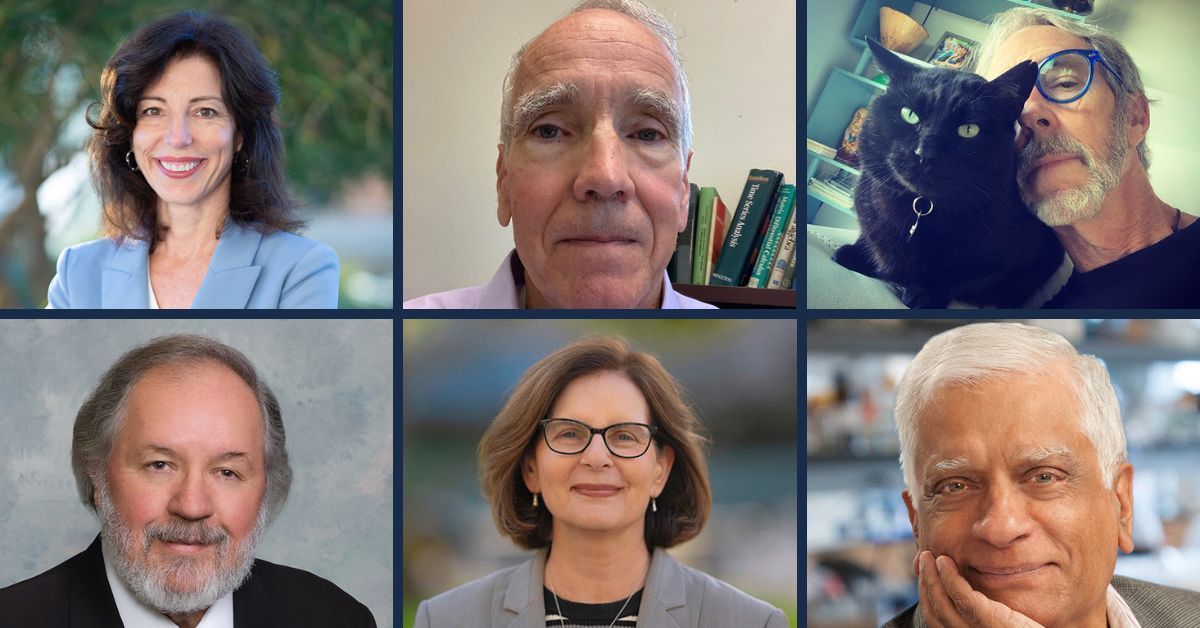 Six UC San Diego Faculty Members Join Prestigious American Academy of Arts and Sciences
Three out of six UC San Diego faculty members elected in 2025 to the American Academy of Arts and Sciences are from the School of Social Sciences: Social Sciences Dean Carol Padden of Communication, Associate Dean of Social Sciences Amanda Datnow of Education Studies, and James Hamilton of Economics. In the story, Chancellor Pradeep K. Khosla says that these honors are “a testament to the pathbreaking work being done throughout our university.” The induction ceremony will take place in Cambridge, Mass. in October.
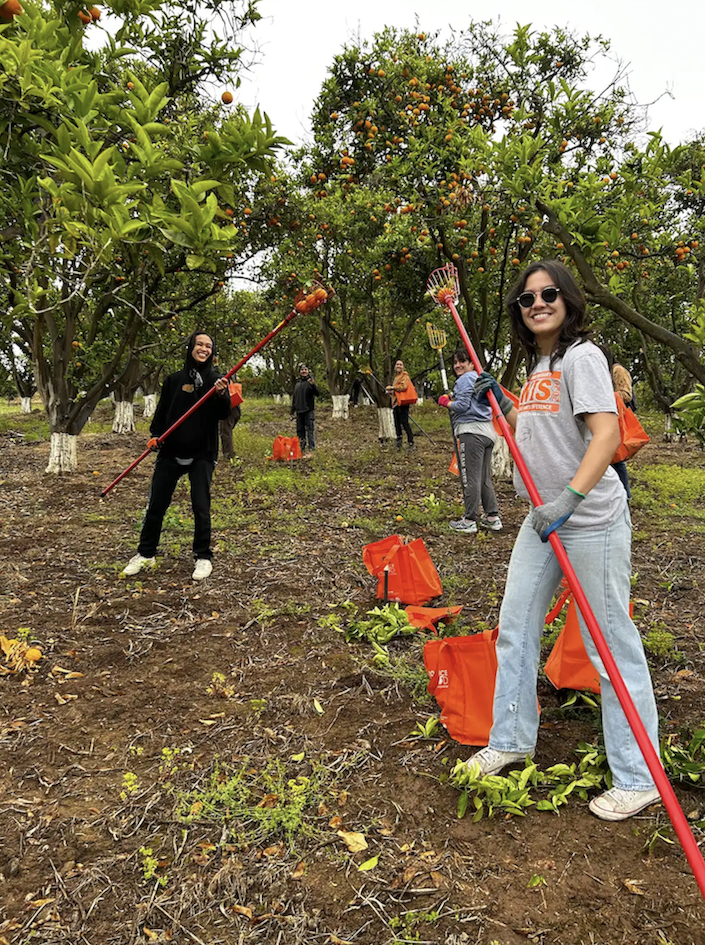 Food for Thought: The Ingredients for Social Change
Amy Lerner of Urban Studies and Planning, Jana Fortier of Anthropology, and Christine Crofts of Sociology are offering a taste of the social importance of food in their courses. From volunteering at a community garden to cooking South Asian cuisine, students gain a hands-on understanding of what the social sciences bring to food studies. “Social sciences help us understand how food intersects with our social structures, cultural practices, economic systems, and political landscapes,” Fortier says.
Education Alum Wins District Teacher of the Year for Second Time
Education Studies graduate alum Miguel Marin ’08 has been named the 2025 District Teacher of the Year for Sweetwater Union High School District. Marin also received the award in 2017.
Hoston Article Wins Best of 2024
The Journal of the History of Ideas honored Germaine A. Hoston of Political Science for her article “Neo-Confucianism and the Development of German Idealism,” which was selected as the best article published in the journal in 2024.
Cognitive Science Ph.D. Candidate Receives NSF Graduate Research Fellowship
Cognitive Science doctoral student Irene Hou, mentored by Philip Guo of Cognitive Science, has won an NSF Graduate Research Fellowship for her proposal, “Human-Centered AI Tools for Building Social Connectivity in Computing Education.” This year’s cohort was extremely selective, with a 6% acceptance rate and only 1,000 students awarded across the country.
 UC San Diego Professor Shares Broader History of Black Americans Along the Pacific Coast in Public Exhibition
Caroline Collins of Urban Studies and Planning, also a Communication doctoral alum, spoke to the San Diego Union-Tribune about “Take Me to the Water: Histories of the Black Pacific,” her new exhibition on display at San Diego Central Library. Explaining her motivations behind the project, Collins said: “I felt that you couldn’t really talk about the significance of the Pacific as this important site, commercially and economically and socially, and all it’s done and continues to do in the development of the U.S. (unless you) also understand how part and parcel Black folks were in that region.”
How Has Global Poverty Fallen
“In the 80s, about 2 billion people were poor by the standards we use, and now it's more like 700 million,” said Tom Vogl of Economics on an episode of VoxDevTalks. Vogl conducted research with Economics colleagues Paul Niehaus and doctoral student Vincent Armentano to explain these changing demographics. “No one path out of poverty predominates. There are numerous intricate paths out of poverty.”
 An AI Model Has Officially Passed the Turing Test
In a preprint study awaiting peer review, postdoc Cameron Jones and Ben Bergen of Cognitive Science find that “in a three-party version of a Turing test, in which participants chat with a human and an AI at the same time and then evaluate which is which, OpenAI's GPT-4.5 model was deemed to be the human 73 percent of the time when it was instructed to adopt a persona,” reports Futurism. “The results provide more evidence that LLMs could substitute for people in short interactions without anyone being able to tell," Jones wrote on social media. "This could potentially lead to automation of jobs, improved social engineering attacks, and more general societal disruption." The study was also featured in Popular Mechanics, Live Science, The Conversation, The Independent, Psychology Today, Interesting Engineering, Newsweek, and other outlets.
Lilly Irani Presents at CHI Conference on Human Factors in Computing Systems
Lilly Irani of Communication and the Labor Center, housed in the Department of Urban Studies and Planning, presented research about how to prioritize worker needs in an age of pervasive automation at CHI 2025. The conference was held in Yokohama, Japan.
Hard Work Feels Worth It, but Only After It’s Done – New Research on How People Value Effort
“When deciding if something is worth the effort, whether you’ve already exerted yourself or face the prospect of work changes your calculus,” Piotr Winkielman and postdoc Przemysław Marcowski of Psychology wrote for The Conversation. “For many people, there’s a sweet spot – a little effort might make something more valuable, but push too far and the value drops.” The story was picked up by Yahoo and other outlets.
RFK Jr.’s 18th-Century Idea About Mental Health
Andrew Scull and Neil Gong of Sociology spoke to The Atlantic about the historical context of RFK Jr.’s proposed wellness farms. “Mental hospitals started out in the 19th century with very utopian expectations around them and their ability to cure,” Scull said. However, Gong added that these institutions “rapidly declined into warehouses where lots of unpleasant things happen to the patients, and where patients tended to get lost.”
 Career Pathways Program Extends a Guiding Hand to High School Students
The Career Pathways Program – part of CREATE (Center for Research on Education, Assessment & Teaching Excellence) in the School of Social Sciences, led through the EAOP (Early Academic Outreach Program) – empowers high school students in San Diego and Imperial counties to learn about potential college and career options. The program is directed by Economics and Latin American Studies alum Francisco Salinas ’17 and supported by four student advisors, including Cognitive Science undergraduate student Zihan Xu. “Our goal here at CPP is to provide students the knowledge they need to make the best decision for themselves, whether it's going to community college, CSU or UC,” Salinas said.
Demand for Mental Health Care, Exits to Permanent Housing Increasing at Father Joe’s Villages
KPBS reported on research led by Homelessness Hub Managing Director Jennifer Nations of Urban Studies and Planning: “Only about 1 in 4 people who stayed in San Diego County shelters between 2018 and 2023 moved straight into permanent housing. Service providers who pair housing with health and social care are the most successful at helping people leave homelessness for good.”
Tariffs Cannot Fund the Government: Evidence from Tariff Laffer Curves
“Hiking import tariffs is not a viable solution to fund today’s public finances,” writes Marc Muendler, chair of the Department of Economics and founding director of the Globalization and Prosperity Lab, in this GP Lab “cBrief,” or computation-based evaluation of global policies, reprinted by VoxEU. “There is no case in the figure where import tariff hikes could raise an extra $600 billion in government revenues.” Separately, Muendler contributed his expertise on tariffs to ABC10 News x2, LiveNOW from FOX and CNA.
Are TikTok’s “Talking” Dogs Legit – or Just a Clever Trick? Science Explains
Fig. 1, the University of California video series that highlights new discoveries, featured Federico Rossano of Cognitive Science and the Comparative Cognition Lab for a deep dive into his research on dogs using communication buttons. Rossano’s research also received coverage by Newsweek and The World, hosted by UC San Diego Journalist in Residence Marco Werman.
1980 Colombia Hostage Crisis Recalled on 45th Anniversary
Alex Fattal of Communication appeared on “The World” to discuss the legacy of the 1980 Colombian hostage crisis: “It’s an elevation of spectacle to the very forefront of politics.” The World is hosted by Marco Werman, UC San Diego’s first Journalist in Residence in the Department of Communication.
California College Professors Have Mixed Views on AI in the Classroom
An EdSource feature included the views of Celeste Pilegard of Psychology: “For me and a lot of professors, there’s fear,” Pilegard said. “We’re holding onto the last vestiges, hoping this isn’t going to become the thing everyone is using. Maybe there are some things that aren’t important for students to be doing themselves. But when the thing you’re offloading onto the computer is building the connections that help you build expertise, you’re really missing an opportunity to be learning deeply.”
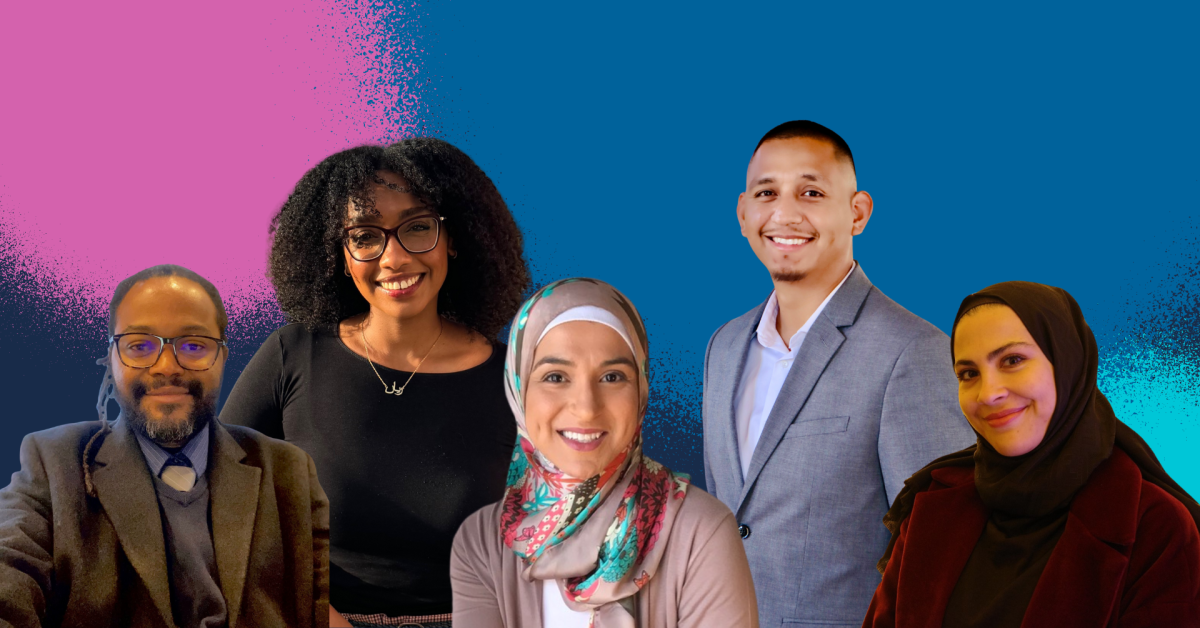 Leaders and Advocates in Inclusive Academic Excellence
UC San Diego Today profiled doctoral students Marwa Abdalla of Communication, a recipient of the Jacobs Fellowship from the School of Social Sciences, and Ivan Valdovinos Gutierrez of Education Studies. Abdalla and Gutierrez are two of five UC San Diego graduate students chosen for this year’s cohort of the Bouchet Graduate Honor Society, which recognizes outstanding academic achievement and personal excellence.
How to Make Indian Governance More Effective
Karthik Muralidharan of Economics appeared on the podcast Sushasan to discuss findings from his book, “Accelerating India’s Development.” Separately, Muralidharan met with Bill Gates to discuss how Indian innovations can help boost global development.
The Surprising Health Benefits of Swearing
“Some people believe that profanity can break social taboos in a generally non-harmful way, [which] can create an informal environment in which people feel like insiders together,” Ben Bergen of Cognitive Science told Time Magazine. However, Bergen advised that knowing one’s audience and “observing how others use language” is important before deciding to swear. “It’s not just whether people are using profanity or not – it’s how they’re using it and what specific words or kinds of words they’re using.”
Speech and Debate Shines at Last Tournament of the Season
Congratulations to the Speech and Debate Team, housed in the Department of Communication, and head coach Robert Campbell on their success at the IPDA National Tournament! The team won the 2nd place national award for the 2024-25 season.
Is Gavin Newsom Changing His Tune with the Oil Industry?
“He has extended a private olive branch to an industry that he’s really been publicly hammering over the last two years…because he recognizes that regardless of the underlying causes for the closures of these refineries, as a governor who has taken such a hard line against oil and gas companies, he may get the blame,” Thad Kousser of Political Science told the San Diego Union-Tribune. “While it’s tempting to read any moderate or pragmatic position that he takes now as a turn away from his past, in fact, that’s who he’s been his whole career.” Separately, Kousser spoke to the San Diego Union-Tribune on El Cajon council weighing in on federal and state issues and the Bay Area News Group on a new bill that aims to make school funding more equitable.
Californians See Undocumented Immigrants as Essential to Economy, Poll Finds
“Instead of mass deportations, Californians want to further integrate immigrants, regardless of their legal status, into the fabric of our state,” Tom Wong of Political Science and founding director of the U.S. Immigration Policy Center told the Los Angeles Times.
Long Beach Mayor Rex Richardson Welcomes the Mayors’ Institute on City Design for Its 80th National Session
John Arroyo of Urban Studies and Planning served as a resource team member at the annual Mayors’ Institute on City Design meeting, which convened mayors from across the country to discuss pressing design and development issues in their cities. “It was an honor to spend three days with mayors from across the U.S. in Long Beach. As a resource team member, I valued the mayors’ intent and passion, engagement with their communities, and their infectious fervor for the future for each of their cities,” Arroyo said.
New Research Shows That Propaganda Is on the Rise in China
A recent paper co-authored by Molly Roberts of Political Science analyzes the rising prevalence of government-authored propaganda in Chinese newspapers. “In China, scripted propaganda is a daily phenomenon – on 90% of days from 2012 to 2022, the vast majority of party newspapers include at least some scripted propaganda,” the authors wrote.
Could the U.S. Become a Manufacturing Hub Again?
“Yes, but the president’s policies will set us back,” James Hamilton of Economics told the San Diego Union-Tribune’s Econometer panel. “The U.S. manufactures over 10% of the world’s cars and computer chips and 20% of world pharmaceuticals…If we want to make America great again, we need to build on the foundations of our success.” Hamilton also shared expertise on whether California drivers should be charged by the mile, if San Diego’s new hotel tax will help expand the convention center, and whether the trade war with China was necessary: “No one wins a trade war. Everybody will get hurt.”
The 40-Something Single Dad Shaping Liberal Media From His Laptop
Communication professor emeritus Daniel Hallin shared expertise with the Washington Post on how viral, fast-cut news clips are similar to legacy forms of journalism. Hallin compared social media accounts like Acyn Torabi’s to “old-style TV news, where you would hear someone speak a whole paragraph, or hear a conversation with several turns.”
Historic Footprints at Mingei International Museum
Ross Frank of Ethnic Studies developed and served as a guest curator for “Historic Footprints,” a new exhibition on display at the Mingei International Museum until August. Students from Frank’s “Representing Native America” course helped create the exhibition, which features Native American ledger drawings from Fort Marion. It received coverage in the San Diego Union-Tribune’s 2025 art exhibitions preview. 
Communicating with Compassion: A Student’s Perspective
Anthropology undergraduate student Madeline Balzarini, who aspires to work in environmental conservation, spoke to UC San Diego Today about the importance of non-violent communication, especially when addressing climate change.
UC San Diego Celebrates 60 Years of Its Unique College System
Did you know six of the eight UC San Diego college provosts are Social Sciences faculty? UC San Diego Today highlighted the impactful work done by provosts Wayne Yang of Ethnic Studies at Muir College, Leslie Carver of Psychology at Marshall, Marisa Abrajano of Political Science at Warren, Ivan Evans of Sociology at Roosevelt, Kate Antonovics of Economics at Seventh, and Angela Booker of Communication at Eighth.
Top Women Making a Difference in the World of Academe
Congratulations to Amanda Datnow of Education Studies – associate dean of the School of Social Sciences – on being chosen by Diverse: Issues in Higher Education as one of 40 women creating a positive impact in higher education.
 Imperfect Sounds: Implants Can Help Deaf Kids Hear – but Many Still Struggle With Spoken Language
Social Sciences Dean Carol Padden of Communication and Rachel Mayberry of Linguistics told Science magazine that waiting to introduce sign language to children with early language processing and hearing difficulties can have negative effects on their language processing abilities. Padden added that late language learners "really don’t have the kind of comprehension that we take for granted."
Library of Congress Selects Zeinabu Davis’ "Compensation" for National Film Registry
"Compensation," the 2000 feature film debut by Zeinabu Davis of Communication, has been added to the Library of Congress National Film Registry. This prestigious honor is only awarded to 25 films each year and this year there were more than 6,700 nominations. The film is also having a nationwide theatrical release for the first time. You can find "Compensation" showtimes or watch its rejuvenated trailer. 
Meet Adam Syed: The Designer Who Supported Millions of Creators Through Innovation at Twitch
Cognitive Science alum Adam Syed was profiled in a USA Today contributor content piece for his impressive work as a product designer at Twitch, a live-streaming social media platform. Syed now works for LinkedIn, incorporating AI to help users find and assess job opportunities more efficiently.
Resilience Summit Highlights Local Leadership on Global Climate Crisis
Fonna Forman of Political Science co-chaired a recent Climate-Resilient California and Californians (CRC2) summit. The event brought together government officials, religious leaders, researchers, and students to discuss local responses to climate-driven disasters. "In local communities, we are likelier to cut through the divisions that are presently undermining robust collective action at broader scales," said Forman, founding director of the Center on Global Justice. "We need to work together, all of us, to protect California’s neighborhoods and communities."
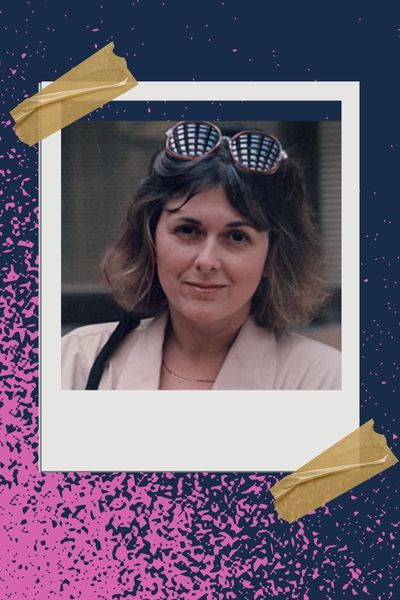 8 Trailblazing Women Educators Who Paved the Way at UC San Diego
In honor of Women’s History Month, UC San Diego Today highlighted the late Elizabeth Bates who played a central role in the establishment of the university’s Department of Cognitive Science in 1986 – the first of its kind in the United States. Bates, who served as director of the Center for Research in Language at UC San Diego and was also a member of the Psychology faculty as well as Cognitive Science, helped shape the modern understanding of how language develops in the brain.
Most Stays at San Diego County Homeless Shelters Were Brief. Some Persisted for a Year or More
A front-page story in the San Diego Union-Tribune featured research by the Homelessness Hub in Urban Studies and Planning. The study, "Passing Through and Staying Put," recommends increasing access to supportive services and programs that prevent people from becoming homeless in the first place: "Expanding shelter capacity and other temporary accommodations may reduce the numbers of people living unsheltered on the streets but will not sufficiently change the system’s capacity to help people permanently exit homelessness."
Russia-Ukraine War
Branislav Slantchev of Political Science shared his expertise with BBC News on the Trump-Putin call, The Hill on Trump’s aid freeze to Ukraine, and Raw Story on Trump shutting down Voice of America.
Spotlighting Leaders in Graduate and Postdoctoral Education
UC San Diego Today profiled three Social Sciences students and faculty who received Graduate Education and Postdoctoral Affairs (GEPA) Awards for their work advancing equity and diversity on campus. Congratulations to Cognitive Science and Linguistics Ph.D. student Shai Lynne Nielson and to Christina Schneider of Political Science and Mirle Rabinowitz-Bussell of Urban Studies and Planning.
UC San Diego Innovators at SXSW 2025
Patty Ahn of Communication was one of the university innovators whose work was featured in the South by Southwest (SXSW) conference and festivals: A documentary feature "Forever We are Young," co-directed by Ahn, had its world premiere at the 2025 edition of SXSW. The film "dives into the passionate fandom that catapulted the K-pop band BTS into a global household name" and "captures the powerful spirit of activism and collectivity that make BTS fans a symbol of hope and unity in our ever-fractured world."
Is It Too Early To Tell What Trump’s Policies Mean for the Economy?
James Hamilton of Economics said as part of the San Diego Union-Tribune’s Econometer panel that although it’s too soon to tell how Trump’s policies will affect the economy, he is concerned about the fall in consumer sentiment: "The Trump administration should take this as a warning flag to be much more cautious about the hornet’s nest of tariffs and retaliations that it has stirred up." Hamilton also contributed to the expert panels on whether San Diego should mandate a $25 minimum wage for tourism workers and whether it’s good for the city’s population growth to be fueled largely by immigration.
Gavin Newsom Is Welcoming Prominent Conservatives on His New Podcast
"While there are clear risks [to the California governor’s approach], he is trying to align his national reputation … in a slightly unpredictable middle," Thad Kousser of Political Science told Fortune. Kousser added that politicians talking with members of the opposite side is "so rarely a part of public discourse it seems like either bravery or lunacy." Separately, Kousser contributed expertise to the San Francisco Chronicle on whether Newsom will support increasing health privacy protections in California.
 Hundreds Gather at UC San Diego for the Stand Up for Science Rally
Cognitive Science postdoc Christian Cazares told KPBS that federal funding cuts to universities will also hurt local economies. "That means people spending money at restaurants and local businesses. All of that will be gone," Cazares said.
UC San Diego Speech and Debate Wins Two National Titles
The Speech and Debate Team, housed in the Department of Communication and coached by Robert Campbell, continues to rack up wins: finishing fourth in intercollegiate debate and eighth overall at the 2025 Pi Kappa Delta National Tournament.
How Trump’s Presidency Could Change Where Babies Are Born
The Times (UK) highlighted research by Gordon Dahl of Economics on the "Trump baby bump" among Republicans after the 2016 election.
Scholars Accused of Sexual Misconduct Are Cited Less After Allegations Come to Light
New research from the Rady School of Management co-authored by Craig McKenzie of Psychology reveals that scholars accused of sexual misconduct saw a significant decline in citations within three years of public allegations. The study, published in PLOS One, also finds there is no significant citation decrease for scholars accused of scientific misconduct in the same timeframe.
Covid’s Long Shadow in California: Chronic Absences, Student Depression and the Limits of Money
EdSource cited research by Julian Betts of Economics, revealing that two years of increased federal Covid spending had a positive impact on low-income students in 2021-22, "equivalent to a gain in math and English language arts of about 10 days of learning." However, schools with high percentages of low-income students still lost a quarter year of learning during this period.
Can Animals Understand Human Language?
Live Science featured Federico Rossano of Cognitive Science and his research using button boards to understand dogs’ communication abilities. Rossano is currently investigating "whether dogs use buttons to refer to people or objects that aren't currently present, and whether they combine buttons to refer to things they don't know the names of." Rossano’s work was also featured in NPR podcast "Dog Talk."
Psychological Insights for Building the Climate Movement
Adam Aron of Psychology discussed the emotional challenges of addressing climate change on a podcast called "Bridging the Carbon Gap." Aron also published, along with several UC San Diego colleagues, a case study in the journal Frontiers in Education on "The wins of the grassroots climate movement in the University of California."
Gen.G Foundation Awards Scholarships to 10 Students in Eight States
Kudos to Cognitive Science major Eric Williamson on being selected for a $5,000 Gen.G Foundation scholarship by global esports and gaming organization Gen.G. Williamson, who gains access to career and mentorship programming, as well as the network of Gen.G Foundation alumni, said: "Receiving this scholarship feels like a vote of confidence in my journey. It not only lightens the financial load but inspires me to dream bigger, work harder, and stay focused on achieving my goals in school and beyond."
The Self-Deporters
The New York Times writes about the prospect of “self-deportation” by unauthorized migrants, reporting that most are currently staying put. But, say experts like Wayne Cornelius of Political Science, bleak job prospects are what’s most likely to impel undocumented immigrants to leave.
U.S. Tariffs, Expert's View
Marc Muendler of Economics, founding director of the Globalization and Prosperity Lab at UC San Diego, has been speaking with a number of local, national and international outlets, including Nikkei (linked here) and CBS, about the various effects of tariffs and trade wars.
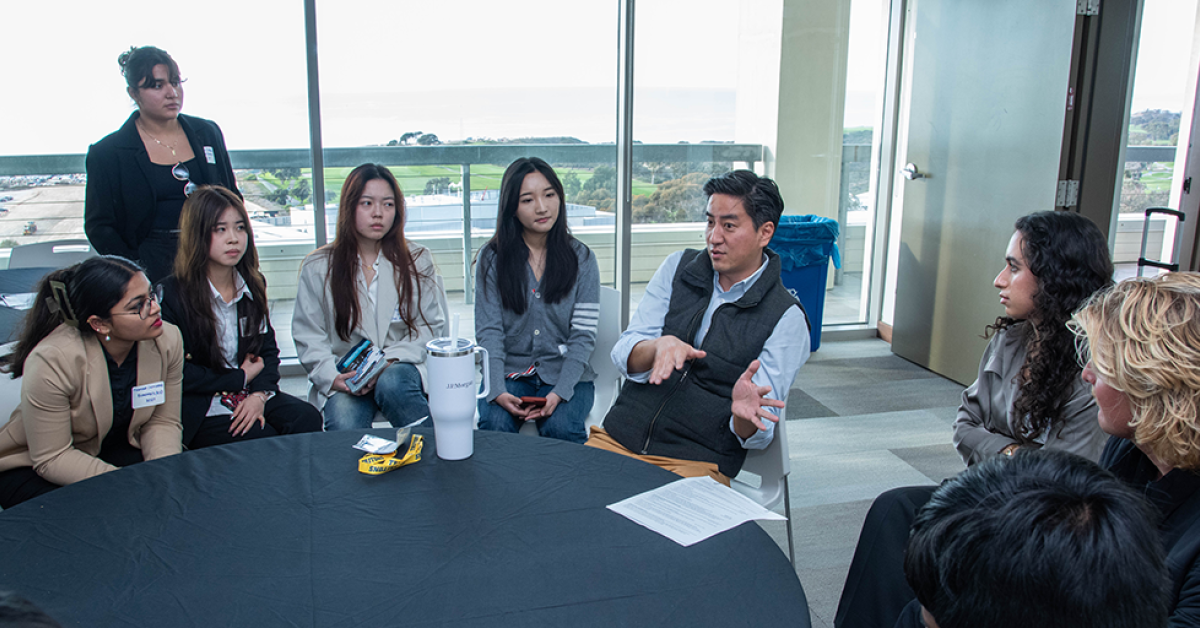 Alumni Advice to Students Is on the Money
More than 200 undergraduate students attended the "Future of Finance" career conference hosted by the Department of Economics industry engagement program. The two-day event featured alumni and other professionals who have made their marks as entrepreneurs, leaders and innovators in various industries. "I envisioned an event that would help students explore career possibilities in finance, offer tangible advice on what to do as a student to prepare for a future career and feel a greater sense of connection to UC San Diego alumni and the business community," said conference planner Karen Doescher, who serves as Economics' director of industry relations and student professional development. ICYMI: you can read more about how Doescher and colleagues in Cognitive Science and Urban Studies and Planning are helping Social Sciences students launch their post-college careers.
Buying a Home in California? Here’s How Seriously You Should Take Zillow’s Climate Risk Data
“The real world is much more complicated than one through 10,” Judson Boomhower of Economics told the San Francisco Chronicle. “You have to take all this with a grain of salt … A single number for every house probably does convey some precision that isn’t really there in reality.” Boomhower also contributed expertise to CNN Business on whether people buying burned lots in L.A. should worry about future fires and to Business Insider on how homeowners can protect their houses from wildfires.
 ‘Compensation’ Review: Still Rebellious
“Compensation,” the renowned 1999 film by Zeinabu Davis of Communication has been chosen as a New York Times’ Critic’s Pick and is also celebrated by The New Yorker as it embarks on its first-ever theatrical release. “The arrival of this restored beauty,” The Times writes, “proves that Davis knows how to rebel in her own distinctive way.”
The Dark History Behind Public Education
Agustina Paglayan of Political Science and the School of Global Policy and Strategy was featured in The Atlantic’s “Good on Paper” podcast in a discussion of her new book, “Raised to Obey: The Rise and Spread of Mass Education,” which argues that the “expansion of primary education in the West was driven not by democratic ideals, but by the state’s desire to control citizens.”
 India Has Undermined a Popular Myth About Development
The Economist cited research by Paul Niehaus, Tom Vogl and doctoral student Vincent Armentano of Economics on how extreme poverty declined in India, China, Indonesia, Mexico and South Africa from 1981 to 2019. One key finding is that people can surpass poverty while still working in agriculture, which is especially significant in India, where more than 40% of workers are employed in agriculture.
Meet the 2025 Illustrious Alumni Honorees
Four out of 10 of this year’s Illustrious Alumni Award recipients are School of Social Sciences alumni! Congratulations to Ellen Chen ’95 of Economics, Shelley S. O’Connor ’83 of Psychology, Jamie Montgomery ’81 of Political Science, and Leo Spiegel ’83 of Economics, who will be celebrated at events in New York and Los Angeles. The award is one of UC San Diego’s highest honors and recognizes distinguished alumni who are “creating a legacy of excellence and innovation.”
 UC San Diego Alumnus Leverages Technology to Bring Educational Resources to Those Who Need It Most
Cognitive Science doctoral alum Jamie Alexandre ’14 created Learning Equality, an education nonprofit that brings online content to those without Internet access, while he was still a student at UC San Diego. More than a dozen years after its launch, Learning Equality’s offline-first approach still resonates.“Today, the connectivity gap has narrowed, but it still exists,” Alexandre told UC San Diego Today. “There are still 2.6 billion people without connectivity – almost a third of the world.” Housed in Qualcomm Institute’s Innovation Space, the team is also now thinking about how to support offline AI education.
Do Animals Have Language?
The Economist’s “Babbage” podcast featured Federico Rossano of Cognitive Science in its two-part series on animal communication. The second episode, “Could AI translate animal communication,” is also available now.
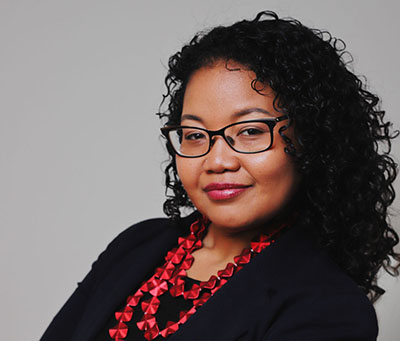
Satomi Rash-Zeigler Receives Civil Rights and Justice Award from City of San Diego
Congratulations to Satomi Rash-Zeigler, executive director of the UC San Diego Labor Center, housed in Urban Studies and Planning, on receiving a Bayard Rustin Award from Mayor Todd Gloria and the City of San Diego Human Relations Commission. The annual award recognizes individuals who have “positively impacted their communities through their advocacy and dedication to civil rights and justice.” Rash-Zeigler, who has more than 20 years of experience working in the labor movement, said in a City News story: “It was a privilege to celebrate alongside fellow advocates and leaders in our community, all dedicated to the values that Bayard Rustin championed.” ICYMI: Here’s last year’s story about Rash-Zeigler’s appointment to the Labor Center.
Inclusive Excellence Awards
Congratulations to Victor Ferreira of Psychology and Leslie Vallejo Avila, a Political Science undergraduate student and the 2024-25 Associated Students president, on receiving Inclusive Excellence Awards, which recognize campus leaders who advance diversity, equity and inclusion.
Trump Wants to End Birthright Citizenship. Where Do Other Countries Stand?
When did birthright citizenship, the law in about 30 countries around the world including the United States, first appear? John Skrentny of Sociology told BBC that most of these 30 countries are former colonies that adopted the policy when they became nation-states. "They had to be strategic about whom to include and whom to exclude, and how to make the nation-state governable,” Skrentny explained. “For some, it encouraged immigration from Europe; for others, it ensured that indigenous populations and former slaves, and their children, would be included as full members, and not left stateless. It was a particular strategy for a particular time, and that time may have passed."
Trump’s Immigration Plans Follow a Familiar Playbook: Exclusion, Incarceration and Mass Deportation
In this Capital & Main piece, republished by Fast Company, Tom Wong of Political Science predicts that mass deportations could lead to labor shortages, increased food prices and construction delays. “It’s going to take a lot of pain before people realize how damaging mass deportation efforts are,” says Wong, founding director of the U.S. Immigration Policy Center at UC San Diego.

Google Drops Pledge Not to Use AI for Weapons or Surveillance
“This is an opportunity to remind ourselves of the emptiness of Google’s promises,” Lilly Irani of Communication and a former Google employee told the Washington Post. Although Google’s updated policy says AI will be used with international law and human rights in mind, “we’ve seen those limits routinely broken by the U.S. state,” said Irani.
The Erasing of American Science
An Atlantic magazine story on the “battle over how research can and will be done in the United States” quoted Keolu Fox of Anthropology saying he’d leave the country if the administration’s decisions end up directly impacting scientific progress.
Deepti Chatti Receives Junior Scholar Award
Congratulations to Deepti Chatti of Urban Studies and Planning and Critical Gender Studies on receiving the Bonnie J. McCay Junior Scholar Award from the Anthropology & Environment Society section of the American Anthropological Association. This award honors “exemplary scholarship” from authors who have received a Ph.D. in the past five years. Chatti was selected for her paper “Disrupting the Grid: Encountering Fire and Smoke through Energy Infrastructures.”
Democratic Governors Diverge on How to Handle Trump
“There will be governors who see the route to their party’s nomination in 2028 as being the chief critic of President Trump,” Thad Kousser of Political Science told The Hill, while others will take a “more loyal opposition, find-areas-for-common-ground” approach. Separately, Kousser contributed expertise to CBS8 about the new ban on federal funding to sanctuary cities and the 'Economic Blackout' movement.
UC San Diego Speech and Debate: Southern California Champions for Fifth Consecutive Year
Congratulations to the Speech and Debate Team, housed in the Department of Communication and coached by Robert Campbell, on their first place win at the Pacific Southwest Collegiate Forensics Association’s (PSCFA) Spring Championships Tournament! The team was undefeated this season, with a 7-0 Tournament Championship record. Check out the team website for more impressive achievements this season.
Should the U.S. Create a Sovereign Wealth Fund?
“The federal government doesn’t have any wealth to invest,” James Hamilton of Economics said in the San Diego Union-Tribune as part of its Econometer panel. “The U.S. Treasury currently owes the public almost $29 trillion dollars. To create a sovereign fund, the government would need to borrow even more.” Hamilton also contributed to the expert panels on San Diego's ADU bonus program, whether California should back off on 2026 zero-emission car mandates and the future of California's high-speed rail project.
 The Coming Democratic Baby Bust
The Atlantic cited research by Gordon Dahl of Economics showing a “Trump baby bump” among Republicans after the 2016 election. Based on that work, Dahl predicted that a partisan birth gap could also persist over the next four years. “If you’re a Democrat and you really care about child care and family leave and climate change,” Dahl said, you might decide that “this is maybe not the right time to bring a kid into the world.”
‘I Was Crying Watching This’: Locals React to Heated Oval Office Exchange Between U.S. and Ukrainian Leaders
Branislav Slantchev of Political Science told ABC10 that the Trump administration had a “complex” strategy going into their meeting with Ukrainian President Zelenskyy, and may have had something to do with the administration's refocus on China. Slantchev said he believes the Trump administration, as well as others not a part of the administration, are trying to use a "Reverse Nixon" policy, meaning detaching Russia from China.
 An Insurance Crisis Was Already Brewing in L.A. Then the Fires Hit.
Judson Boomhower of Economics spoke to the Washington Post about the Los Angeles fires and the tensions facing homeowners, insurance companies and regulators as climate disasters become more frequent. Boomhower also provided timely expertise to Brookings on how climate change is impacting home insurance, CNN on how the region could have minimized damage, MSNBC on how California can rebuild resilient structures, and other prominent outlets, including Marketplace and CalMatters x2.
In the Rush to Rebuild, One Topic Is Taboo: What Should Be Built Differently – or Not at All?
Bill Fulton of Urban Studies and Planning, former mayor of Ventura, contributed expertise to the Los Angeles Times on how L.A. should approach rebuilding after the fires. “The difficult part is making everybody whole, both financially and emotionally,” said Fulton.
The 2025 RHSU Edu-Scholar Public Influence Rankings Unveiled
Congratulations to Amanda Datnow and Mica Pollock of Education Studies on being selected as two of the “200 university-based scholars in the United States who did the most last year to shape educational practice and policy.”
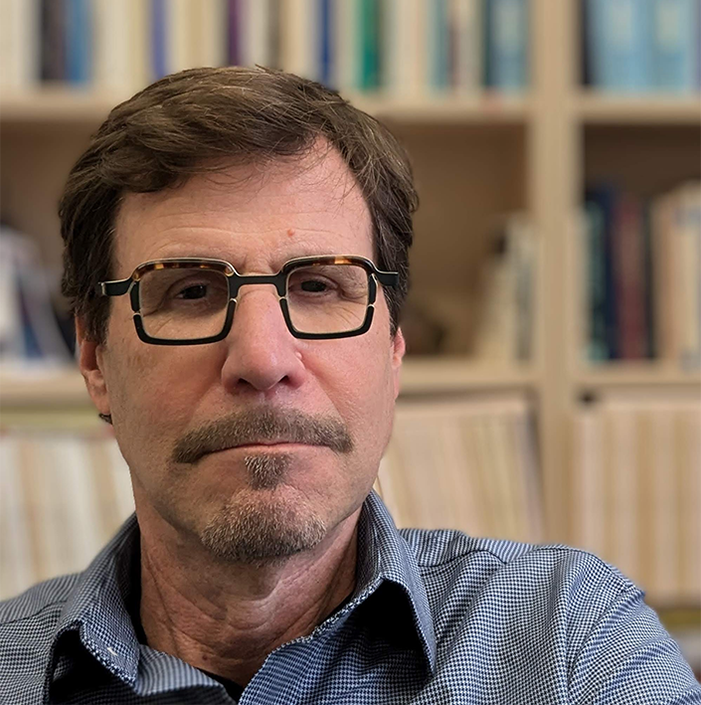 Grant Goodall Elected a Fellow of the Linguistic Society of America
Linguistics Chair Eric Baković had this to say about Grant Goodall’s election to the Linguistic Society of America (LSA), the highest academic honor in linguistics: “In the four decades since he received his Ph.D. at UC San Diego, Grant has had a stellar record of scholarly contributions to the field, service to the LSA, outreach and communication with the language teaching and constructed language communities.” Goodall said: “I love what I do and I feel enormously privileged to count research, teaching, and supervising student researchers as part of my job. Receiving this recognition… is like icing on the cake. Other campus LSA fellows include emeritus professor David Perlmutter and School of Social Sciences Dean Carol Padden.
How Button Boards Are Changing Human-Canine Communication
PBS News Hour featured research by Federico Rossano of Cognitive Science on how dogs using soundboard buttons can comprehend specific words and produce contextually appropriate responses. Separately, Rossano was interviewed by Deutsche Welle, a story that was also translated into Spanish, Arabic and Dutch. Also, ICYMI, the New York Times Magazine cover story on Rossano’s research led to a segment on MSNBC’s “Morning Joe” program.
UCSD Trump Tariff Simulation: Wages Would Rise, but Prices Would Rise Higher
Marc Muendler, chair of the Department of Economics, shared expertise with ABC10 News about the potential impacts of Trump’s proposed tariffs.
Impact of AI on the Workforce
In this video (beginning at 41:00), UC San Diego Labor Center leadership – executive director Satomi Rash-Zeigler and faculty director Lilly Irani of Communication – present to the AI ad-hoc subcommittee of the County of San Diego. Their presentation proposes strategies the county can implement to “ensure AI adoption benefits workers and supports equitable labor practices.” The Labor Center is housed in the Department of Urban Studies and Planning.
Birthright Citizenship: Why the ‘Right of Soil’ Is So Big in the Americas
John Skrentny of Sociology shared expertise with CNN about the history of birthright citizenship. Separately, Skrentny also spoke to CBS News about H-1B visas. "The H-1B visa is like the Swiss Army knife of visas. It's used for a lot of different purposes,” he said. “If you hear people say that the H-1B visa is very important for attracting the best and brightest to the United States, they are correct. At the same time, the H-1B visa is used for cheap labor."
 Local Effects on Immigration, Education Under Trump 2.0
Agustina Paglayan of Political Science and the School of Global Policy and Strategy appeared on KPBS Midday Edition to discuss how Trump’s proposed education policies will affect K-12 and higher education in San Diego. “The way that the federal government can influence curriculum is not by passing a curriculum, but by threatening to withhold funding from districts and states that don't comply,” Paglayan said. “People need to realize that whatever comes out of the current debates over the curriculum is something that will most likely stick around for many, many decades. It will shape the future of education in the U.S., and it will also shape how we think of common values.”
Announcing the Inaugural GEPA Award Recipients
The Graduate Education and Postdoctoral Affairs (GEPA) Awards recognize individuals who are making waves in equity and diversity for graduate education and postdoctoral training at UC San Diego. Out of this year’s six honorees, three are Social Sciences students and faculty: Cognitive Science and Linguistics Ph.D. student Shai Lynne Nielson, Christina Schneider of Political Science, and Mirle Rabinowitz-Bussell of Urban Studies and Planning.
Mexico Builds Temporary Shelters to Prepare for Mass Deportations From US
Wayne Cornelius of Political Science told Reuters that Mexican towns and villages that rely on remittances from U.S. workers could face "serious economic disruptions” as a result of the Trump administration’s deportation plans.
Archaeo-Diplomacy in Action
Thomas Levy, who was the inaugural holder of the Norma Kershaw Chair in the Archaeology of Ancient Israel and Neighboring Lands in the Department of Anthropology, is at the forefront of a partnership between UC San Diego and the University of Haifa that is studying 10,000 years of climate and environmental change on Israel’s Mediterranean coast. A recent event celebrated the partnership and its most recent expansion. You can view a recorded livestream of the event.
Trump’s Border Czar Tom Homan Wants a Tip Line to Catch Immigrants in US Illegally
"Such a hotline will turn citizens against immigrants, embolden vigilante groups, and serves as a recipe for racial profiling and increased discrimination,” Tom Wong of Political Science told USA Today. “Undocumented communities will also be further driven into the shadows as citizens become part of the immigration enforcement apparatus.” Wong also spoke to KPBS about how San Diego would be impacted by mass deportations: “Policy promises like mass deportation would significantly impact San Diego economically and devastate our tourism industry.”
San Diego in 2025: Experts Predict Rising Home Prices, Higher Unemployment and More
“The inflation rate will be a key summary of whether 2025 brings workable compromises or a dysfunctional U.S. government,” said James Hamilton of Economics as part of the San Diego Union-Tribune’s Econometer panel. Hamilton also contributed to expert panels on whether the domestic box office will return to pre-pandemic levels, whether California insurance reforms can stop insurers from leaving, whether MTS should delay or cancel plans to improve trolley service, and whether companies should roll back DEI programs.
Breaking Down the Politics of President Trump’s Inauguration
Seth Hill of Political Science contributed expertise to NBC7’s inauguration coverage.
The Last Shall Be Last: Ethnic, Racial, and Nativist Bias in Distributive Politics
In this Faculti.net video, Thad Kousser of Political Science discussed how “historic budget and spending patterns from state legislatures reflect biases based on race, class and immigration status.” Separately, Kousser contributed expertise to the Washington Post on Trump’s first week in office, the Los Angeles Times on Trump’s visit to L.A. to assess wildfire damage, Voice of San Diego on Trump gaining voters in Chula Vista and San Ysidro, and ABC10 News on the federal funding freeze.
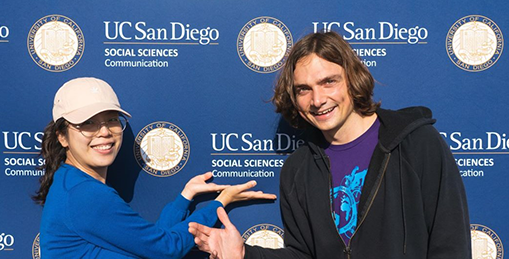
New Communication Major Boosts Career Prospects for Students
The Department of Communication is launching a new major designed to prepare students for careers in journalism, advertising, marketing, public relations, film, streaming media and allied fields, the Media Industries and Communication (MIC) major. “It was a natural way of extending our interests, and a natural way to meet where our students are,” said Shawna Kidman, a member of the faculty group that developed the MIC major. Thomas Schmidt, another member of the faculty group, senior Lizabeth Wong, and Communication and Visual Arts alum Beth Accomando ’82, a well known arts and entertainment reporter for KBPS, all shared with UC San Diego Today their excitement about the new program.
D ogs Use Two-Word Button Combos to Communicate, Study Shows
A new study from the Comparative Cognition Lab, led by Federico Rossano of Cognitive Science, shows that dogs trained to use soundboards to “talk” are capable of making two-word button combinations that go beyond random behavior or simple imitation of their owners. Published in the journal Scientific Reports, the study analyzed data from 152 dogs over 21 months, capturing more than 260,000 button presses – 195,000 of which were made by the dogs themselves. The “first scientific study to analyze how dogs actually use soundboards” was covered by the Washington Post, Nature, CBS8, Neuroscience News, Popular Science, Earth.com, The Jerusalem Post, MSN, and The Telegraph (UK), among other outlets. Rossano’s research on animal communication was also more broadly featured by The New York Times Magazine and The Economist.
2024 Was Hot – but It Might Be the Coldest Year of the Rest of Your Life
Adam Aron of Psychology told National Geographic that even when people are aware of the climate crisis, they may not take action unless behavioral changes become the social norm in their communities.
 25 Films Named to National Film Registry for Preservation
Kudos to Zeinabu irene Davis of Communication, whose film “Compensation” has achieved the prestigious honor of being selected for the Library of Congress National Film Registry. Annually, the registry selects 25 films based on “their cultural, historic or aesthetic importance to preserve the nation’s film heritage.” Among the other honorees this year are “Beverly Hills Cop,” “Dirty Dancing,” “Angels With Dirty Faces,” and “No Country for Old Men.” Read more in the New York Times, or watch this video announcement featuring Davis and other recognized filmmakers. “Compensation” also received coverage by NPR, Billboard, and other outlets. (Stay tuned for a UC San Diego Today story soon!) You can catch a local screening of the film hosted by the San Diego Museum of Contemporary Art as part of their exhibition “For Dear Life: Art, Medicine, and Disability.”
The Best Scholarly Books of 2024
Congratulations to Neil Gong of Sociology, whose book “Sons, Daughters, and Sidewalk Psychotics: Mental Illness and Homelessness in Los Angeles” was one of 12 chosen by The Chronicle of Higher Education as the best scholarly books of the year.
Study Finds No Benefit to Race-Specific Spirometry Equations
New research by Amy Non of Anthropology and colleagues around the country reveals that removing race from the lung function equations does not reduce the ability to diagnose asthma in children. The study – published in the American Journal of Respiratory and Critical Care Medicine, with Non as its first author – strongly supports using race-neutral equations.
NATO Warned of Russian Cyber Threat
Erik Gartzke of Political Science shared his expertise with BBC News: “Cyber attacks can be very broad, but their effects tend to be relatively superficial. It’s not the same as dropping a bomb on something, it’s not the same as invading a country,” Gartzke said. “These attacks, while they could be very scary for ordinary citizens, they’re not going to have a significant military effect, and that indeed is the nature of the problem for the Russians. They’re running out of options.”
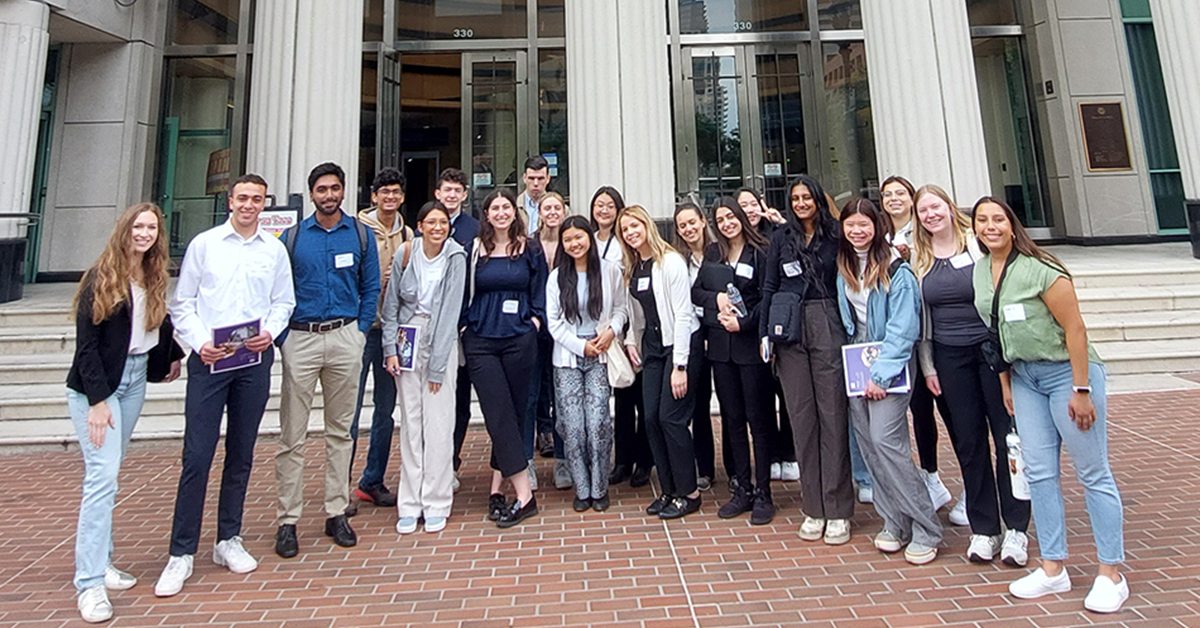 Pathway to Law School Via Krinsk-Houston Law and Politics Initiative
Housed in the Department of Political Science and directed by Maysa Nichter, the Krinsk-Houston Law and Politics Initiative inspires students to make informed decisions on the legal profession. The program features opportunities to network with practicing lawyers and law students, take law school-inspired courses, and gain support in the law school application process. “To anyone who tells me that they are interested in going into law, I tell them to go to UC San Diego,” said program alum Megan Chubb ’22. The UC San Diego Today story also highlighted program alumni Ojas Sandhu ’24, Briona Chata ’24, and Marysol Valdez ’24, along with Political Science alum Nabil Issa ’94 – who has supported the initiative since its creation in 2016 and serves as a guest lecturer and mentor.
Public Had More Trust in This Election – Because Trump Won
The San Diego Union-Tribune featured a report on election trust from the Yankelovich Center for Social Science Research, authored by Thad Kousser of Political Science, graduate students Laura Uribe and Alex Zhao, and Lauren Prather of the School of Global Policy and Strategy, “On the eve of the election, there was a wide gap over trust in elections between supporters of Donald Trump and those who backed Kamala Harris. After Trump's clear victory, that gap entirely disappeared. Trust among Harris supporters dipped slightly but remained at a high level, while trust among Trump supporters increased sharply to that same level.” Separately, Kousser spoke to KPBS about how political scientists predicted election results more accurately than the polls.
Latinos Who Consume News in Spanish on Social Media More Susceptible to Election Lies
"Having that medium of Spanish, especially for recent Latino immigrants, feels like it's a more trustworthy source," Marisa Abrajano of Political Science told KPBS. "A lot of the way that we get news and information is through our networks, a friend or a family member. And so I think that can potentially play a role in why (Latino voters are) more likely to believe in these misinformation stories." ICYMI, you can learn more about Abrajano’s research in this UC San Diego Today story.
Trump’ s Second Term Might Have a Surprising Effect on America’s Fertility Rate
Can the election of a new president really affect fertility rates? Slate featured research by Gordon Dahl of Economics that says yes. “There is a partisan divergence on policy priorities and worries about the future. So when their party does not win the presidency, they respond to changes in actual or expected policy they think is important to them when considering whether to have kids,” Dahl said. “Republican fertility will rise relative to Democrats, with an increase in the number of babies in Republican families showing up roughly 9-12 months from now.”
Why You Should Talk About Politics With Family
Kevin Lewis of Sociology told KPBS that since many people live in completely separate social and media bubbles from their loved ones, it can be “even more challenging than in the past” to talk about politics. “Both sides just have a hard time really even conceiving of an alternative viable perspective,” Lewis said. Despite this, Lewis and other scholars believe that having these tricky conversations is necessary to better understand each other and rebuild unity.
Why You Shouldn’t Lie to Your Children About Father Christmas
Many scholars agree that lying to kids is harmful and weakens their sense of trust – but is Santa an exception? The Conversation cited research by Gail Heyman of Psychology that shows four out of five parents have partaken in “parenting by lying,” or telling lies in order to control the emotions or behavior of their children.
Ukraine Ceasefire Terms Come Into Focus as Trump Returns
Branislav Slantchev of Political Science told The Hill that Putin will not accept Ukrainian requests for NATO membership because it would disregard “basically the whole idea that he proposed” to the Russian public as a justification for war. “It’s unclear to me that the Russians would actually go anywhere near this,” Slantchev said, referring to Ukraine’s ceasefire proposal.
Longstanding Oceanside Art Space Faces Eviction and Closure
John Arroyo of Urban Studies and Planning told KPBS that “it feels like it's an assault on the actual creativity” when community art organizations, like The Hill Street Country Club in Oceanside, are pushed out by gentrification. Arroyo advocates for local and state governments to step in and protect these important spaces when they are at risk of displacement. “Could there be an emergency fund to help make a down payment on another property?” Arroyo asks. “Could the state, the city, the county evaluate other county-owned properties that are not being used that would allow for sort of the reuse in a cultural center?"
Border Report: What a Sanctuary City Is, and Isn’t
Voice of San Diego cited research by Tom Wong of Political Science, reporting that “counties that limit local law enforcement interactions with ICE have lower crime rates and stronger economies.”
Does History Shed Any Light on What Trump’s Second Act Will Look Like?
When asked to choose a historical period most similar to our current state of politics, Sam Popkin of Political Science told KPBS that Trump might resemble Andrew Jackson in his second term due to their shared desires to punish political opponents and demand loyalty from government officials. Trump is also “taking bigger swings now” compared to his first term by nominating cabinet leaders who “oppose the national establishment,” according to Thad Kousser of Political Science. “They want to change the institution, or even tear them down rather than just re-steer the ship of state,” Kousser said.
 Making Sense of the Short-Lived Martial Law Declaration in South Korea
“South Korea demonstrates a broader storyline that is all too familiar to Americans: how polarization can weaken support for democratic institutions,” Political Science Ph.D. student Yeilim Cheong and Stephan Haggard of the School of Global Policy and Strategy write in a San Diego Union-Tribune opinion piece.
Should the U.S. Increase Immigration Levels for Highly Skilled Workers?
“Knowledge and technology are key drivers of the U.S. economy. Students come from all over the world to learn at U.S. universities, and their spending contributed $50 billion to U.S. exports last year,” James Hamilton of Economics told the San Diego Union-Tribune as part of their Econometer panel. “Highly skilled immigrants contribute much more in taxes than they receive in public benefits. The skills immigrants bring to America can make us all better off.” Hamilton also contributed to the expert panels on whether California should offer an EV rebate, whether San Diego should increase parking fees, and whether the U.S. dollar will be replaced as the world’s reserve currency.
2024 Post-Election Hearing
Thad Kousser of Political Science was invited to testify and share research from the Yankelovich Center for Social Science Research on ways to increase trust in American elections at the U.S. Election Assistance Commission's Post-Election Hearing.
'Research to Solve Problems' Conference
Zoltan Hajnal of Political Science presented research from the Yankelovich Center for Social Science Research on election trust and fairness at the 2024 Social Science Research Council Conference, which featured campus leaders from more than 80 colleges and universities.
Communication Alum Joins Greater Boston Food Bank's Board of Advisors
Communication alum Diane Bevan is a new advisor for the Greater Boston Food Bank (GBFB), one of the largest food banks in the U.S. Bevan has been involved with the organization since 1999, leading fundraising efforts and frequently volunteering at their food distribution warehouse, and brings her extensive background in marketing and branding to the role. “I believe food insecurity in Massachusetts is a solvable challenge,” Bevan said. Bevan will be trekking in the Himalayas for 27 days to raise funds for the food bank.
 A Look Back at 2024: Breakthroughs in Research at UC San Diego
ICYMI, two School of Social Sciences stories were featured in UC San Diego Today’s year-end research roundup. Check out “Dogs Understand Words from Soundboard Buttons” with Federico Rossano of Cognitive Science and “A New Kind of Authoritarianism: Democracy in Decline at Home and Abroad” with Christina Schneider of Political Science.
Triton Gift Guide - Also ICYMI
The holidays may be over, but you can support these Triton entrepreneurs all year long. For a delicious treat, try An’s Dry Cleaning Ice Cream – which was named America’s best ice cream shop by USA Today and is co-owned by Sociology alum Kris Warren ’06 and Political Science alum Travis Bailey. Seager, founded by Sociology alums Mattson Smith ’16 and Elliott Shaw ’16, offers Old West-inspired lifestyle apparel.

Social Sciences Industry Liaisons Help Students Launch Post-College Careers
While the UC San Diego Career Center is a resource for all students in their job search, three School of Social Sciences departments have gone a step further by bringing in specialized professionals who are deeply attuned to the unique needs of students in their respective disciplines. "Our industry liaisons play a critical role in supporting our students to make a successful transition from college to the workforce," said Social Sciences Dean Carol Padden. "Their personalized guidance, and the tools and knowledge they provide our students lay a solid foundation for fulfilling and impactful careers." In this feature, learn more about our liaisons: Andrew Cronan in Cognitive Science, Jennifer Eller in Urban Studies and Planning, and Karen Doescher in Economics.
Welcome!
Sixteen new faculty members are joining us in the School of Social Sciences in 2024-25. We are thrilled to welcome them and look forward to the many ways they will contribute to the school as researchers, thought leaders and teachers who will guide and inspire our students.
Why Spending Smarter Beats Bigger Budgets
ICYMI, you can watch this TED Talk by Karthik Muralidharan of Economics about how improved government interventions can address the global learning crisis. “We have reason to be optimistic that there is a huge free lunch on the table that we can act on by using data and evidence to improve the effectiveness of public spending,” Muralidharan says.
California Educational Research Association Award
Congratulations to economist Julian Betts and colleagues on receiving a “Research Practice Partnership Award” from CERA for their project addressing post-pandemic learning recovery in California. The work is in collaboration with researchers at the California Department of Education, the American Institutes for Research, and UC Berkeley. The team’s goal is to identify ways to provide students with equitable support that considers the unique challenges they faced during the pandemic.
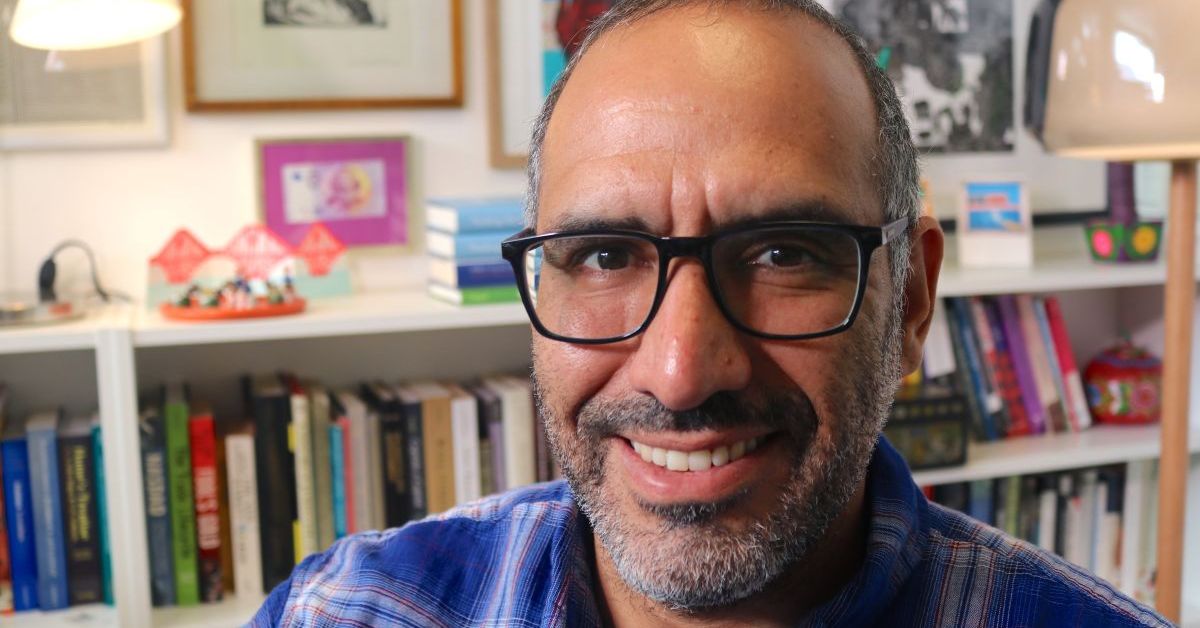 Sociologist Joins Hispanic Leadership Academy
Congratulations to Juan Pablo Pardo-Guerra of Sociology on being selected for the 2024-25 cohort of the Hispanic Association of College and Universities (HACU)’s Leadership Academy/La Academia de Liderazgo. The year-long fellowship will allow Pardo-Guerra to gain expertise to better support UC San Diego’s journey towards becoming a Hispanic-Serving Institution (HSI). “Building the future we collectively aspire to requires practical knowledge of the challenges and opportunities faced by higher education as well as a commitment to fully participate in our institutions' lives,” Pardo-Guerra said.
 Linguistic Society of America Fellows
Kudos to Grant Goodall of Linguistics, director of the Linguistics Language Program and director of the Experimental Syntax Lab, on being one of five to be selected as a Linguistic Society of America Fellow. The fellowship recognizes those who have “made distinguished contributions to the discipline.” Goodall earned his Ph.D. from UC San Diego’s Linguistics Department in 1984.
Business as Usual: How Sponsored Media Sold American Capitalism in the Twentieth Century
This new book by Caroline Jack of Communication explores how “corporations used mass media to teach Americans that capitalism was natural and patriotic, exposing the porous line between propaganda and public service.”
 Mass Education Was Designed to Quash Critical Thinking
In this Q&A with UC San Diego Today, Agustina Paglayan of Political Science discusses her new book “Raised to Obey: The Rise and Spread of Mass Education,” in which she argues that mass education systems were designed to create obedient subjects. The book received coverage by the San Diego Union-Tribune and Education Next.
Confession to a Computer? Experts Say ‘AI Jesus’ Can’t Perform Sacrament
John Evans of Sociology, associate dean of Social Sciences, served as a source for this USA Today fact check column.
Cheating Has Become Normal
What motivates students to cheat – is it easy access to generative AI, a disregard for university honor codes, or a lack of repercussions for their actions? Talia Waltzer, Psychology postdoc with Gail Heyman, analyzed several common scenarios, such as students feeling intense pressure to get good grades or perceiving their assignments as busy work, to understand how students decide to cheat and justify their actions. “Students are talking about assignments that they perceive as not being valuable for their career and learning goals, not advancing their skills, their long-term goals,” Waltzer told The Chronicle of Higher Education. Tricia Bertram Gallant, director of the Academic Integrity Office at UC San Diego, also shared new approaches that encourage students to complete their own work.
San Francisco’s Surprisingly Difficult Quest To Turn a Century-Old Highway Into a Park
Proposition K, which would turn a two-mile stretch of San Francisco’s Great Highway into a permanent recreation space, has sparked debates in the city about climate solutions and the effects of car-centric urban design. “In general, parks and open spaces seem to have more benefits than costs,” Mark Jacobsen of Economics told Grist. Encouraging people to replace their cars with bikes would help lower greenhouse gas emissions and noise pollution, plus those already living along the Great Highway could see their property values increase.
 The Power of Urban Design, Beyond Boundaries
KPBS Midday Edition interviewed Design Lab Director Mai Nguyen of Urban Studies and Planning about her work organizing the World Design Policy Conference and her role as a World Design Capital board chair. Nguyen also discussed how urban design can be a tool to address social inequalities, especially in regards to immigration, housing, and climate change.
Voters Were Fed Up Over Immigration. They Voted for Trump.
“Changes in the global migration system made it inevitable that there would be increased pressure on the U.S. border,” Wayne Cornelius of Political Science told the New York Times to explain the record high levels of migration that occurred during Biden’s presidency. The Times reported that many Democrats and independents have developed more conservative views on immigration, in part due to economic concerns, over the past four years as a result.
Adapting Public Opinion Polls to 21st Century Communication
Marisa Abrajano and Thad Kousser of Political Science spoke to KPBS about the importance of using modern communication modes – texting, social media, email – to survey public opinion in order to more accurately represent diverse populations. “We want to make sure, as a representative democracy, that legislators are being responsive to the needs of their constituents and this is where public opinion plays a valuable role in understanding those needs,” Abrajano said.
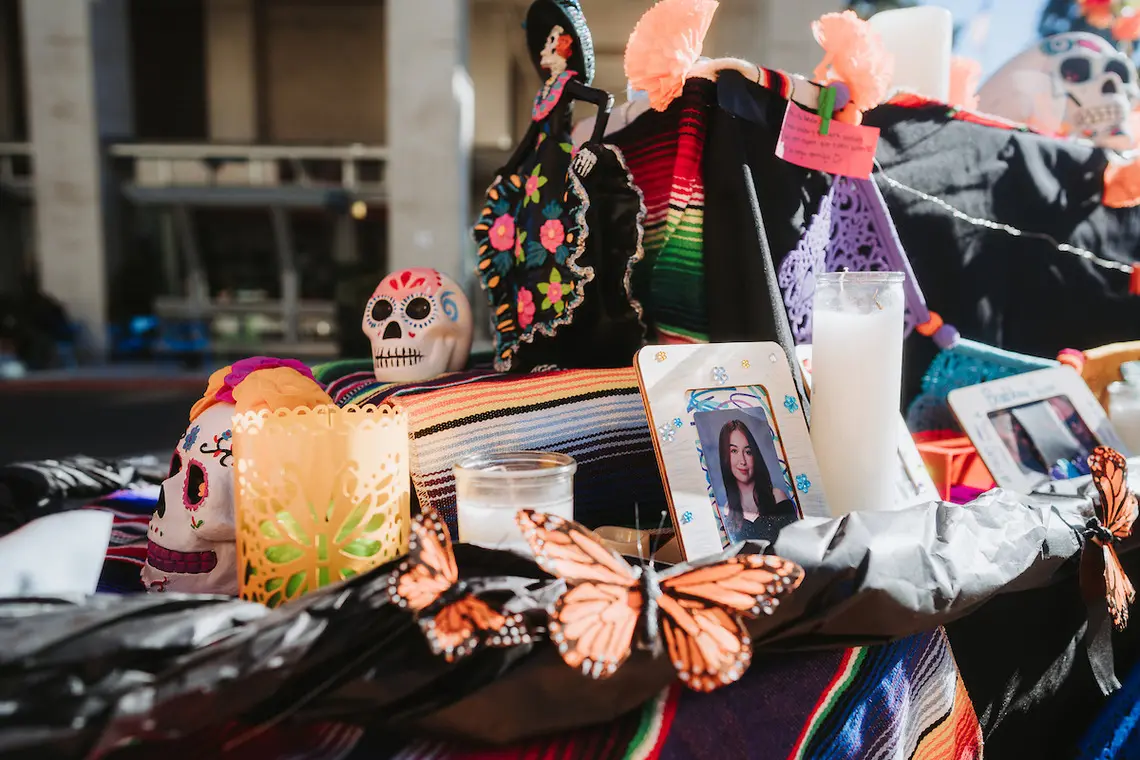 A Colorful Celebration of Life: Campus Honors Día de los Muertos
Psychology major Selena Tadeo and Cognitive Science and Psychology major Joseph Carmona told UC San Diego Today that participating in Día de los Muertos traditions on campus helped them feel close to home, even while being away from their families.
Republicans, Democrats Prepared for Legal Challenges to 2024 Election Results
Seth Hill of Political Science contributed to election coverage, including this pre-election piece from CBS 8.
Three Years After Amazon Arrived, This Tijuana Neighborhood Remains One of the City’s Poorest
After an Amazon warehouse opened in Nueva Esperanza, local leaders hoped the corporation would support projects to improve neighborhood conditions, including building a school. While Amazon and other American corporations operating in Tijuana have made donations to the school, these efforts are “symbolic and low scale” according to Teddy Cruz, director of urban research in the Center on Global Justice (CGJ). Cruz, an architect whose primary appointment is in Visual Arts, told KPBS that it would be more beneficial for these companies to help with long-term, collaborative projects, like creating solar energy infrastructure. Additionally, Fonna Forman of Political Science serves as the founding director of CGJ.
Otherwise Film Festival
The Otherwise Film Festival, held from November 13-16, was an innovative celebration of “marginalized voices and their unique cinematic narratives.” The festival was organized by Luciana Marcos Laberge, program coordinator for Latin American Studies and the International Institute, and Cambria Herrera, outreach coordinator for Latin American Studies and Sociology. Juan Pablo Pardo-Guerra of Sociology and Alexander Fattal of Communication were also event collaborators.
Could Tijuana and San Diego’s Cross-Border Economy Benefit From a Second Trump Term?
“Trump sees trade deficits as fundamentally harmful,” James Hamilton of Economics told the San Diego Union-Tribune as part of its Econometer panel. “I expect to see aggressive steps to reduce Mexican imports. Efforts to control immigration are also likely to inhibit some of the cross-border shopping that has boosted San Diego's economy.” Hamilton also contributed to the panels on whether San Diego should spend millions to lure big sports events and what experts are grateful for about the economy.
Double Registration and Strategic Voting Across State Lines
Gordon Dahl of Economics co-authored this Center for Economic Policy Research (CEPR) essay on how U.S. voters who are registered in multiple states, due to moving recently, choose where to vote from and how these voters affect election outcomes. Their research found that double registrants “disproportionately choose to vote in swing states and in states which automatically send out mail-in ballots.”
 Spanish-Language Social Media Increases Latinos’ Vulnerability to Misinformation
A new study by Marisa Abrajano of Political Science and collaborators at NYU shows that Latinos who rely on Spanish-language social media for news are significantly more likely to believe false political narratives than those who consume English-language content. “Latino voters are heavily courted in U.S. elections, and there has been much speculation on the reasons behind their increase in Republican support in the 2024 Presidential contest. Understanding their news and information sources on social media, especially as it pertains to political misinformation, is an important factor to consider,” Abrajano told UC San Diego Today. CNN's Reliable Sources newsletter featured the research as a “notable study.”
He’ll Try, but Trump Can’t Stop the Clean Energy Revolution
“State governments are going to be the clearest counterbalance to the direction that Donald Trump will take the country on environmental policy,” Thad Kousser of Political Science told Grist. “California and the states that ally with it are going to try to adhere to tighter standards if the Trump administration lowers national standards.” Separately, Kousser also shared his expertise on this campus panel “What a Second Trump Presidency Will Mean for Energy and Climate.” He also contributed election coverage to the Washington Post, Los Angeles Times, NBC San Diego, and Times of San Diego, among others.
The Brains Behind Today’s AI Revolution
In this UC San Diego Today Q&A, Terry Sejnowski, adjunct professor of Cognitive Science and member of CARTA (the Center for Academic Research and Training in Anthropogeny), discusses his integral role in the development of artificial intelligence and how neuroscience intersects with AI. Sejnowski’s primary appointments are in the School of Biological Sciences and Salk Institute.
XPRIZE Rainforest
Economics alum Tom Walla ’91 built and led the team that won the $5 million grand prize at the global XPRIZE Rainforest competition. Walla described that their innovative project “has the potential to revolutionize the rate at which we monitor and assess biodiversity with technology that's small enough to fit in a backpack.” In this YouTube video, learn more about Walla’s UC San Diego roots and economics background.
‘Poetry Is a People’s Art’: Jason Magabo Perez on His Vision for San Diego’s Literary Future
KPBS profiled alum Jason Magabo Perez to reflect on his two-year term as San Diego’s poet laureate, where he has strived to engage young artists and create community gathering spaces centered around poetry. “Poetry belongs to no one or no institution. It belongs to no university, no library or anything like that. Poetry is a people's art. It belongs to us,” said Perez, who earned a bachelor’s in Political Science and doctorate in Communication and Ethnic Studies.
 Fresh Faces on Campus: Welcoming UC’s Newest Undergrads
First-year Economics major Xochilt Carpio searched for universities where she could continue pursuing her passion for debate. “When I learned that UC San Diego had debate, I was amazed that you could join no matter your background or your financial situation. Here, the opportunities are open to everyone, and they take care of their students,” Carpio told the University of California. The Speech and Debate Team is housed in the Department of Communication.
 UC San Diego Prof Wins NIH Director’s New Innovator Award
Congratulations to Dhananjay “DJ” Bambah-Mukku of Psychology on winning the prestigious NIH Director’s New Innovator Award, which highlights innovative, impactful research by early-career investigators. The award will allow Bambah-Mukku to further his exploration of the infant nervous system and behavioral development. "Since joining UC San Diego, DJ has rapidly launched an ambitious research program focused on understanding the evolution of diverse forms of social organization,” John Serences, chair of the Department of Psychology, told UC San Diego Today.
Dean’s Leadership Council
The Dean's Leadership Council is comprised of visionary leaders in business, finance, technology, philanthropy and academia who are partnering with School of Social Sciences Dean Carol Padden to advance the school's strategic initiatives. The following members, many of whom are Social Sciences alumni, are now serving on the newly formed council: Sara Baxter ’90, Sue Hart ’86, Ralph Ho, Gary Jacobs ’79, Gary Kraut, Alondra Nelson ’94, Matt Posard ’89, and Sandra Timmons ’81.
The Hidden Politics of Disorder
The New York Times’ podcast “The Ezra Klein Show” featured research by Neil Gong of Sociology on the “tolerant containment” of social problems, exploring how cities approach mental illness in poor communities by tolerating drug use and crime in designated neighborhoods.
Living on Earth: Conversations with Dogs
Federico Rossano of Cognitive Science appeared on Living on Earth to discuss his groundbreaking research on dogs being able to comprehend and respond to certain human words and how motivation plays a role in these behaviors.
UC San Diego Launches New Graduation Requirement, Bolstering Climate Change Education
The Jane Teranes Climate Change Education Requirement, an innovative program implemented this fall, mandates that all incoming first-year students complete one course about climate change. Muir College Provost Wayne Yang of Ethnic Studies, who served as co-chair of the workgroup with Teranes, hopes the new requirement will inspire faculty across disciplines to incorporate climate change into their curriculum. “I don't know how we're going to solve climate change, but I have no doubt that our students are going to be part of it,” Yang told KPBS. Out of the 40 approved courses offered this year, many come from departments and programs in the School of Social Sciences: Anthropology, Critical Gender Studies, Economics, Global Health, Political Science, and Urban Studies and Planning. The program received coverage by The Guardian (UK) and ABC News – both of which highlighted the Critical Gender Studies course “Gender and Climate Justice” – and other outlets, including CNN, Inside Higher Ed, NBC7, and FOX5.
The Value of Bilingual Education
Maria Aragon of Education Studies spoke to KPBS about how bilingual education can enhance students’ self-esteem and cultural identity, and shared thoughts on California’s goal of having most students bilingual by 2040. “It's not just about teaching biliteracy and teaching academic skills in two languages,” Aragon said, “but also about generating this broader cultural awareness and valuing the cultural knowledge and experiences that these students bring with them into the schools.”
UC San Diego Alumna Evaluates Ethics in AI Algorithms
UC San Diego Magazine profiled Political Science doctoral alum Rumman Chowdhury ’17, CEO and co-founder of Humane Intelligence, about the potentially harmful implications of A.I. “Bias comes from the very basic data that the models are trained on,” said Chowdhury. “The effects are just manifesting preexisting cultural and social biases that exist in society today.” ICYMI, you can also watch Chowdhury’s TED Talk “Your Right to Repair AI Systems.”
How Sustainable Are Typical Electric Vehicle Batteries?
Isaac Martin, chair of Urban Studies and Planning, contributed to this UC San Diego Magazine discussion of the future of lithium battery production in Imperial County. Martin explained the need for additional public infrastructure and workforce training before any manufacturing facilities can be built.
 Is Democracy in Peril?
“The rise of democratically elected autocrats and their increasing involvement in the world is alarming and happening in every region of the globe,” Christina Schneider of Political Science told UC San Diego Magazine in a Q&A with Emilie Hafner-Burton of the School of Global Policy and Strategy. Schneider and Hafner-Burton serve as co-directors of the Future of Democracy Initiative at the UC Institute for Global Conflict and Cooperation (IGCC). Separately, Schneider and others published research in the Review of International Organizations, which you can learn more about in a UC San Diego Today story entitled “A New Kind of Authoritarianism: Democracy in Decline at Home and Abroad.”
Nobel Prize Winner, ‘Godfather of AI’ Geoffrey Hinton Has UC San Diego Roots
Geoffrey Hinton, winner of the 2024 Nobel Prize in Physics for his pioneering work in artificial intelligence, has many connections to campus. He conducted postdoctoral research in the late 1970s and early 1980s in the Department of Psychology, working with an interdisciplinary group of cognitive psychologists, linguists and others who would go on to found the world’s first Department of Cognitive Science in the School of Social Sciences. Hinton was part of the Parallel Distributed Processing (PDP) group with David Rumelhart and James McClelland, where they laid the foundation for the development of backpropagation, a critical algorithm that is used in most modern AI systems. His work with Terrence Sejnowski on Boltzmann machines was cited by the Nobel Prize committee. Hinton also won the first ever Rumelhart Prize, aka “the Nobel Prize of Cognitive Science,” which was established by cognitive psychology alumnus Robert Glushko. The Rumelhart Prize was also awarded to Hinton’s late colleague, neural networks pioneer Jeffrey Elman, who served as dean of the School of Social Sciences 2008-14. 
Conservative States Seek to End Protections for Immigrant ‘Dreamers’
As an appeals court debates the future of the Deferred Action for Childhood Arrivals (DACA) program, experts are questioning if DACA recipients would choose to stay in the country or leave if the program is overturned. “Every DACA recipient I’ve spoken to says that they’re going to do everything they can to stay here and continue to build their lives,” Tom Wong of Political Science told the New York Times. Wong, founding director of the U.S. Immigration Policy Center, conducts an annual survey of DACA recipients.
Fears of a Global Oil Shock if the Mideast Crisis Intensifies
What are the potential ramifications of an Israeli strike on Iranian oil – will oil and gasoline prices surge globally? “We have precedent for that kind of supply shock,” Eli Berman of Economics told the New York Times, citing the 2019 drone strike on oil production sites in Saudi Arabia. Berman, who is also a research director at the UC Institute on Global Conflict and Cooperation, added: “That attack did not result in a regional tit for tat.”
‘The Limitation Effect’: Study Examines Effect of Censorship in Schools
Mica Pollock of Education Studies and colleagues at NYU analyzed how parents and educators have responded to Florida censorship laws passed since 2021. Pollock told the Florida Phoenix that the research “sounds the alarm about how K-12 system actors pressured by state restriction policy can reduce education opportunity, both to sub-groups of students and in education systems writ large.” Among these limited opportunities include conversations about LGBTQ and Black experiences, access to AP courses, and resources for students with disabilities. Pollock added that this “should worry any American across political lines.”
US Law Entitles Immigrant Children to an Education. Some Conservatives Say That Should Change
Forbidding children from receiving public education based on their immigration status used to be considered “too far to the right and too far fringe,” Tom Wong of Political Science told ABC. “But now,” Wong, founding director of the U.S. Immigration Policy Center, added, “we are seeing a political climate where previously fringe policies are becoming mainstream.”
Black and Latino Voters Should Stick With the Democrats
Washington Post opinion columnist Perry Bacon Jr. cited research by Zoltan Hajnal of Political Science and the Yankelovich Center for Social Science Research showing that Black and Latino Americans make greater economic gains under Democratic presidents than Republicans. You can read more about the research in this UC San Diego Today article.
Scientist Looks for DNA Evidence to Trace the Migration of His Polynesian Ancestors
KPBS featured how Keolu Fox of Anthropology is using genetics to create timelines and maps documenting ancient Polynesian migration between islands in the Pacific. Some of the collected data indicates that Polynesians made it to South America hundreds of years pre-Columbus. ICYMI, Fox separately gave a TED Talk on how plant DNA can be used to create data centers.
Trump’s Plan to Deport Millions of Immigrants Would Cost Hundreds of Billions, CBS News Analysis Shows
Abigail Andrews of Urban Studies and Planning told CBS News that Trump’s assumption that local law enforcement will comply with deportation policies is inaccurate. “We know from the last couple of decades that one of the major ways for cities and states to dissent around immigration processes has been for the police to cooperate or not cooperate with ICE,” Andrews said. Deportation also has detrimental effects on immigrants and their families, Andrews emphasized. "The economic cost will be extremely high, but the social, emotional, and community costs will also be extraordinarily high.”
Election Officials Can Boost Voter Trust in Delayed Results with Early Communication
In recent U.S. elections, results often took days to finalize, fueling voter distrust in the electoral process and ballot outcomes. Now, research from the Yankelovich Center for Social Science Research shows that a simple, proactive message from election officials — ahead of Election Night — can effectively reduce this distrust. “Election officials can reassure voters that delayed election results aren’t a sign of fraud, but they should proactively communicate this before the election,” said Political Science doctoral alumnus Mackenzie Lockhart, now a postdoc at Yale University. In addition to Lockhart, study co-authors are Yankelovich Center co-director Thad Kousser, Jennifer Gaudette, Seth J. Hill, and Laura Uribe of Political Science. The study received coverage by the San Diego Union-Tribune, CBS8, NBC San Diego, Times of San Diego, Electionline Weekly, and Election Law Blog.
UCSD Speech and Debate Team: Picking Up Where They Left Off
Congratulations to the Speech and Debate Team, sponsored by the Department of Communication, on winning a Tournament Championship at the Jannese Davidson Memorial Tournament!
Purina Invests $200,000 in Interspecies Communication Research Partnership
Purina announced grant funding to Federico Rossano of Cognitive Science and the Comparative Cognition Lab that aims to “help give dogs a voice.” The partnership was covered by CBS8.
How Democratic States Are ‘Trump-Proofing’ Ahead of Election Day 2024
Democratic leaders made preparations for their worst-case election outcome, protecting state policies and programs they fear could be under attack by a future Trump administration, including same-sex marriage rights, access to abortion pills, and climate change initiatives. “This has been the eternal battle,” Thad Kousser told the Washington Post. “And in our modern polarization, after every presidential contest, half the nation wants to move in the opposite direction of the president.” Separately, Kousser contributed his expertise to election coverage in the Los Angeles Times, KPBS, Cal Matters, CBS8, and Voice of San Diego, among others.
How Mexico’s Migrant Crackdown Influences the U.S. Election
Mexico’s increased efforts to apprehend and transport non-Mexican migrants to its southern regions, away from the U.S. border, have taken some heat off the border debate in the U.S. presidential race. Wayne Cornelius of Political Science told Reuters that this has been “absolutely crucial” in contributing to decreasing U.S. migrant apprehensions.
Japan’s Long-Governing Party Loses Its Majority
Megumi Naoi of Political Science contributed expertise on the Japanese parliamentary elections to the New York Times. “The L.D.P. should be pumping money into the city and talking more about the cities and the hardships of child-rearing voters,” Naoi said.
 Was California Too Quick to Abandon Nuclear Power?
“Solar and wind are intermittent power sources, and require a backup when the sun’s not shining and the wind’s not blowing. Nuclear is a better alternative than natural gas, and natural gas is much better than coal,” said James Hamilton of Economics, a regular contributor to the San Diego Union-Tribune’s Econometer panel. “What sense does it make for California to shut down our nuclear power plants and then import electricity from coal-fired power plants in Arizona?” Hamilton also contributed to the expert panels on whether Mayor Gloria should receive emergency powers to clear homeless encampments, whether San Diego’s inflation rate will drop below 2%, and San Diego’s plan to construct more townhouses.
Fellows With Lived Experience Aid UC San Diego Homelessness Hub
The Homelessness Experienced Action Research Training (HEART) Fellows program, led by the Homelessness Hub in Urban Studies and Planning, was featured in UC San Diego Magazine.
Communication Department Launching New Media Industries Major
The Department of Communication is launching a new major, Media Industries and Communication (MIC), starting Winter Quarter 2025. The program provides students with the tools to participate in and analyze “an increasingly complex media and communication landscape.” Building off of the existing Communication major, it incorporates additional practice-based courses and opportunities to study a vast array of cultural industries including film, tourism, A.I., journalism, and advertising. Stay tuned for more about the new major soon!
2024 Cultural Heritage Champion
Refugee San Diego, a website co-created by Yến Lê Espiritu of Ethnic Studies, has been recognized by the San Diego County Archives as a Cultural Heritage Champion. The site documents the history of refugee arrivals in San Diego and highlights refugee experiences through its collection of community resources and creative work.
 UC San Diego Announces 2025 Lifetime Legacy and Chancellor’s Medal Awardees
Ken Kroner ’88, doctoral alum of Economics, is being recognized with a Chancellor’s Medal for “ensuring social good and sustainable futures with leading-edge financial research.”
Why the #&@% Are Candidates Swearing So Much These Days?
Ben Bergen of Cognitive Science, associate dean of the School of Social Sciences, told the Washington Post that profanity in politics “almost seems like it’s been normalized,” as both Trump and Harris have been swearing frequently throughout their 2024 presidential campaigns without much backlash. But how does hearing this profanity actually affect listeners? “There’s a neurological and physiological reaction that happens when people are exposed to words that they themselves judge to be taboo,” Bergen explained. “You get blood flow to the extremities, your pupils dilate, your blood pressure increases. And you get a hit of adrenaline.”
‘Li ving Chronically’ Podcast to Launch in Winter 2025
An exciting addition to the hands-on learning opportunities in the Department of Communication: an upcoming podcast called “Living Chronically” that will highlight the experiences of chronic disease patients. Doctoral alumnus Matt Dewey will teach the accompanying course, where students will hone their audio-visual production skills to create the podcast in the department’s Democracy Lab. Brian Goldfarb of Communication, director of the public service minor in Marshall College, will act as managing producer of the series.
WTO Announces Winner of 2024 Essay Award for Young Economists
Congratulations to Economics doctoral alumnus Carlos Góes ’24 on receiving the World Trade Organization’s 2024 Essay Award for Young Economists for the paper “Trade, Growth, and Product Innovation.” The paper examines the mechanisms through which trade integration can lead to product innovation. Note: A UC San Diego Economics alum has won the award for the second year in a row: Xiao Ma ’21 won the award in 2023. Both winners were Ph.D. students of Marc Muendler.
 New York Film Festival Features Davis Film
“Compensation,” the renowned 1999 film by Zeinabu irene Davis of Communication, is having a world premiere of its 4k restoration at the New York Film Festival in October. Described by The New Yorker as “one of the finest American independent films ever,” the film will be shown in theaters nationwide beginning in February 2025.
From California to Capitol Hill: UC San Diego’s Federal Policy Interns are Shaping the Future
Political Science undergraduate students John Paculdo Koenigshofer and Maya Perez-Diaz spent 10 weeks in Washington D.C. as our university’s first federal policy interns, where they advocated for UC San Diego’s interests and experienced firsthand how policymaking works through personalized capstone projects. “The federal policy internship helped me focus on Asian American and Pacific Islander issues, and that’s really informed how I’ve conducted myself as a student leader back on campus,” Koenigshofer, a Key into Public Service Scholar, told UC San Diego Today. Perez-Diaz, whose capstone centered on military mental health care, added: “It was life-changing for me. This opportunity opened so many doors and I couldn’t be more thankful for it.” Her experience was so inspiring that after graduating in June, she relocated to Washington, D.C. to continue working in civic engagement.
Famed Pacific Island’s Population ‘Crash’ Debunked by Ancient DNA
A new study of ancient genomes suggests that the Rapanui people may have reached the Americas before Europeans did. This does not come as a surprise to Keolu Fox of Anthropology. “We’re confirming something we already knew,” Fox told Nature News. “Do you think that a community that found things like Hawaii or Tahiti would miss a whole continent?” The story was also picked up by Smithsonian Magazine.
 Why Do Apes Make Gestures?
Scientists have observed chimpanzees and other apes making more than 80 meaningful gestures, but where do these behaviors come from? Are they habitual, genetic, or something else? The New York Times reports on new research co-authored by Federico Rossano of Cognitive Science that argues apes “do not inherit specific gestures, but they do inherit the sense that they can use gestures to communicate with other chimpanzees.”
Why Playing It Safe on Immigration and Crime Could Be a Big Risk for Harris
“I think that Democrats have been scared away [from] talking about immigration because of the record numbers of arrivals at the southern border,” Tom Wong of Political Science told CNN in regards to Harris not openly criticizing Trump’s mass deportation plans. Research by Wong, founding director of the U.S. Immigration Policy Center, showed that while mass deportation is initially popular, support drops when people learn that it could target long-time residents who haven’t committed any crimes and may have U.S. citizen children. “Once we can put a human face on the idea of an undocumented immigrant being rounded up and deported, then the general public takes a step back.”
Workers vs. the Robots: Minimum Wage and California’s Fast Food Offerings
Some economists are concerned that California’s raised minimum wage for fast-food restaurant workers ($20 an hour as of April 2024) could increase teen unemployment and stir fears of robots replacing human workers. Marc Muendler of Economics told SD Metro that since customers still prioritize quality service at restaurants, the new wage will not lead to drastic employment changes. “If you go to a restaurant, you don’t want a robot. There’s no easy way to make restaurant workers more productive and more efficient.”
An Ethical Way Forward for Indigenous Microbiome Research
A Nature News piece about the long history of Indigenous communities being exploited for their genetic data includes an in-depth interview with Keolu Fox of Anthropology, who says, among other things: “What we have seen is just an egregious abuse of power, an egregious culture of extraction.”
Did the Federal Reserve Go Too Far with Its Half-Point Reduction?
“Everybody was expecting the Fed to begin reducing rates starting with a one-quarter- to one-half-point cut at the last meeting,” James Hamilton of Economics told the San Diego Union-Tribune’s Econometer panel. “This just means that the Fed is going to get to a lower level of interest rates a little more quickly than many of us expected. It’s a sign that the Fed believes inflation is getting under control.” Hamilton, a regular contributor to the expert panel, also commented on the likelihood of a light rail connection to San Diego’s airport, whether taxes should be removed on tips, and how to address battery storage fire concerns.
The Not-So-Supermajority
Thad Kousser of Political Science told Politico that California’s state Legislature has not overturned a governor’s veto in over 40 years, despite having the power to do so and being composed of over two-thirds Democrats. Why? Because of fear. “You’ll bet the governor is going to exact revenge,” Kousser said. Separately, Kousser contributed election coverage to CNBC, KPBS, NBC7, and Bay Area News Group.
 Does the U.S. President’s Party Matter to Black and Latino Economic Wellbeing?
A new report from the Yankelovich Center for Social Science Research, authored by center co-director, political scientist Zoltan Hajnal, uniquely analyzes how the U.S. president’s party affects Black and Latino employment, poverty, and median income rates. The results are drastic, revealing kitchen-table gains for Black and Latino Americans under Democratic presidents without apparent losses for whites.
With an Election Looming, the U.S. Is Approving Citizenship Applications at the Fastest Speed in Years
The Los Angeles Times highlighted research from the U.S. Immigration Policy Center headed by Tom Wong of Political Science.. Key findings include that 97% of naturalized citizens in swing states and California said they are likely to vote in November’s election, and that these new voters have diverse political leanings. 54% of survey respondents supported Harris, while 38% supported Trump.
Kamala Harris' Economic Plan
A survey of top 40 macroeconomists, run by the Financial Times and Allan Timmermann of Economics together with colleagues at the University of Chicago and Johns Hopkins, is cited in Vice President Kamala Harris’ economic “New Way Forward” plan.
The Real Trump Mystery
New York Times opinion columnist Thomas Edsall cites research by Gary Jacobson of Political Science showing that Republicans and Trump supporters downplay the significance of Trump’s criminal charges by using, he argues, denial, or “motivated ignorance reinforced by right-wing pundits and social media entrepreneurs.”
UC San Diego Welcomes the Newest Tritons
First-year Psychology undergraduate student Angel Do and Education Studies undergraduate student Alyssa Theurer spoke to UC San Diego Today about their college ambitions and what inspired them to choose their majors. “The program provides the unique experience of gaining experience in the classroom during undergrad,” Theurer shared on her decision to pursue Education Studies at our university. “With my interest in neurobiology and psychology, I completed independent research with the assistance of a UC San Diego professor,” Do added. “Since then, I was determined to start a new life at UC San Diego!”
Interior Design Makes a Difference in Keeping People Housed
The San Diego Business Journal featured an evaluation by the Homelessness Hub in Urban Studies and Planning of Humble Design, a nonprofit that designs and furnishes living spaces for formerly homeless individuals and families. Researchers found that almost all recipients stay housed after receiving Humble Design home makeovers. “What we discovered is that having a sense of home – rather than merely having access to housing – improves client physical, mental, social and financial health,” said Stacey Livingstone, doctoral alum of Sociology, now a Homelessness Hub postdoc.
Design for San Diego 2024
The annual civic design challenge called D4SD is focused this year on designing innovative solutions to housing insecurity and homelessness. Steven Dow of Cognitive Science is one of the event’s organizers, and the pitch submission deadline is October 25.
 Dogs Understand Words from Soundboard Buttons, Study Reveals
A new study published in PLOS ONE reveals that dogs trained with soundboard buttons can indeed comprehend specific words, producing contextually appropriate responses. This is the first empirical study emerging from the world’s largest longitudinal project on button-trained pets, led by Federico Rossano of Cognitive Science, head of the Comparative Cognition Lab. The study has received significant coverage by many outlets, including the Washington Post, NPR’s Short Wave podcast and All Things Considered, The Guardian (UK), ABC (Australia), Newsweek, Salon, Daily Mail, Men's Journal, CBC (Canada), MSN, Psychology Today, NBC San Diego, and the San Diego Union-Tribune. It was also chosen as a top story by the University of California-wide newsletter, Fiat Lux. Separately, if you have Netflix, Rossano is also featured in their popular documentary "Inside the Mind of a Dog."
Comic-Con 2024: Where Pop Culture Meets Science
If you missed the Comic-Con panels hosted by the Fleet Science Center that featured School of Social Sciences faculty, here are the videos: "For All Mankind – Historic Fiction, Real Science" with Juan Pablo Pardo Guerra of Sociology and "Asimov’s Foundation: Math, Morality and Making Humans" with sociologist John Evans, associate dean of Social Sciences. Guerra’s group explored the new era of the space race, while Evans’ session discussed how advances in math and science could change our notions of humanity and lead to longer lifespans.
 How Are Insurance Markets Adapting to Climate Change? New Study Explores the Impact of Wildfires on Home Insurance
As natural disasters increase in frequency and intensity due to climate change — with annual losses in the U.S. now topping $120 billion — the homeowners insurance market is facing unprecedented challenges. A new working paper from the National Bureau of Economic Research (NBER), co-authored by Judson Boomhower of Economics, delves into how insurance companies are responding to increased climate risks, particularly wildfires, which have become the fastest-growing source of catastrophe-related damages in the United States. The study, covered in Bloomberg, The Hill, and LA-area NPR affiliate LAist, found "striking variation" in how insurers priced wildfire risk.
Inaugural Chancellor’s Interdisciplinary Team Catalyst Fund Awardees Announced
Alan Daly of Education Studies and Jennifer Nations of Urban Studies and Planning are collaborators on two of five projects that received awards from the Chancellor’s Catalyst Fund. This new fund highlights multidisciplinary collaborations and aims to advance innovative research. Daly is collaborating with Parinaz Naghizadeh of Electrical and Computer Engineering on catalyzing AI and machine learning for equity, education and knowledge mobilization, and Nations is collaborating with David Moore of Psychiatry on building cross-campus capacity to reduce HIV and other health-related disparities among people experiencing homelessness.
Are San Diego Jobs at Risk From AI?
"AI will change the way many of us work. It will eliminate some jobs. But it will also create new jobs, particularly for those who develop and apply the new technology," James Hamilton of Economics told the San Diego Union-Tribune’s Econometer panel. "AI and people need to work together to be most effective." Hamilton, a regular contributor to the panel, also shared his expertise on whether the overvaluation of homes makes home ownership a risky decision, on whether a Harris administration could spur construction of 3 million new homes, on Comic-Con demands for reduced hotel room prices, on whether a U.S. economic slowdown would be a hard or soft landing, and other topics.
2024 Dissertation Year Fellowship Award Recipients
Congratulations to Cognitive Science doctoral student Mia Borzello and Ethnic Studies doctoral student Daniel Rios on being selected to receive the prestigious UC President’s Dissertation Year Fellowship!
 Rising UC San Diego Scientists Lead the Way with NSF CAREER Awards
Congratulations to Holly Okonkwo of Ethnic Studies on being one of eight UC San Diego faculty to receive a National Science Foundation’s Faculty Early Career Development Program (CAREER) award! Okonkwo will use this award to research ways to make STEM education more equitable to ensure it better meets the needs of Black undergraduate students, prioritizes diverse knowledge sources, and equips students with essential leadership skills.
As More Seniors Head Online, Efforts Are Needed to Help Their Digital Media Literacy Skills
Research shows that older Americans are more likely than any other age group to engage with and share misleading or false political content online, but why? Nadia Brashier of Psychology told CBC (Canada) that seniors "expect to see credible content because they assume 'my close friends and my family wouldn't share false stuff.’" To help improve their digital media literacy, Brashier advocated for tech companies to incorporate seniors’ feedback and needs into product development and educational interventions that teach older adults about how to fact-check online content.
Bad Bunny and Reggaeton Have Sparked a Puerto Rican Spanish Renaissance
The global popularity of Puerto Rican musicians has inspired fans to learn Puerto Rican Spanish to better understand their favorite tracks. Ana Celia Zentella of Ethnic Studies told the New York Times that the dialect has been historically looked down upon and seen as representing the underclass. "But what Bad Bunny has done is say, ‘Not only am I not ashamed of this, but this is what I’m proud of,’" Zentella said. "He and others are coming along and making it known that Puerto Rico can be proud of its beautiful way of speaking."
 Climate Crisis Survey Reveals Scientists’ Willingness to Act – and Barriers to Action
A large-scale survey led by investigators at the University of Amsterdam has found that scientists worldwide and across disciplines are extremely concerned about climate change and its cascading effects on every sphere of life. Many scientists surveyed report a willingness to make lifestyle changes and engage in advocacy and protest, but also see key barriers that can limit action. Adam Aron of Psychology is a co-author of the study published in the journal Nature Climate Change.
Trump and Other Republicans Call Kamala Harris a Failed ‘Border Czar.’ Here’s the Truth
"‘Border czar’ is a gross mischaracterization of Harris’ role in the administration’s immigration policymaking," writes Wayne Cornelius of Political Science in a Los Angeles Times opinion piece. "She was never tasked with fixing border enforcement. In fact, her remit was to promote a different, complementary approach to controlling unwanted immigration: addressing why migrants felt it necessary to leave their homes." Cornelius cites Harris’ Partnership for Central America as "a narrowly focused root-causes strategy" that saw "tangible results." Separately, Cornelius spoke to the New York Times about the harmful implications of Biden’s border crackdown.
The CHIPS Are Down – Why STEM Employers Must Bet on Women
"Many women are earning STEM degrees, but employers are not attracting them or retaining those who do get hired," John Skrentny of Sociology wrote in a Newsweek opinion piece on the 2022 CHIPS and Science Act. "If policymakers aim to rebuild America's advantage in the global innovation race, it's vital for STEM employers to create working conditions that attract, retain, and advance women," Skrentny continued, citing harassment, bias, and a lack of female leadership and family-friendly policies as some of the factors that steer women out of STEM. Separately, Skrentny spoke to Southern California News Group about his book, "Wasted Education: How We Fail Our Graduates in Science, Technology, Engineering and Math."
California's Exodus Could Get Even Worse
California’s population has decreased by 500,000 over the last three years, and experts are wondering why so many Californians are moving to other states. "All the data I've seen suggest that housing is the driving issue. A typical house in California costs twice as much as a typical house in Texas, the most common destination for California out-migrants," Tom Vogl of Economics told Newsweek. "California is also the epicenter of homelessness in the US. The homelessness crisis is another byproduct of unaffordable housing as well as another push factor that may drive residents to leave."
Nonprofit Humble Design Breaks Cycle of Homelessness by Furnishing New Homes
Researchers from the Homelessness Hub in Urban Studies and Planning evaluated the effectiveness of Humble Design, a nonprofit that designs and furnishes living spaces for formerly homeless individuals and families. "Our findings are remarkable: nearly 98% of Humble’s clients stay housed after receiving Humble’s services," Stacey Livingstone, Sociology PhD alum and Homelessness Hub postdoc, told Times of San Diego. The study, also covered by KPBS, found that eight in 10 Humble Design recipients felt more confident and secure after their homes were furnished.
 Formerly Incarcerated and System-Impacted Students Thrive with Community and Camaraderie
At UC San Diego, formerly incarcerated and system-impacted students – those who experience the negative fallout of a close relative’s incarceration, for example – are beating the odds stacked against them with the help of a robust scaffolding of support and nurturing community offered by the Underground Scholars Initiative (USI) and Triton Underground Scholars (TUS). UC San Diego Today highlighted the involvement of USI faculty advisor Michael McCullough of Psychology and alumna Colleen Murphy ’23 (Sociology, Political Science), as well as many other Social Sciences students and alumni, including Sociology major Margaret Grant and Anthropology alum Briana Gomez ’24.
Fertility, Migration, and Altruism
In this Faculti.net video, Eli Berman of Economics presents his research on Soviet Jews who migrated to Israel and the complex interplay of migration costs and their effects on intergenerational altruism and fertility.
Summer Research Conference Draws International Crowd
UC San Diego Today highlighted Cognitive Science major Austin Hutton and Anthropology major Lucia Rejzek, two undergraduate research assistants who were among 400 presenters at the 2024 Summer Research Conference (SRC). Hutton works in Bradley Voytek’s lab, where they combine cognitive science, neuroscience and data science research to better understand the brain. "This is the first time in my academic career that I get to work on things that really matter," Hutton said about his impactful experience at SRC. Rejzek, a member of Amy Non’s Epigenetic Anthropology Laboratory, helps examine disparities in mental health and emotional resilience between Mexican American mothers and their children. "What is the purpose of research if it’s not accessible to the general public?" Rejzek added. "Conferences force you to condense a super broad and complex project into something accessible for the public to absorb and listen to."
When Civilizations Collapse
Thomas Levy of Anthropology reviewed the new book "After 1177 B.C.: The Survival of Civilizations," which details the collapse of the Late Bronze Age and reveals how ancient societies adapted to climate change, social disruption, and periods of vulnerability. "With today’s challenges of climate change, pandemics, warfare, supply chain disruptions, and poor leadership, we can only hope that we will avoid the risk of cascading failure and systemic collapse faced by so many LBA societies," Levy wrote for Science.
Elon Musk’s ‘Final Straw’ Moment Marks Political Transformation
Elon Musk’s shocking summer announcement of plans to move X and SpaceX to Texas from California is "qualitatively different from both what we’ve seen from other businesses and even what we’ve seen from Musk before," Thad Kousser of Political Science told Bloomberg. Separately, Kousser spoke to the Bay Area News Group about the 'Kamalanomenon' and contributed expertise to election and state political coverage by the Los Angeles Times, San Diego Union-Tribune, LAist, KPBS, among other outlets.
Elon Musk Is Very Publicly Trying to Recruit His Billionaire Peers to the Trump-Vance Camp
Daniel Hallin of Communication spoke to Business Insider about Elon Musk’s possible motivations for endorsing the campaign of former U.S. President Trump: Musk "probably thinks Trump is likely to win and wants to have a friend in power, both because it is fun to be an insider, and because he has lots of business interests that are affected by government."
 California Has Problems. AI Can Help Solve Them
This University of California feature story includes Molly Roberts of Political Science, who researches data science and the politics of information.
How Would Mass Deportation of Migrants Under Trump Actually Work?
"There is no logistical way to track down 10 to 12 million undocumented immigrants with the ICE employees they currently have," Abigail Andrews of Urban Studies and Planning told NBC News. Andrews, skeptical about the feasibility of Trump’s mass deportation plans, shared that the cost of detaining and housing millions of deportees "would be astronomical."
Kousser Appointed Interim Associate Dean in Division of Graduate Education and Postdoctoral Affairs
Thad Kousser of Political Science and the Yankelovich Center for Social Science Research will serve as associate dean in the Division of Graduate Education and Postdoctoral Affairs during the 2024-25 academic year, providing guidance to graduate students and assisting the development of new graduate programs.
American Political Science Association (APSA) Awards
Wayne Cornelius of Political Science received the 2024 Migration and Citizenship Career Achievement Award of the American Political Science Association for outstanding scholarly publication, teaching, professional service, and public scholarship. Three other Political Science faculty also received APSA awards: Kaare Strom won the Barbara Sinclair Legacy Award for a lifetime of contributions to the study of legislative politics, Sam Kernell won the Presidents and Executive Politics Career Service Award, and Agustina Paglayan won an Luebbert Best Article Honorable Mention. Congratulations to all!
Homelessness Trends and Overnight Emergency Services in San Diego County
A study conducted by the Homelessness Hub in Urban Studies and Planning found that there was a substantial increase in the number of people experiencing homelessness in San Diego County from 2016 to 2024, and that the San Diego region does not have enough emergency shelter beds to service all of the people in need of short-term housing accommodations.
AI or Human? GPT-4 Fools People During Online Conversations
Under the supervision of Ben Bergen of Cognitive Science, doctoral student Cameron Jones created online simulations to test whether human participants could determine if they were interacting with a GPT-4 AI model or another human after a five minute conversation. "Although real humans were actually more successful, persuading interrogators that they were human two-thirds of the time, our results suggest that in the real world, people might not be able to reliably tell if they’re speaking to a human or an AI system," Jones told Interesting Engineering.
Getting Cash Transfers Right
Paul Niehaus of Economics appeared on a VoxTalks Economics podcast, produced by VoxEU and the European Center for Economic Policy Research, to discuss how cash transfers to individuals and households can be best used to alleviate poverty.
2024-25 Coro Southern California Fellows
Congratulations to Political Science and Psychology alum Genavieve Koenigshofer ’24 on being selected for Coro’s Fellows Program in Public Affairs! While at UC San Diego, Koenigshofer gained experience advocating for many causes, including immigration reform, affordable housing, and improved services for disabled students, through her work with Associated Students and the ACLU. Driven by her passion for youth well-being, Koenigshofer will pursue a Master of Public Policy at UC Berkeley after the fellowship.
 HEART Fellows Bring Unique Insights to Homelessness Research
The Homelessness Experienced Action Researcher Training (HEART) Fellowship is a new initiative launched by the Homelessness Hub in Urban Studies and Planning to collaborate on research with people who have lived experiences with homelessness. "The HEART Fellows bring perspectives and bodies of knowledge that complement our own and enrich the research. They think of questions that we don’t think of. They also act as connectors and trust bridges to the broader community of people experiencing homelessness in San Diego," says Leslie Lewis in this UC San Diego Today feature. The HEART fellowship is supported in part by a grant from the Yankelovich Center for Social Science Research.
30 Years of Critical Funding for Junior Faculty
The Hellman Fellows Program recognizes promising junior faculty and provides funding to support their research and progress towards tenure. Congratulations to the Social Sciences faculty selected for the 2024-25 cohort: Fabian Eckert of Economics, José I. Fusté of Ethnic Studies and Critical Gender Studies, Neil Gong of Sociology, Kelema Lee Moses of Urban Studies and Planning, Holly Okonkwo of Ethnic Studies, and Haijun Xia of Cognitive Science.
UC San Diego Speech and Debate Team Shines on National Stage
The Speech and Debate Team, sponsored by the Department of Communication, has won three national championship titles at the 2024 Biennial Tournament! Political Science undergraduate students Jared Hoffart, Felip Gerdes, and Carter Castillo won first place in their debate formats at the competition. Head coach Robert Campbell told UC San Diego Today, "For a program only six years old, I am simply amazed by the talent on this team. To win so many awards at the prestigious Pi Kappa Delta national tournament clearly places UC San Diego as one of the top speech and debate teams in the country." Team captain Hoffart added, "It was incredibly rewarding to have years of hard work recognized at the national level."
 Moving Beyond Limits
Communication alum Christina Lambert, now a licensed psychologist and counselor for UC San Diego’s Faculty and Staff Assistance Program (FSAP), shared her expertise on neurodivergence and creating neuroinclusive workplaces with UC San Diego Today. "Recognizing that we have thousands of neurodivergent staff, faculty and students is foundational," Lambert said. "There is no need to ask people if they identify as neurodivergent or to make assumptions about why people behave or communicate the way they do. Instead, we can ask, ‘What is an ideal environment for you to work optimally?’ ‘How can we support each other?’ ‘How can I best partner with you to bring out your strengths?’"
TritonGPT, Shaping the Future at UC San Diego Through Student Innovation
Cognitive Science undergraduate students Bradley Grace and Edwin Ruiz played integral roles in the creation of TritonGPT, UC San Diego’s very own suite of AI assistants that is tailored to provide information and support unique to our university’s needs. "We’ve seen a lot of interest in TritonGPT from staff and students alike, and we are still only scratching the surface of what is possible with its rollout," Grace told the University of California IT Blog. Grace added that the TritonGPT student team was committed to prioritizing data integrity. "As a fully self-hosted application, data never leaves UC San Diego’s networks, providing a secure environment for our users."
UC San Diego Expands Undergraduate Library Research Prize
Political Science undergraduate student Jingyi Chen received a 2024 Undergraduate Library Research Prize for their project "Domestic Abuse and Women's Legal Consciousness: Cases from Magazines and Newspapers in China in the 1930s." Congratulations!
 The Basement Celebrates Student Entrepreneurship with Demo Day-Pitch Competition 2024
Social Sciences students shined in the Demo Day and Pitch Competition at the Basement. Economics major Paulina Laba won first place for the startup she co-founded, LockPod, that designs next-level bike lockers to prevent bike and scooter theft. "I came to [The Basement] with just a drawing on my iPad, and now it’s grown into a full company," Laba told UC San Diego Today. The story also highlighted projects by Cognitive Science major Samantha Sayson, Economics major Harris Dalal, and Economics and Psychology major Richard Collins Billhardt.
What Pride Means to Us
In celebration of Pride Month, Psychology undergraduate J Hernandez, Cognitive Science and Psychology undergraduate V Narredula, and Sociology and Critical Gender Studies undergraduate Kira Esguerra opened up about their experiences as student leaders in LGBTQ+ spaces on campus. "Having the opportunity to be who I want to be means so much more to me than just an event in the month of June," Hernandez told UC San Diego Today. "Pride is challenging the ways that we think about gender and sexuality, including their intersections with race, class, immigration status, able-bodiedness and more," Esguerra added.
Transfer Students Triumph in the Class of 2024
The University of California highlighted Manuel Vasconcelos, a Class of 2024 Cognitive Science major, and his unique journey as a transfer student. "When I realized that, unlike my parents, I do have the privilege as an American to go to school and get an education, I thought, why would I not do it? Why would I not do the most I can do?" Vasconcelos said. During his time at UC San Diego, Vasconcelos participated in STARTneuro, a competitive program that supports transfer students in neuroscience, and currently works as a research assistant in the Salk Institute’s Tye Lab for systems neurobiology. After graduation, he will continue his research at the Tye Lab as a full-time lab tech while applying for Ph.D. programs.
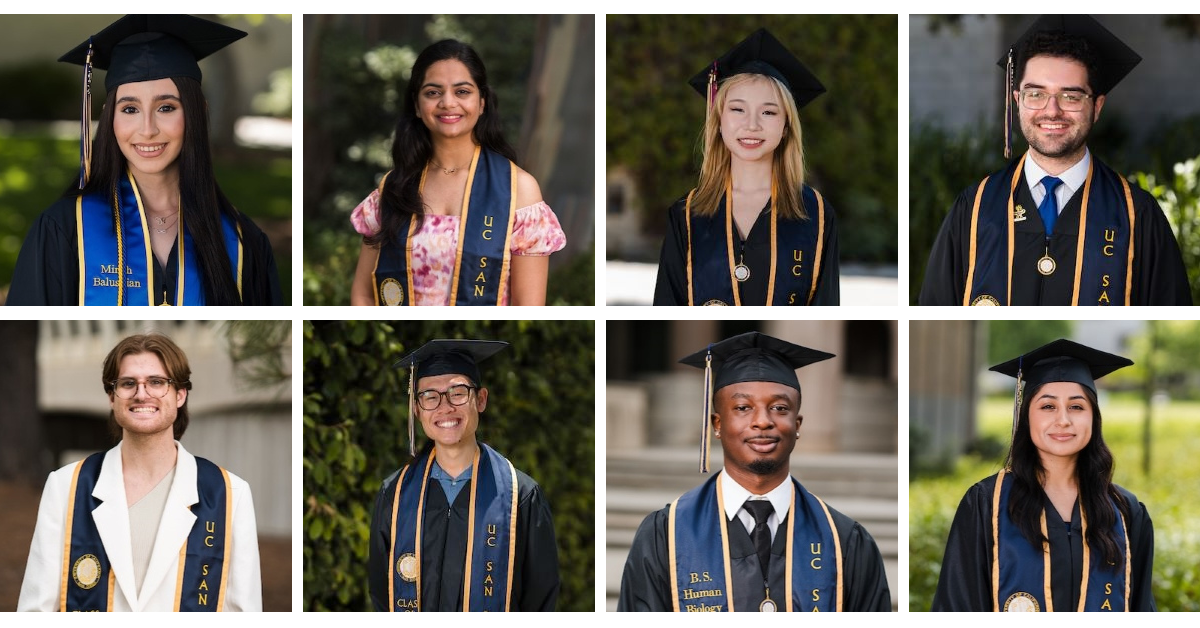
Eight Student Speakers, One Class of 2024
Three of the eight inspiring All Campus Commencement student speakers were Class of 2024 Social Sciences graduates. Congratulations to Education Studies major Kole Gregory Kistler, Human Developmental Sciences major Mineh Balushian Haftevani, and Cognitive Science major Keanu Sina Nazemi. You can watch their speeches here and read more about their UC San Diego journeys and inspirations for creating change above.
Proudest Moments and Favorite Memories
Several Class of 2024 Social Sciences students told UC San Diego Today about the highlights of their time as Tritons: Psychology majors Kayla Kamani and Kyla Perez, Psychology and Cognitive Science major Natalie Sanchez-Lazo, Psychology and Economics major Richard Collins Billhardt, and Communication major Alexandra Gilden. Congratulations to all graduating students - we will miss you!
The Class of 2024: Making the Most of Being a Triton
Class of 2024 undergraduate students Dylan Shafer, a double major in Political Science and Oceanic and Atmospheric Sciences (Scripps Institution of Oceanography), and Education Studies minor Hannah Nguyen shared their favorite Triton moments and future aspirations with UC San Diego Today. "My favorite memories at UC San Diego have been the numerous open water swims I have taken before class, after class and (sometimes) during class. These swims have pushed me physically and mentally but always helped me relax in the stress-filled life of an undergraduate," Shafer said. Nguyen, who spent part of one summer teaching English to 7th graders in Vietnam, called her trip "one of the most difficult but rewarding experiences of my life." Congratulations to these grads!
News Highlights
Contact Inga Kiderra, Director of Communications, at ikiderra@ucsd.edu or 858-822-0661
Previous News Highlights
 Normal Heights Event Showcased Alleys As Potential Public Spaces
Sue Peerson of Urban Studies and Planning organized Alleys in Action, a pop-up event in Normal Heights where students and community members explored ways to make alleys more useful and pedestrian friendly. “Alleys are an untapped resource. By getting community input, we want to turn this alley from a space to a place,” Peerson told KPBS. Watch this video to see Peerson in action and learn more about the event.
Google Search Has Added an AI Feature. Critics Worry It’s Not All It’s Cracked Up to Be.
Stuart Geiger of Communication told Marketplace that Google’s new AI feature dissuades critical thinking by making information too easy for users to access. “You’re not engaging with the original source or where that came from. You’re not seeing comments, you’re not even seeing who the author is. Those things are really critical for digital media literacy.” He also shared concerns about AI’s potential to act as a “people pleaser” by generating inaccurate information based on user input, regardless of its factual basis.
2023-24 Undergraduate Academic Advising Awards
Congratulations to Mónica Rodriquez de Cabaza of Ethnic Studies on winning two Undergraduate Academic Advising Awards! Cabaza received the Student Advocate Award, which recognizes an advisor who goes above and beyond to enrich students’ academic and personal development journeys, and the Advising Jedi Champion Award, which honors advising work that promotes justice, equity, diversity, and inclusion.
 Yankelovich Center 2024 Grant Recipients
The Yankelovich Center for Social Science Research awarded over $275,000 in grants to support research by faculty and graduate students all across the School of Social Sciences. Congratulations to this year’s recipients!
Why You Can Hear the Temperature of Water
The New York Times featured research by Psychology researcher and doctoral alum Tanushree Agrawal ’22 showing that three-fourths of participants in her experiments can distinguish between the sounds of hot and cold water being poured. Test your own ability in this interactive feature.
RFK Jr. Could Be a Spoiler in November. But Will It Help Biden or Trump?
Thad Kousser of Political Science told the Los Angeles Times about the potential threat that RFK Jr. poses to both Democrats and Republicans in the election: “When you have nail-bitingly close elections, nearly any candidate can be a spoiler. Now, the interesting thing, unlike Jill Stein [a perennial Green Party candidate], it’s not 100% clear which major party candidate he hurts most.”
It’s Not Just Young Voters. New Citizens Will Head to the Polls This Year, Too
NPR featured research from the U.S. Immigration Policy Center, directed by Tom Wong of Political Science, showing that “an estimated 3.5 million adults of voting age have been naturalized in the U.S. since the 2020 election.” Another survey, conducted with the National Partnership for New Americans (NPNA), found that economic concerns and immigration are the most important issues to new voters.
Triton Athletes Face the Hidden Opponent
Economics undergraduate student Reilly Erickson and Psychology undergraduate student Zoë Richards, both members of the UC San Diego softball team, told UC San Diego Today about their work with The Hidden Opponent, a student organization that strives for increased mental health awareness in sports culture. “You’re expected to be a good athlete but you're also expected to be a good student, teammate and friend,” Richards said about the pressure placed on student athletes to excel in all areas. “My goal,” Erickson added about The Hidden Opponent’s mission, “is to collaborate with coaches and teams to create safe spaces for athletes to talk about their mental health and advocate for athletes as a whole.” 
Are Higher Mortgage Rates Enough To Slow San Diego Home Price Growth?
James Hamilton of Economics, a regular member of the San Diego Union-Tribune’s Econometer panel, said that a 7.52% interest rate, the highest mortgage rate this year, will deter some homebuyers. “Rates are going to take much longer to come down than many people had been assuming. If you’re going to be stuck paying that high interest for many years, you have to rethink purchasing an expensive home.” Hamilton also contributed to the Econometer discussions of whether San Diego should implement the $25 service worker minimum wage, Biden's raised tariffs on Chinese EVs,the impact of San Diego City Council increasing developer fees, and whether a new neighborhood group in Uptown is a positive development.
How to Help Grad Student Instructors Develop a Teaching Style
“Graduate students play a pivotal role in the instructional mission of colleges and universities. It is incumbent upon us to assist them in developing a teaching identity that reflects their personal experiences, values and aspirations,” Michel Estefan of Sociology writes in an Inside Higher Ed opinion piece. Estefan shares four ways that graduate students can become more confident and successful instructors with their own “genuinely authentic” teaching styles.
 UC San Diego Student Selected for National Public Service Scholarship
Congratulations to Political Science and History undergraduate student John Paculdo Koenigshofer on being selected as a Key into Public Service Scholar by The Phi Beta Kappa Society, a national academic honor society that recognizes students interested in pursuing careers in government. Paculdo Koenigshofer is passionate about advocating for Asian American and Pacific Islander American people and seeks to work as a legislative staffer in Congress after completing his undergraduate education. “Coming to UC San Diego gave me the opportunity to reconnect with my Filipino roots and apply these unique perspectives to my work in advocacy and organizing,” he told UC San Diego Today.
UC San Diego Team Wins Entrepreneurship Challenge for Third Year in a Row
Congratulations to the UC San Diego team who won first place in the National Nanotechnology Entrepreneurship Challenge (NTEC) for their proposed company that would provide life-saving technology to stroke victims. This year’s team was composed of Cognitive Science undergraduate student Laura Charria and two students from the Jacobs School of Engineering. “It’s not only about working on our own startup, but also listening and learning from what the other teams are doing all around the nation,” Charria told UC San Diego Today.
 Cognitive Science Researcher Establishes UC San Diego’s First Fellowship in the Field
Susan Chipman, a pioneer in the area of cognitive science, has pledged a $1 million planned gift to the Department of Cognitive Science to support graduate students. “UC San Diego is home to one of the top cognitive science programs in the country. I am pleased to make this gift to support the future leaders and trailblazers in the field of cognitive science,” said Chipman, who was lauded, in turn, by Cognitive Science Chair Douglas Nitz as having helped shape cognitive science “as it relates to potential applications to education, training for complex and demanding jobs, and the engineering of effective human system interaction.”
APIA Heritage Month: Innovation and Unity Transforming Communities and Understanding
Congratulations to Global Health undergraduate student Mira Gupta and Urban Studies and Planning undergraduate student Andie Ongaco on being two of six student recipients of 2024 Asian and Pacific Islander Alumni Council (APIAC) Awards. The awards recognize students who demonstrate a commitment to the advancement of Asian and Pacific Islander education and community building at UC San Diego.
Education, Collaboration Help Launch Startups at UC San Diego
“In 2015, we launched The Basement with complementary objectives of incubating ideas and student entrepreneurs,” Economics alum Jeff Belk ’83 told UC San Diego Magazine. The Basement, co-founded by Belk and housed in the new Design and Innovation Building, features a prototyping lab, standing tables, computers and large-scale screens to foster collaboration and interdisciplinary brainstorming.
High School Program Offers Free College Credits at UC San Diego
An Ethnic Studies course, "Ethnic Studies: Land and Labor," was part of the successful pilot of "Discover UC San Diego." The next iteration of the program for local high school students will also offer a Linguistics class in American Sign Language (ASL).
Cooking Up Community Through Indigenous Foods
A new UC San Diego course offered at the Craft Center, “Food Justice and Indigenous Food Sovereignty,” explores Indigenous contributions to knowledge about food, environmental stewardship, and agriculture. “Besides cooking, I enjoy learning about the backstory of recipes and how different cultures influence cooking styles,” Sociology major Zahira Alatorre told UC San Diego Today, while Ethnic Studies major Erica Ruiz added: “I’ve learned about my classmates’ lives while cooking food together. It’s just a reminder – food is life,”
 Alumna Nastasha Tan ‘10 on Trends in Design Education
“Design has a huge role to play in defining how [new] technologies are brought responsibly to market,” Cognitive Science alum Nastasha Tan ’10 told UC San Diego Today. Tan, who is now chief design officer at Kite, lauds that UC San Diego now has the Design Lab to even better prepare students for future design opportunities.
Design Lab Stars
The Design Lab newsletter celebrates several Social Sciences faculty for their impact: Steven Dow and Haijun Xia of Cognitive Science and Lilly Irani of Communication and the Labor Center. Design Lab Director Mai Nguyen, who is also on the faculty of Urban Studies and Planning in the School of Social Sciences, writes that she loves being “surrounded by brilliant and passionate faculty, students, researchers, and designers who are radically changing the world.”
San Diego Officials, Experts React to Trump Guilty Verdict
"This is clearly a historic day in American politics. Never before had a president been convicted of felony, and today that happened 34 times. But in other ways, it's not unprecedented because we've seen this so many times with Donald Trump,” Thad Kousser of Political Science told NBC San Diego. Kousser also contributed his expertise on Trump’s verdict to the Los Angeles Times, among other outlets.
Law Professor's Tireless Search for Rare Recordings Resurrects Voices of Landmark Segregation Case
Can AI be used as a tool to engage with historical events in new ways? A Chicago professor is working to recreate and share oral arguments from Brown v. Board of Education using AI. The Wall Street Journal story also mentions the role played by political scientist Peter Irons in the legal battle in the early 1990s over recordings from the case.
UC San Diego Library Adapts to Meet the Needs of Today’s Students
“In the wake of COVID-19, advocating for spaces and activities that nurture overall wellness is paramount,” Communication alum Gen Thipatima ’14 told UC San Diego Magazine. Thipatima serves as Geisel Library’s Engagement, Assessment & Spaces Manager and helps lead the Library’s mental health programming, including therapy dog visits, yoga classes, and watercolor painting.
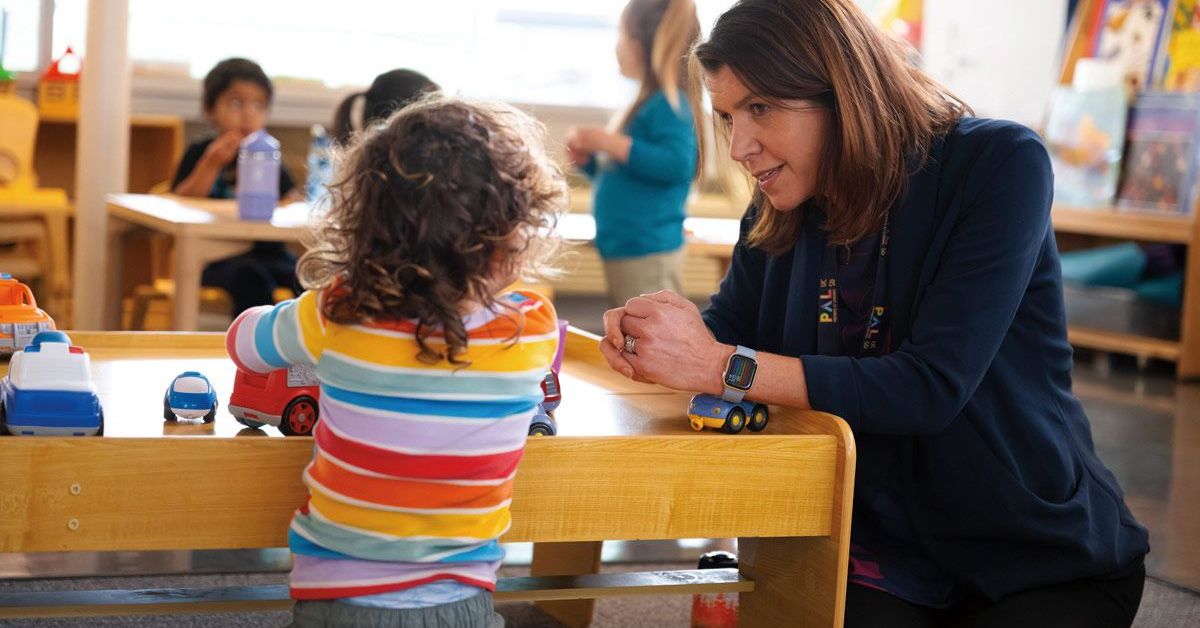 Researchers Dig Into the Science of Education
Alison Wishard Guerra and Shana Cohen of Education Studies and Tim Brown of the School of Medicine are among scholars participating in a research-practice partnership between UC San Diego and Vista Unified School District. The team is gathering data from multiple perspectives – education, neuroscience and cognitive science – and collaborating with VUSD teachers and administrators on strategies not only to bridge achievement gaps stemming from low socioeconomic status and language barriers but also to improve learning outcomes for all students. “It may sound grandiose, but our goal and motivation to do this kind of work is to change the field of education and change the world by doing so,” Wishard Guerra told UC San Diego Magazine. Wishard Guerra and Cohen are also working with Education Studies’ Thandeka K. Chapman and graduate student Monica Molgaard and teachers in UC San Diego’s Early Childhood Education Center (ECEC) to help foster cultural diversity and inclusivity in ECEC classrooms.
Expert Weighs In on the State of US Education
Amanda Datnow, Chancellor’s Associates Endowed Chair in Education Studies and associate dean of the School of Social Sciences, shared her thoughts on the future of education in the U.S., the benefits of “research–practice partnerships” and what it means to educate the whole child with UC San Diego Magazine. “Schools don’t just teach students content; they also teach them ways of thinking, solving problems and working with one another. So, if we don’t think about the whole child, we miss an opportunity to connect education to that child’s own purpose, sense of self and sense of learning in the world.”
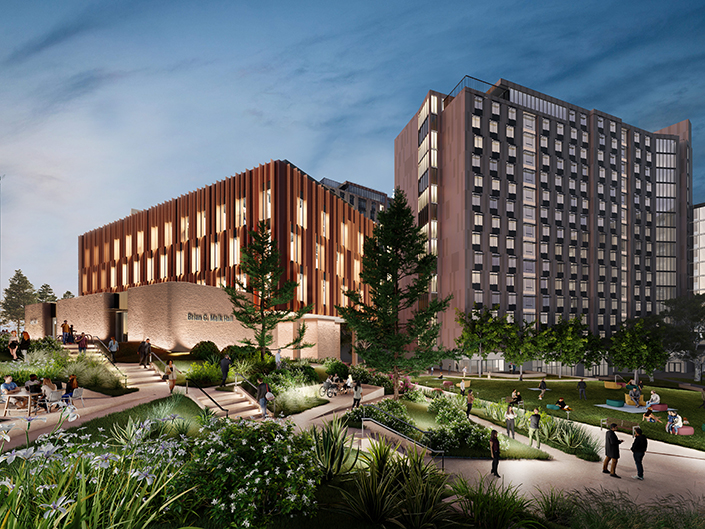 Brian and Nancy Malk Donate to UC San Diego Department of Economics, Naming Malk Hall
La Jolla resident and businessman Brian C. Malk and his wife, Nancy, have pledged a philanthropic gift to support the expansion of the Department of Economics. Slated for completion in 2026 as part of Ridge Walk North Living and Learning Neighborhood, Brian C. Malk Hall will also house the Hub Basic Needs Center and the Triton Food Pantry. “Malk Hall will provide a collaborative space for our faculty, students and our many partners as we strive to foster the thought leaders and changemakers of tomorrow,” said Carol Padden, dean of the School of Social Sciences. Economics chair Marc Muendler added: “Malk Hall will be a magnet for students, faculty and thinkers from across campus and from around the world.”

UC San Diego Labor Center Appoints Its First Executive Director
The UC San Diego Labor Center, housed in Urban Studies and Planning, is a hub of research, scholarship, and policy work that aims to address critical issues that working people face today. Satomi Rash-Zeigler is the new executive director of the Labor Center and will work alongside faculty director Lilly Irani of Communication. Two upcoming projects are Labor Summer, an initiative to develop the next generation of labor researchers and organizers, and the Labor Center’s first conference in the fall, which will focus on AI. "We want to build a region that recognizes and acknowledges our economy's greatest asset – workers,” Rash-Zeigler told UC San Diego Today.
2024 Economic Report of the President
Research by Juan Herreño of Economics was cited in the 2024 Economic Report of the President released by the White House and its Council of Economic Advisers.
The Deep Conflict Between Our Work and Parenting Ideals
New York Times’ podcast “The Ezra Klein Show” highlighted Mary Blair-Loy of Sociology and her book “Competing Devotions: Career and Family Among Women Executives.” Blair-Loy’s research focuses on how many mothers in the United States struggle to balance “giving it their all in the workplace or giving it their all at home.”
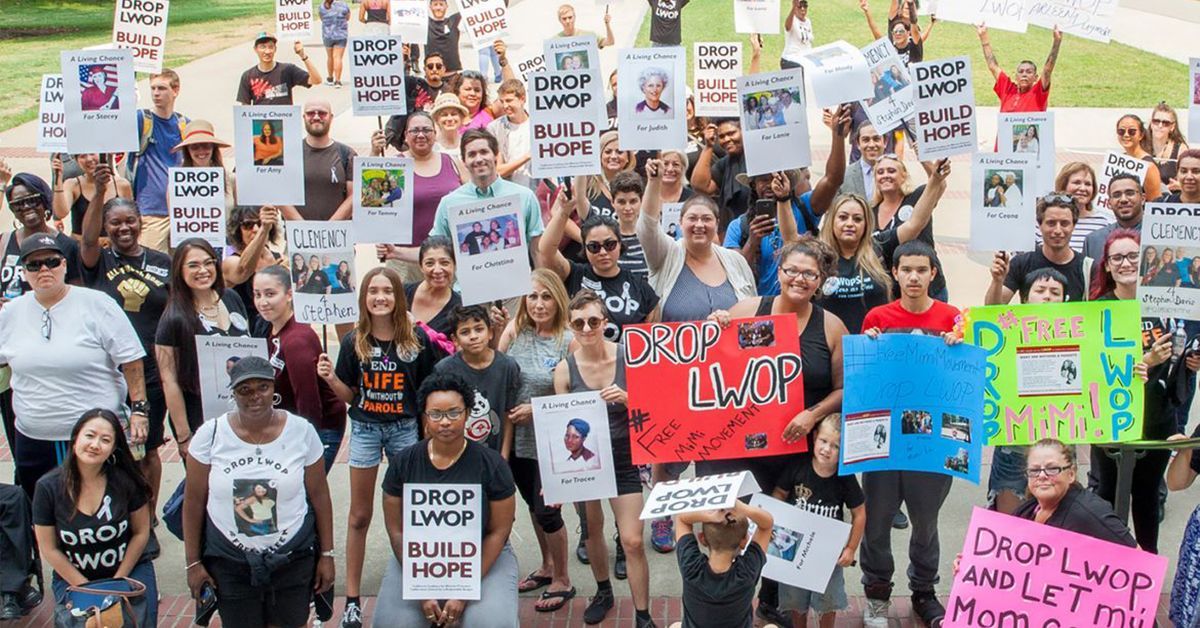
Disrupting Narratives that Legitimize Long-term Incarceration, from the Inside Out
A new $2 million grant from the Mellon Foundation will support the University of California Sentencing Project collective of organizers, scholars and artists – inside and outside of prison – as they work to disrupt the narratives that legitimize the racialized and gendered criminalization of people in California’s prisons designated for women. Joseph Hankins of Anthropology and colleagues at the UCLA Center for the Study of Women | Barbra Streisand Center are working in collaboration with currently and formerly incarcerated individuals from the California Coalition for Women Prisoners (CCWP) and the Felony Murder Elimination Project. “With this generous grant funding, we will seek to build opportunities to give system-impacted people agency of their narratives in a way that has not been done before,” Hankins told UC San Diego Today.
 Evaluation of Homelessness Programs Can Do Much More Than Save Money
In a San Diego Union-Tribune opinion piece, Jennifer Nations, managing director of the Homelessness Hub in Urban Studies and Planning, advocates for homelessness program evaluations to be used for improvements beyond just cutting costs. “Evaluation can show how programs can better address the diverse needs of our unhoused neighbors,” writes Nations, “and guide local agencies to know where they can most effectively direct resources.” Nations also lent her expertise to the Union-Tribune in its reporting that homelessness in San Diego County has risen every month for the past two years.
As Population Growth Slows, San Diego May Not Need to Build as Many New Homes
“Has San Diego County already built enough new housing to accommodate all the currently projected population growth through the year 2050? The answer, surprisingly, is ‘yes,’” Richard Carson of Economics writes in a Times of San Diego opinion piece. In spite of this, homelessness rates have not changed much, because most new housing developments are high-end, so a lack of affordable housing in San Diego is still an issue community planners must address.
Niehaus Wins Econometric Society's 2024 Frisch Medal
Congratulations to Paul Niehaus of Economics on winning the Econometric Society’s 2024 Frisch Medal for his contributions to the paper “General Equilibrium Effects of Cash Transfers: Experimental Evidence from Kenya.” The Frisch Medal celebrates the best applied paper published in Econometrica in a four-year period.
 Could the U.S. Force Treatment on Mentally Ill People (Again)?
Neil Gong of Sociology and his new book, “Sons, Daughters, and Sidewalk Psychotics: Mental Illness and Homelessness in Los Angeles,” were featured in NPR’s Planet Money newsletter. "I definitely worry that we're going to move to this kind of heavy-handed, lock-people-up, get-them-outta-sight-in-the-cheapest-way-possible approach,” Gong said about forced institutionalization again being treated as a solution to mental illness and homelessness. However, he is hopeful for a future of better community-based services for mentally ill people where carefully executed forced treatment is a last resort.
Scientists Show Ancient Village Adapted to Drought, Rising Seas
Research co-authored by Thomas Levy of Anthropology gives surprising new evidence that the village of Habonim North, off Israel's Carmel Coast, thrived throughout a period of climate change and drought around 6,200 BCE. “This [study] helped fill a gap in our understanding of the early settlement of the Eastern Mediterranean coastline,” Levy told UC San Diego Today. The study was covered by Newsweek, The Jerusalem Post and Archaeology, among others, as a story of human resilience in the face of climate change.
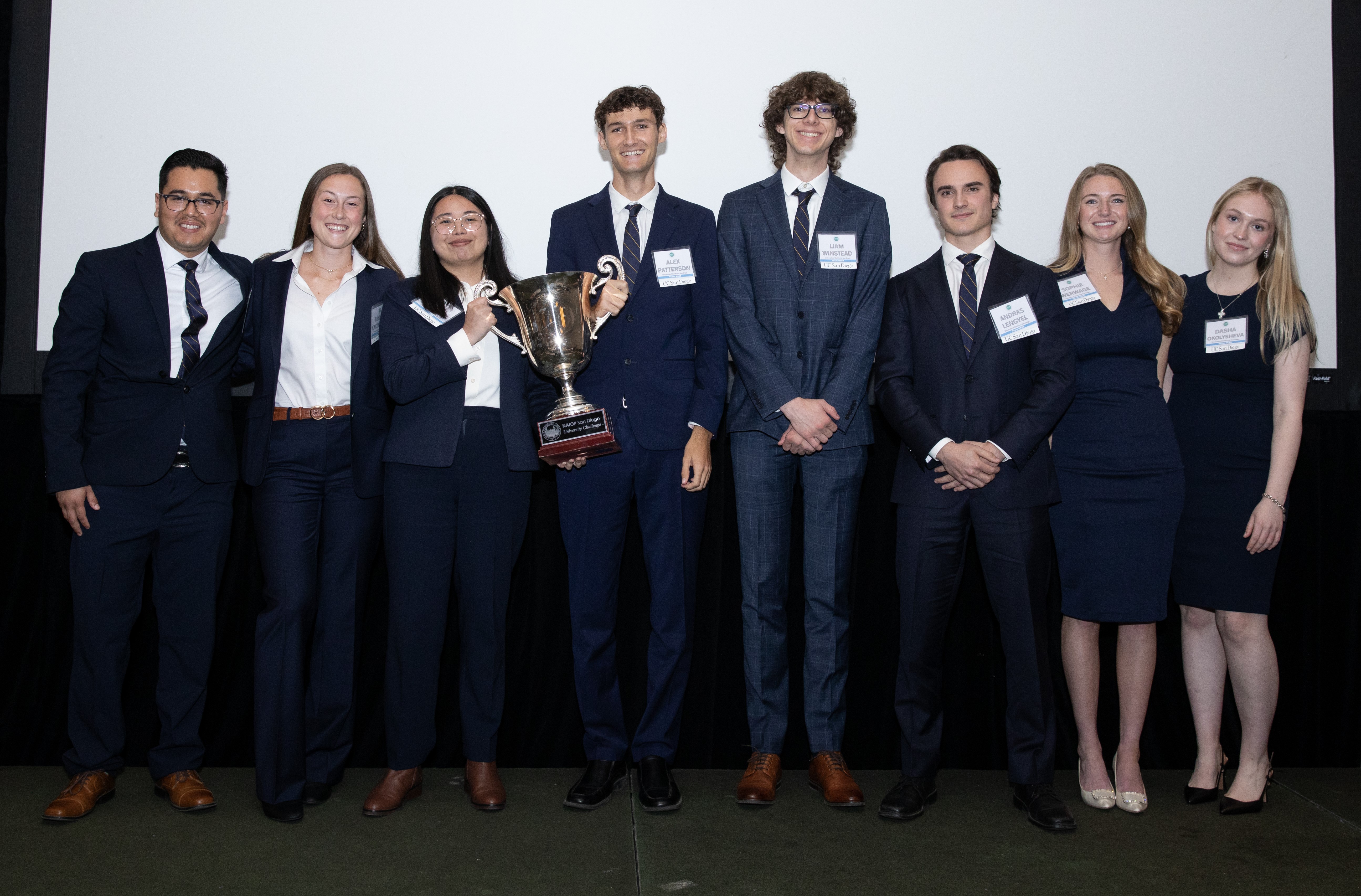
UC San Diego Student Team Wins NAIOP San Diego University Challenge
Congratulations to the Urban Studies and Planning NAIOP team on their win in the annual NAIOP San Diego University Challenge! The NAIOP (the Commercial Real Estate Development Association) competition hosts students from UC San Diego, USD, and SDSU to create redevelopment proposals for actual sites in San Diego. The UC San DIego team also won the challenge in 2023, 2021, and 2020.
Also Migrating From Latin America: A Wave of Urban Innovation
Bloomberg reported that the UCSD-Alacrán Community Station, part of the Community Stations Initiative in the Center on Global Justice, is “a first-of-its-kind sanctuary neighborhood for migrants,” with housing, healthcare, education, and community space. The center has developed three other community stations in San Diego and Tijuana. “It is in Latin American cities where we can find the DNA for reclaiming a new public imagination in the US,” said Fonna Forman of Political Science, the center’s founding director, and Teddy Cruz of Visual Arts, the center’s director of urban research, about their inspiration for the stations.
Behind the Vine: Campus Gardens Cultivate Sustainability and Belonging
UC San Diego is home to an array of campus gardens that promote education and the growth of sustainable food. In this UC San Diego Today video story, Cognitive Science and Psychology undergraduate student Xandria Romei and Urban Studies and Planning undergraduate students Zachary Bickel and Riccardo Gavardoni speak about the benefits of these green spaces.
 The Wild Community of San Diego Foragers
Pascal Gagneux of Anthropology and the School of Medicine, executive co-director of CARTA (the Center for Academic Research and Training in Anthropogeny), shared with San Diego Magazine his experiences identifying over 100 edible species while foraging for food in San Diego. “For 99 percent of the existence of our species, all we did was get up in the morning and ask ourselves, ‘What am I going to eat today?” said Gagneux, who enjoys connecting with nature through the process of finding food.
Mingei International Museum Fellowship
Communication and Anthropology alum Olivia Joseph ’23 is the new Quilt Research Fellow at the Mingei International Museum in Balboa Park. “I am most excited to learn about how certain aspects of an individuals’ livelihood are captured in symbolism in the quilts. Certain designs and patterns can be reflective of movements and trends happening at specific points in history,” Joseph said.
Alum Receives Prestigious Fulbright Specialist Award
Congratulations to Cognitive Science alum G. Christopher Stecker ’94 on receiving a Fulbright Specialist Award! Stecker is a senior scientist at Boys Town Hospital and director of the Spatial Hearing Lab in the Center for Hearing Research. Stecker’s Fulbright project, to be completed in Kosice, Slovakia, will research “how people use multiple senses – vision, hearing and balance – to support spatial awareness.”
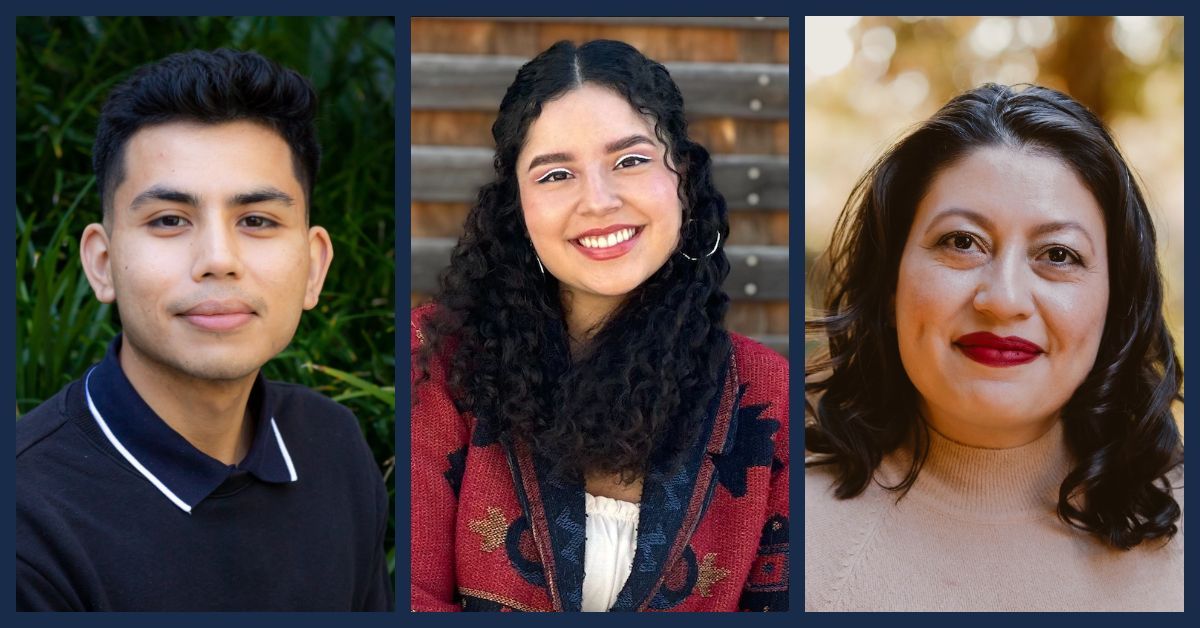
Celebrando y Luchando por La Causa: Meet Three Tritons Fighting for the Cause
This April, UC San Diego commemorated César E. Chávez’s life and legacy through a celebratory month of community building and activism. UC San Diego Today highlighted three Tritons who passionately serve their communities and represent Chávez’s values: Cognitive Science and Global Health undergraduate student Jonathan Rodriguez, Global Health alum Marissa Islas ’21, and Political Science alum Haydee Cervantes Salazar ’07.
Is the Negative Effect of the $20 Fast-Food Minimum Wage Overblown?
James Hamilton of Economics told the San Diego Union-Tribune, as part of their Econometer panel, that the negative impact of a $20 fast-food minimum wage is very real. “A recent survey found 1 in 8 Americans had worked for McDonald’s at some point in their lives. Now fewer of these jobs are going to be available in California.” Hamilton also contributed to the expert panels on Sea World's declining attendance, whether the Federal Reserve will cut interest rates, and whether California’s Supreme Court should overturn new rooftop solar rules.
2024 SEAREG Pre-Dissertation Fellowship
Political Science Ph.D. student Duong Thi Thuy Pham was selected as a Southeast Asia Research Group (SEAREG) Pre-Dissertation Fellow. The SEAREG Fellowship provides social science Ph.D. students the opportunity to travel to Southeast Asia for research.
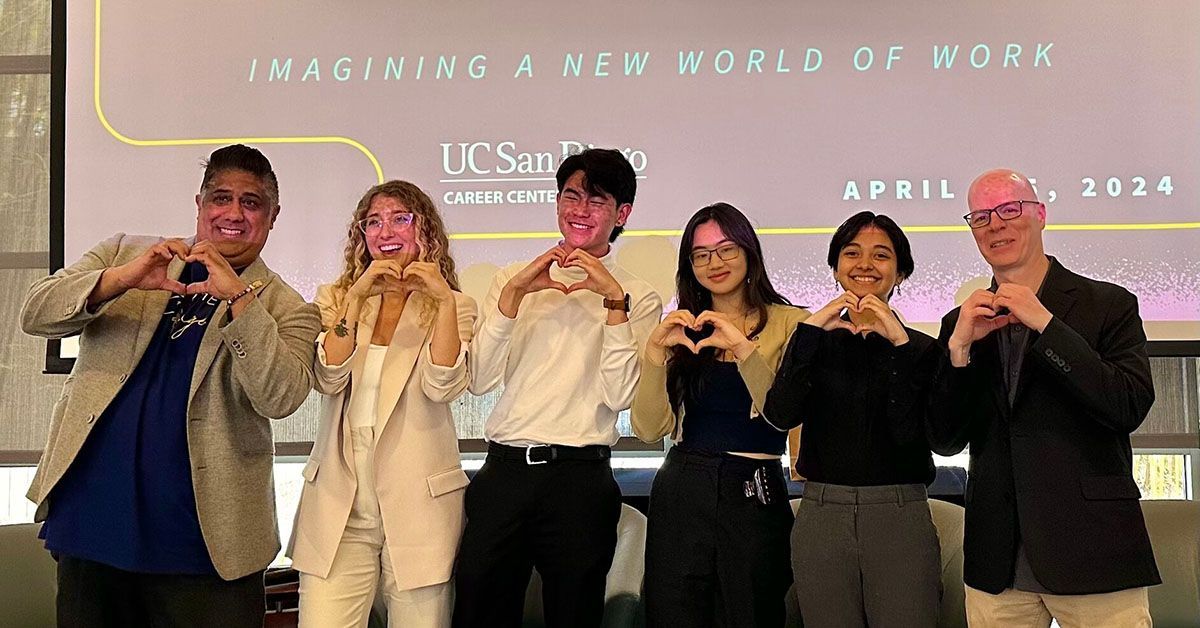 Imagining a New World of Work
UC San Diego’s inaugural annual Future of Work Conference featured a robust five-day lineup of keynotes, panels, workshops, and career fairs that addressed hot topics like AI, social media, and remote work. Among the students involved in planning and leading the conference were Communication major Maria Coates, Cognitive Science major Sabrina Cheng, and Cognitive Science and Psychology major Victoria Morales Vargas. Coates, who moderated the panel “The Student Employment Experience: Leveraging On-Campus Opportunities in Upskilling,” told UC San Diego Today: “The future of work is all about connection and empathy, and our biggest advantage over AI will be, ‘How human can you be?’”
Leslie Vallejo-Avila Wins Runoff for Student Body Presidency
Congratulations to Political Science undergraduate student Leslie Vallejo-Avila on her election as the 2024-25 Associated Students president. Her campaign, themed “Building Bridges” and “Investing in Students,” includes proposals to expand mental health and well-being services, help student organizations secure funding and space reservations, and advocate for basic needs services on campus. “To be able to have a platform to utilize my knowledge to be a bridge for students, to connect them to these resources, is an opportunity that I’m very excited to pursue,” Vallejo-Avila told The Guardian.
2024 Jean Piaget Society Dissertation Prize
Two Psychology doctoral alums were honored by the 2024 Jean Piaget Society Dissertation Prize! Congratulations to Elizabeth Lapidow on winning the prize for her dissertation “Explaining the Self-Directed Learner as an Intuitive (Causal) Scientist.” Haleh Yazdi was also recognized as the finalist for this year’s prize for her dissertation, “The Role of Culture in the Development of Prejudice and Moral Reasoning.”
California Gets 150,000 New Citizens
California was the only state to surpass 100,000 new naturalized citizens in 2023, but many are not surprised by California’s high immigration rates. "Part of the reason is many parts of the nation are just in recent years experiencing a large rise in immigration, whereas in California it has been a huge part of the state's history throughout its history – and a huge part of the politics, where it has been an issue since the 1990s," Thad Kousser of Political Science told Newsweek.
College Democrats Back Protests and Criticize Biden’s Israel Policy
“As it stands right now, young people starkly differ on the issue of Palestine/Israel from the Democratic Party apparatus. And throughout the nation, we’re witnessing Joe Biden, Democrats across the ballot, losing scores of young voters over this issue,” Political Science undergraduate Sunjay Muralitharan told the New York Times. Muralitharan, the vice president of the College Democrats, said the organization has chosen to “be representatives of college students to the party, rather than vice versa.”
Behind the Movement That Brought Homosexuality – and Psychiatry’s Power – to a Vote 50 Years Ago
Andrew Scull of Sociology told NBC News that the American Psychological Association’s 1952 decision to classify homosexuality as a mental illness “legitimized a great deal of the horrors” that LGBTQ people were subject to, including forced institutionalization and shock therapy. The article also discusses how the 1973 vote to remove homosexuality from the Diagnostic and Statistical Manual of Mental Disorders (DSM) started a wave of civil rights protections for LGBTQ people that are still impactful today.
There Are 13 People per Square Mile Here. Just Who Exactly Am I Supposed to Date?
Kevin Lewis of Sociology told the Washington Post that people living in rural communities should not rely on dating apps to meet new people because it can exacerbate feelings of hopelessness about dating. “It seems like that’s the end of the line,” Lewis said about running out of potential matches on dating apps. He advises that meeting people in real life is still possible, and that having fewer choices for partners could actually be a “small silver lining.”
Champions of Change: Celebrating UC San Diego’s Volunteer Community
In celebration of Volunteer Appreciation Week, UC San Diego Today featured Economics undergraduate student Tyler Lenart and Economics alum Frank Bellavia ’16 for their community service work on campus and beyond. “Support your local community and your local economy – visit the stores around you, see how people live, why they work, where they are from and get involved to help support them,” Bellavia advised those looking to start volunteer work.
Meet the 2024 Alumni Award Honorees
ICYMI, you can watch these videos celebrating our amazing Alumni Award recipients: Deborah Bronston-Culp '80 of Economics, The Rt. Rev. John Harvey Taylor '80 of Political Science, Alondra Nelson '94 of Anthropology, and Mayly Tao '12 of Communication.
System Changers: Notes on Session 3 of TED2024
Karthik Muralidharan of Economics and Political Science doctoral alum Rumman Chowdhury gave TED2024 talks, as did Keolu Fox of Anthropology. Stay tuned for the videos! We’ll share as they become available.
 Code and Community: Computational Social Science Program Addresses Social Questions with Data
UC San Diego is now offering a one-year Master of Science degree, a Ph.D. specialization and a minor in Computational Social Science (CSS), a program spanning the social sciences that applies computational methods to social questions about creativity, culture, behavior, human practices and more. The UC San Diego Today story (linked above) includes interviews with CSS program director Will Styler of Linguistics, Umberto Mignozzetti of CSS and Political Science, CSS alum Andrew Lona ’23, and current master’s student Lilly Amirjavadi and doctoral student Catherine Arnett. Styler describes the unique opportunities the program offers: “People come in wanting to level up their computing side but with a strong social sciences background, or wanting to retool their career and get the skills they need to answer the questions they’re asking and be more competitive on the job market.” The story was written by Anthropology and Linguistics alum Phoebe Skok ’23.
I’m a Political Scientist and I’m Putting Myself on a Politics Diet for the 2024 Election
“Much of the time and money Americans spend on politics might be driving division more than promoting civic knowledge and participation,” Seth Hill of Political Science wrote in a Los Angeles Times opinion piece. Hill advocates for more fulfilling ways people can spend their time and money during election season. “Imagine the societal benefits if we chose to redirect some of the money spent on political competition to education, scientific research, new small businesses or to directly uplifting the marginalized.”
The Pioneering Women Behind the Invisible Art of Film Editing
Did you know many iconic films – including “Jaws,” “The Wizard of Oz” and “Pulp Fiction” – were all edited by women? Erin Hill of Communication told NPR about the historic importance of women in film editing and how the film industry needs to provide more recognition and opportunities for female editors. “They would be greatly helped if we did more to recognize the structural and the kind of cultural barriers to advancement, and that takes a lot of inward looking,” she said.
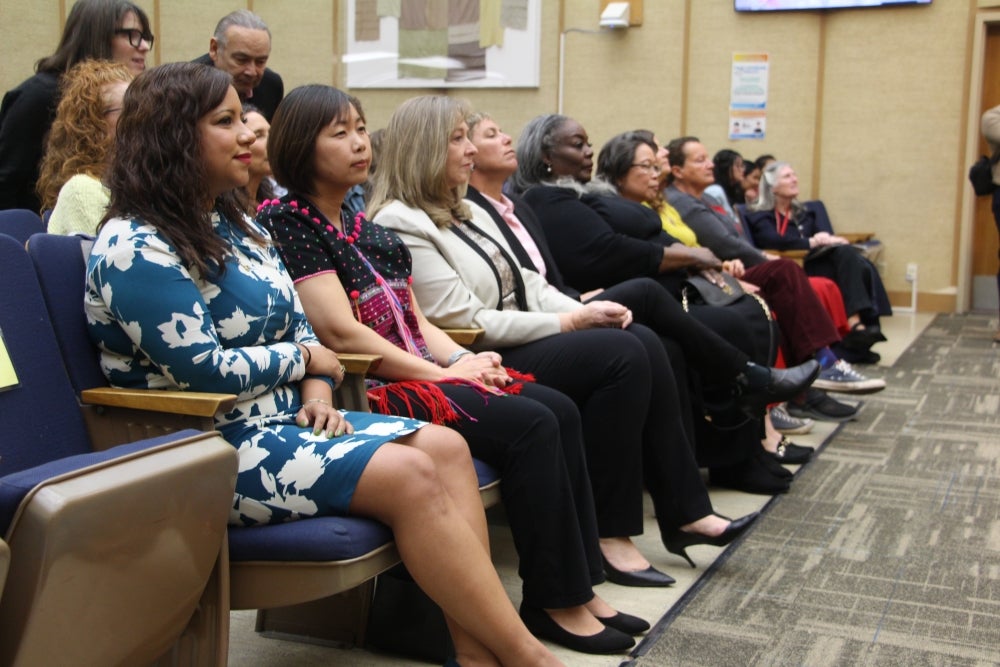 Mayor Gloria Honors Liz Ramírez and Other Influential ‘Women of Distinction’
Psychology alum Elizabeth Ramírez ’09 was recognized by Mayor Todd Gloria as a “Woman of Distinction” for her leadership as president and CEO of the Chicano Federation of San Diego County, which helped affected residents after the recent severe storms and flash flooding in San Diego communities. Ramirez and her team made sure residents knew what help was available and how to access it, working to make San Diego a more equitable place for all.
How India Could Become an Asian Tiger
The Economist features Karthik Muralidharan of Economics and his new book “Accelerating India’s Development.” Muralidharan’s book argues that a central barrier to India’s development is ineffective governance, and that “changes to personnel, data and federalism would together represent the beginnings of a reform package that could do wonders for India’s governance, and therefore its growth.”
 Californians Narrowly Passed Proposition 1. Can the State Ensure the Measure Will Work?
In an opinion piece published by the Los Angeles Times, Neil Gong of Sociology writes that Proposition 1 will not fully address California’s mental health and homelessness crises nor be the stuff of its proponents’ dreams or of opponents’ nightmares: “The estimated 4,350 housing units to be funded will not make a dent in the homelessness crisis, nor will the estimated 6,800 added treatment beds return us to the psychiatric dark ages.” Gong goes on to advocate for more focus on the type and quality of care provided in these facilities: “If we do not account for what it means to truly support people in their healing and independence, we risk throwing money away.”
What Do Kids Need to Succeed? San Diego Community Groups Get a First Glimpse of City’s New Youth Master Plan
Political Science undergraduate student Aidan Lin is a member of the San Diego Youth Commission, which is working with the city and community organizations to ensure kids and their families have access to essential resources and services. Lin told the San Diego Union-Tribune about the importance of youth involvement in the city’s new draft youth master plan: “Youth are very passionate, they’re very knowledgeable, very willing to get involved and help the community.”
Using AI and Data Science to ReNOURISH Food Deserts
NOURISH, a new platform co-created by Keith Pezzoli of Urban Studies and Planning with colleagues at the Supercomputer Center and at UC San Francisco, addresses food deserts by helping small business owners access fresh foods and support specific community needs. The project is funded by the U.S. National Science Foundation and U.S. Department of Agriculture.
2024 Cohort of U.S. Science Envoys
Congratulations to Political Science doctoral alum Rumman Chowdhury on being selected as one of four 2024 U.S. Science Envoys for the Department of State. Chowdhury is the CEO of Humane Intelligence, a nonprofit that addresses artificial intelligence safety and ethics, and a Responsible AI Fellow at Harvard University. The envoys will work to “identify opportunities for sustained international cooperation to advance solutions” to key issues including artificial intelligence, fusion energy, civil use of space, and ocean sustainability.
6 Essential Reads for the Oscars
Sociologist Charles Thorpe’s Oppenheimer article was featured in The Conversation’s special round-up for the Academy Awards. Thorpe’s piece discusses why J. Robert Oppenheimer has become so prevalent in popular discourse. “Fascination with the man behind the bomb,” Thorpe writes, “often seems to eclipse the horrific reality of nuclear weapons themselves.”
 Focus on South Asia
The South Asia Initiative is gaining a new annual forum, made possible by an endowment fund established by Jacobs School of Engineering professor Mohan Trivedi and family. “Our family has participated in and enjoyed various events organized by the South Asia Initiative,” Trivedi told UC San Diego Today. “We are delighted to offer the Gulistan South Asia Endowment Fund as a token of our deep appreciation for the UC San Diego community.” Prashant Bharadwaj of Economics and Saiba Varma of Anthropology are the co-directors of the new forum and steering committee members of the South Asia Initiative. Speaking to the forum’s significance, Varma said: “It will bring speakers of international stature to campus, support greater understanding of the South Asia region from diverse perspectives, and anchor the minor on South Asian Studies.”
Kamala Harris Outlines ‘Profound’ Stakes of Election, Raises Her Own Profile
Thad Kousser of Political Science told the Los AngelesTimes that Kamala Harris is playing a crucial role in Biden’s reelection campaign by appealing to young voters and proving her readiness for presidency. “The fact that she has become a more vocal proponent of a cease-fire in Gaza, I think she’s speaking directly to the progressive younger base to say, ‘I hear you and there are voices in this administration who share your concern on this issue,’” Kousser said. He also contributed to primary election coverage for many outlets, including the San Diego Union-Tribune, NBC San Diego, CBS8 and the San Francisco Chronicle.
 A Puzzling Programming Pedagogy: The Persistent Presence of Parsons Problems
Beth Simon of Education Studies was a keynote speaker at the 2024 SIGCSE (Special Interest Group on Computer Science Education). The talk focused on the learning benefits of various Parsons Problems, or activities where students “understand code fragments and arrange those fragments in a suitable order to perform a well-defined task.” Simon also received a Test of Time Award for her outstanding research in computer science education.
Is the Port of San Diego on the Right Track with Its New Master Plan?
James Hamilton of Economics is supportive of San Diego’s plan to create new parks, restaurants, hotels and shops on the waterfront. “We should embrace a vision of a more economically vibrant waterfront while protecting critical natural wetlands. The plan will help bring more tourists and tax revenue to the city,” Hamilton told the San Diego Union-Tribune as part of their Econometer panel. Hamilton also contributed to the expert panels on San Diego’s $4.5 million trash study, Biden’s tax increase proposals, and whether people will continue to move out of San Diego County.
A Catalyst for Change
Global Health undergraduate student Suhana Singh received a 2023 Inclusive Excellence Award for her work promoting disability justice on campus. As the campaign coordinator for the UC Student Association (UCSA) ACQUIRE Disability Justice Now! Campaign, Singh secured $17.5 million for disabled students throughout the UC system and attended the UCSA Hill Day in Washington D.C. to speak to California representatives.
Conference for Research in the Arts, Social Sciences and Humanities (CRASSH)
The Winter 2024 Conference for Research in the Arts, Social Sciences, and Humanities (CRASSH) featured undergraduate research surrounding the theme “Women’s History Month.” Student presenters included Political Science major Jingyi Chen, Communication major Isabel Koeppen and Biological Anthropology major Zaira Leal. ICYMI, you can watch the event video.
San Diego County Schools Badly Need These Hard-to-Staff Teachers. Can Residency Programs Help?
Education Studies, along with partners at University of San Diego and San Diego State, has partnered with San Diego Unified School District to create a new residency program that aims to train and recruit new teachers. “The hope is that they will help solve teacher shortages in hard-to-staff areas and create quality and diverse teachers for schools, especially schools in low-income communities, which often get fewer teaching applicants,” reports the San Diego Union-Tribune. “Residents take teaching courses through the university while teaching four days a week in a school alongside a district mentor teacher.”
Speech and Debate Team: Southern California Champions Again!
Congratulations to the Speech and Debate Team for winning two first-place sweepstakes awards at the Pacific Southwest Collegiate Forensics Association’s Spring Championships Tournament! The team also won a third place sweepstakes award at the Pi Kappa Delta national tournament.
The Decisive Axes for Biden and Trump That Drive the Campaign in the US
Claire Adida of Political Science told Chile’s El Mercurio that immigration and the border will be a key issue in the presidential election. “In some key states, many voters are concerned about the situation at the border, placing the majority of the blame for what they perceive as a crisis on President Biden,” Adida said.
Book Honors Archaeologist’s Storied Career
Thomas Levy of Anthropology may be have retired from teaching, but his impactful research and mentorship will live on through a new volume titled “‘And in Length of Days Understanding’ (Job 12:12): Essays on Archaeology in the Eastern Mediterranean and Beyond in Honor of Thomas E. Levy.” The book was compiled by more than 140 of Levy’s friends, former students and colleagues.
What Would It Take to End Extreme Poverty?
“We could end extreme poverty at a price so low that none of us would notice the difference,” said Paul Niehaus of Economics in a TEDx Boston talk about the effectiveness of giving money to people in poverty directly.
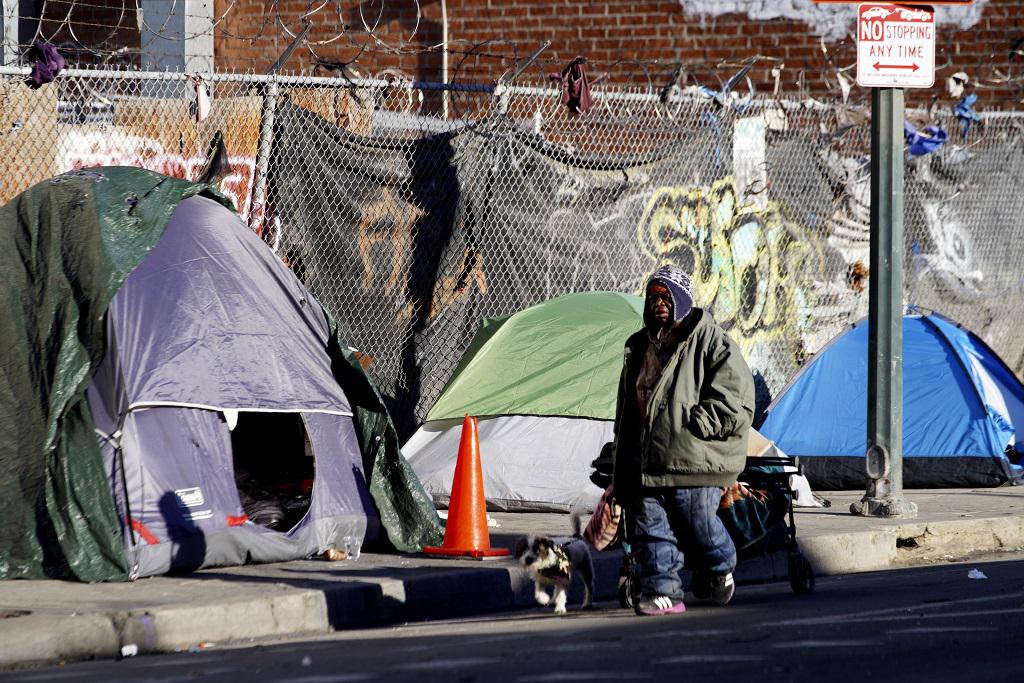 Housing First Can Work - If Done Right
“We have more than enough evidence to know that homelessness is not simply a matter of human failure,” writes Neil Gong of Sociology in an op-ed about the “Housing First” approach to homelessness published by The American Prospect. “It is imperative,” he says, “that programs receive robust funding and that providers be properly trained and compensated.”
Great Apes Tease, Play With Each Other in Ways Similar to Humans, New Study Reveals
Research co-authored by Federico Rossano of Cognitive Science explores how great apes use humor. “If great apes engage in playful teasing, it also reminds us that teasing is independent of language and not human unique,” Rossano told USA Today. The study was featured in The Washington Post, The Atlantic, BBC, The Hill, Psychology Today, and others.
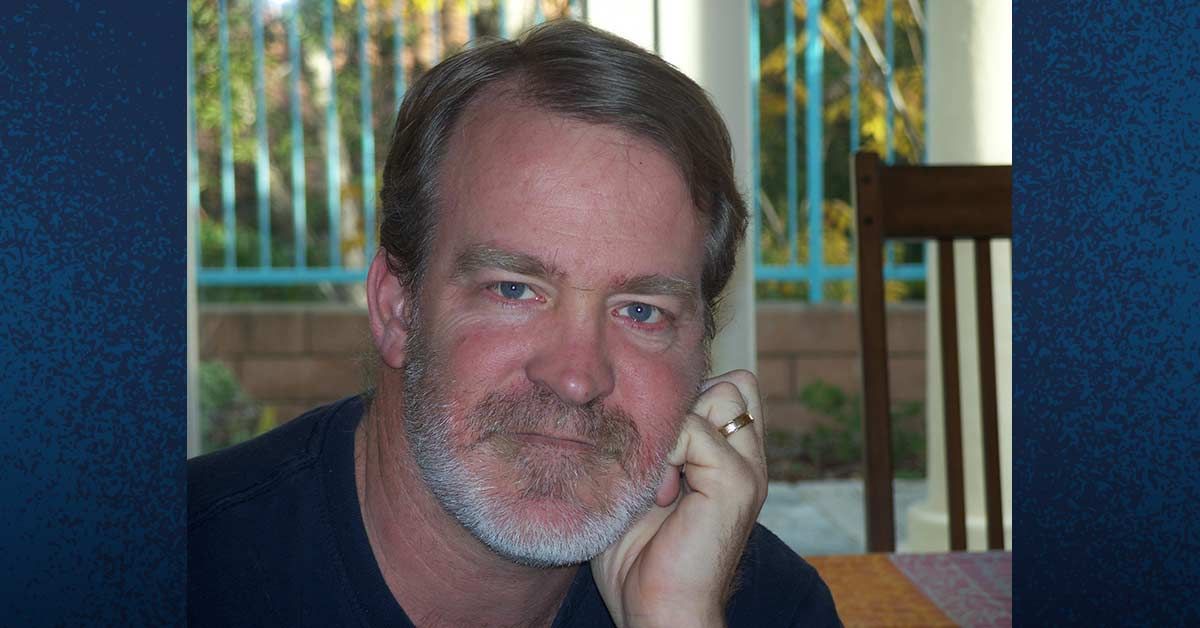 UC San Diego Sociologist Named Hastings Center Fellow
Congratulations to John Evans of Sociology on his election as a fellow of the Hastings Center, a research institute focused on ethical issues in health, science and technology. Evans, an associate dean of the School of Social Sciences, is an internationally renowned expert on the ethics of human gene editing and also serves as co-director for the Institute for Practical Ethics. “Being elected a Hastings Center fellow is a career-defining honor, something I have thought about since I was a grad student in the mid-1990s,” Evans said.
“Dune” and the Delicate Art of Making Fictional Languages
Linguistics alum David J. Peterson was featured in The New Yorker for his work as “the most influential conlanger working today.” Peterson’s first job constructing languages for television and film was developing six languages for “Game of Thrones.” He has created over 50 conlangs since, including for “Thor: The Dark World,” “The 100,” and the two “Dune” movies. While working on “Dune,” Peterson had to balance using language from the original novel, which featured many Arabic terms, and achieving his goal of creating a “brand new” language that feels immersive to viewers.
 Nuanced Accountability Would Help English Learners. New Research Shows How
Education Week features a new report co-authored by Megan Hopkins of Education Studies. The report shows that states can use federal accountability data to improve the quality of English learning programs by closely analyzing program models, access to specialized teachers, student participation, and other learning indicators. “That kind of information is really what I think is most useful to states who are providing guidance to districts, to districts who are trying to learn what’s most effective, and to families and parents and community members as they’re trying to select programs for kids,” Hopkins said.
Meet the 2024 Alumni Award Honorees
Four out of seven 2024 Alumni Award honorees are School of Social Sciences alumni! Congratulations to Deborah Bronston-Culp ’80 of Economics, the Rt. Rev. John Harvey Taylor ’80 of Political Science, Alondra Nelson ’94 of Anthropology, and Mayly Tao ’12 of Communication, who are being celebrated at this year’s 45th Annual Alumni Awards ceremonies in Los Angeles and New York City. The award is one of UC San Diego’s highest honors and recognizes alumni “who are pioneering innovative solutions and creating a positive impact worldwide.”
 Will Pandas Returning to San Diego Zoo Have a Notable Impact on the Tourism Industry?
James Hamilton of Economics told the San Diego Union-Tribune, as part of their Econometer panel, that he is optimistic about the impact of pandas returning to the San Diego Zoo. “It’s a step forward (albeit a very small one) in improving relations between the U.S. and China. Particularly when there are so many issues on which we may have serious disagreements, it’s salutary to find some common ground in a wonder of nature in which all people can find delight.” Hamilton also contributed to the expert panels on Super Bowl advertisements, Disney’s proposed sports streaming service, if San Diego should increase road repair funding, and whether San Diego needs a water quality tax to help with flood repair.
Too Few STEM Graduates? We Should Look After the Ones We’ve Got
John Skrentny of Sociology told Times Higher Education that STEM companies need to fix their own toxic work environments before blaming educational institutions for STEM labor shortages. “There are hundreds of things that these companies could do to improve their dismal record on retaining STEM staff rather than simply asking universities to give them more oranges to squeeze,” Skrentny said in the story featuring him and his book, “Wasted Education: How We Fail Our Graduates in Science, Technology, Engineering and Math.” Separately, Skrentny appeared on Sean Carroll’s podcast, Mindscape, to discuss how the economy mistreats STEM workers.
 Mediterranean Resilience
“Mediterranean Resilience: Collapse and Adaptation in Antique Maritime Societies'', a new volume co-edited by Tom Levy of Anthropology, “examines various forms of adaptation adopted by coastal societies in the ancient Mediterranean in response to external pressures they occasionally experienced.” The volume grew out of a symposium held at Scripps Institute of Oceanography.
Primary Election 2024: Incumbents Hold Advantage in San Diego Congressional Races
Thad Kousser of Political Science served as an expert source for KPBS and many other media outlets in their primary election coverage.
 Love Is a Lie
Kevin Lewis of Sociology appeared on the Sidebar podcast from Courthouse News Service to discuss the dark side of online dating. Lewis shared when and how online dating became normalized in society, whether platforms intentionally remove fake accounts, and what Facebook and online dating apps have in common.
Don’t Leave San Diego Without Trying These 9 Experiences
Keolu Fox of Anthropology, a National Geographic Explorer, told National Geographic that the Salk Institute is a must-visit spot in San Diego. “The way they used concrete sets a precedent for architecture today,” Fox said. “The forms, functions and lines are a perfect example of the concept of ‘make it simple, but not too simple.’”
Why November Could Decide Senate Control for Years
Gary Jacobson of Political Science told CNN why the 2024 Senate elections will be especially challenging for Democrats hoping for reelection in states that Trump won or Biden won narrowly in the 2020 presidential election. “This structural disadvantage the Democrats have is a real thing and it will make it an uphill battle for them to control the Senate for the foreseeable future,” Jacobson said. “But the foreseeable future is pretty short. Political configurations are not cut in stone.”
Scholastic Selects 12 Educators to Join the Second Annual Teacher Fellows Cohort
Congratulations to Political Science alum Jamila Iris Edwards ’00 on being selected by Scholastic as one of its Teacher Fellows! Edwards is a fourth-grade teacher in Oakland Unified School District. The fellows will “collaborate with Scholastic Education Solutions’ product development, research and publishing teams for the duration of the school year” to develop useful resources for teachers.
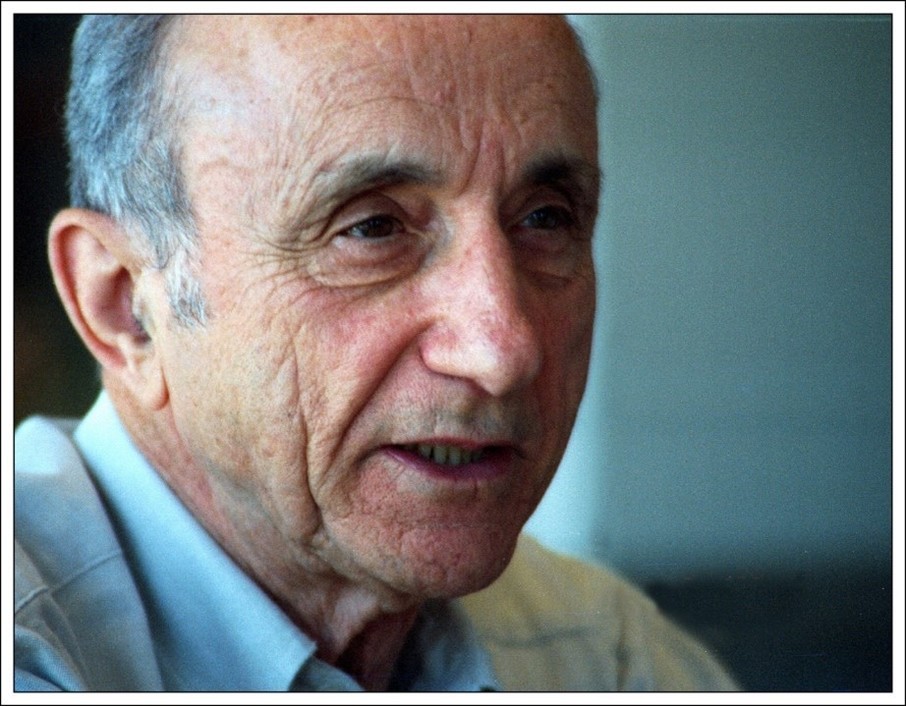 In Memoriam: Aaron Cicourel, Founding Faculty Member of Cognitive Science and Sociology
We share with deep sadness about the passing of Aaron Victor Cicourel, professor emeritus in the Departments of Cognitive Science and Sociology, who also worked in the university’s School of Medicine. A cognitive sociologist and sociolinguist with specialties in medical communication, decision-making and child socialization, Cicourel taught at UC San Diego and throughout the UC system for more than 40 years. A celebration of Cicourel’s life will be held on Saturday, April 6.
Why Treatment for Severe Mental Illness Looks Radically Different for Rich and Poor People
Vox featured Neil Gong of Sociology discussing findings from his forthcoming book, “Sons, Daughters, and Sidewalk Psychotics: Mental Illness and Homelessness in Los Angeles.” According to Gong, there are two vastly different systems that treat people with severe mental illnesses: the public safety net system, which “shuffles people through our broken welfare state” and focuses on “complex social problems like patient homelessness, incarceration, rearrest,” and the affluent private care model, which focuses on “helping people rebuild their identities.”
I Returned My Neuroscience Grant to Devote My Career to the Climate Crisis
Adam Aron of Psychology was interviewed by Nature about how he shifted his career from neuroscience to climate research and activism. The change included co-founding the Green New Deal at UC San Diego and teaching new courses about the psychology of the climate crisis. Aron hopes other academics will prioritize the climate crisis more in their work: “There’s a very narrow window in which we can intervene. And if we don’t succeed, then we’ll have caused a disruption to organized existence in a matter of decades – collapsing insurance markets, dramatic economic damage, enormous immigration and political crises, compromised food supply.”
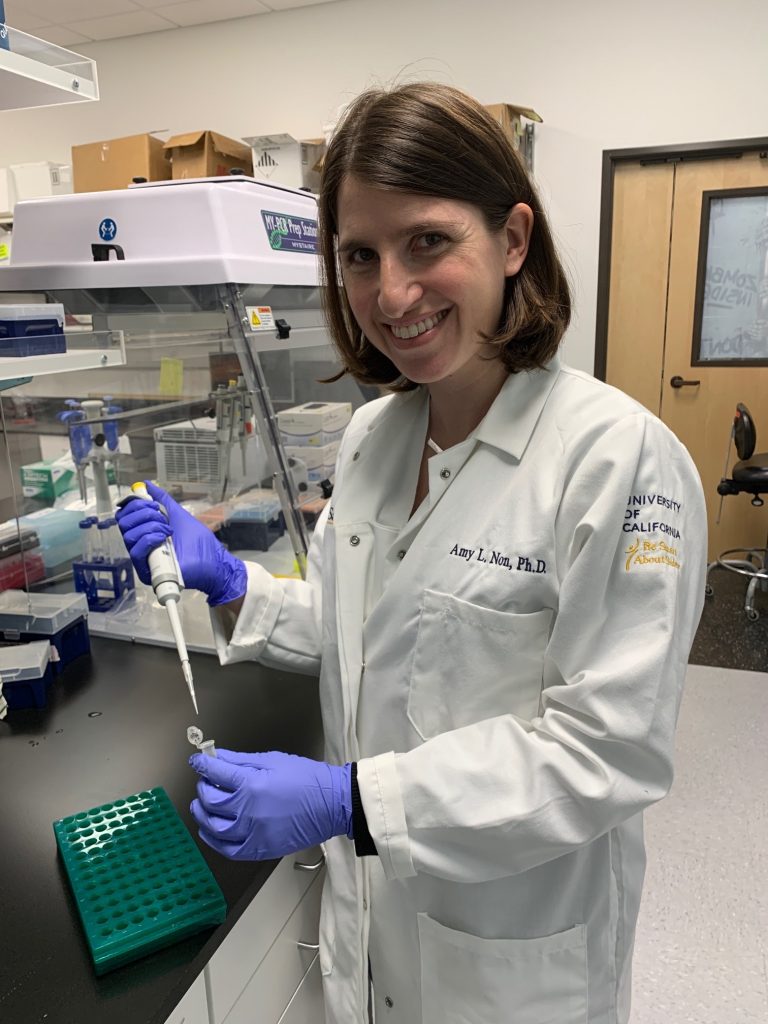 Why Genetic Testing Is a Tool – Not a Solution – to the Opioid Epidemic
Amy Non and graduate student Cassidy Tomlinson of Anthropology published an opinion piece in The Hill about AvertD, a new genetic test that assesses risk of developing opioid use disorder, and proposemore effective ways to address the opioid crisis. “Economic hardship, housing instability, trauma, lack of social support and systematic disinvestment in marginalized communities are all important drivers of opioid use disorder,” they say. “Instead of focusing on the risk for developing opioid use disorder, we should invest in models that offer treatment, service provision and decriminalization to help the most impacted communities.”
‘We’re All Climate Economists Now’
Economics experts are increasingly playing a role in climate change conversations, which has led to new opportunities for climate economists. Joel Watson of Economics told the New York Times that 5.5%of ads for academic economists in 2023 included the phrase “climate change,” compared to 1.1% a decade ago. Watson founded and currently runs the Econ Job Market database, which compiles job opportunities and resources for economics professionals.
 Disinformation Is No. 1 Threat As Elections Approach, WEF Report Finds
With artificial intelligence and misleading social media campaigns more prevalent than ever, experts are worried about the potential effects of misinformation on upcoming elections. In exploring the World Economic Forum’s annual Global Risk Report – and how disinformation corrodes public trust – Forbes cites a Yankelovich Center for Social Science Research study led by Thad Kousser of Political Science. The study’s findings reveal that low trust in elections is correlated with lower voter turnout. Read more about the study in UC San Diego Today.
Why Pushing STEM Majors Is Turning Out to Be a Terrible Investment
“Most STEM graduates don’t work in STEM occupations. The Census Bureau reported in 2021 that a paltry 28% of STEM grads are working in these supposedly in-demand, highly paid and important STEM jobs,” writes John Skrentny of Sociology in an opinion piece for the Los Angeles Times. Skrentny advises employers facing shortages of STEM workers to “raise wages, utilize worker-friendly management, re-train obsolete workers rather than lay them off, follow best practices on workplace inclusiveness and eschew destructive business models.” Separately, Skrentny also contributed his expertise to a WalletHub article on the “Best & Worst Metro Areas for STEM Professionals in 2024.” He writes there that “regarding cities, I believe the most important thing they can do to be more appealing to STEM graduates is also the hardest to do: develop a thriving innovation sector.”
2023 Inclusive Excellence Awards
Congratulations to Global Health undergraduate student Suhana Singh on receiving a 2023 Inclusive Excellence Award! The award recognizes faculty, staff, students, and departments or groups for their leadership in advancing equity, diversity and inclusion.
 Forbes’ 30 Under 30 Abby Sherlock ’19 Talks Gaming, Mentorship and Defying Stereotypes
Communication alum Abby Sherlock ’19 spoke to UC San Diego Today about breaking boundaries in the video game industry and exploring her many passions while a student at our university. Sherlock, named to this year’s Forbes 30 Under 30 list in the games category, now works as an associate game producer at Riot Games. “Gaming is such a cool medium, and I think the more diversity of experience we have in the industry, the stronger we will be for it,” Sherlock says.
 Talking Buttons Try to Break the Pet-Human Language Barrier
Can new technologies help us have conversations with our pets? Discover Magazine features research by Federico Rossano of Cognitive Science and the Comparative Cognition Lab. “I can 100 percent confirm,” Rossano said, “that many dogs and cats are most certainly using the soundboards to communicate with their humans.” Rossano is most excited about the potential for pets to communicate when they are in pain so that they can receive necessary medical care faster.
As Eli Lilly Wades Into Telehealth for Weight Loss, Doctors Are Wary
The pharmaceutical company Eli Lilly has launched a platform that makes it easier for patients to get weight loss drugs delivered to their homes. “This is just an evolution of direct-to-consumer advertising,” Timothy Mackey of Anthropology and Global Health told the New York Times. Mackey also expressed concern that other pharmaceutical companies will create similar services in order to sell more medications, regardless of patients’ actual needs.
Triton Leaders Conference: Making Waves for a Better Tomorrow
The Triton Leaders Conference explored environmental justice through a variety of speeches and discussions led by UC San Diego alumni. Political Science alum Serge Dedina ’87 co-led a session called “A Mayor’s Response to Environmental Crisis,” about how to address cross-border environmental justice issues. Dedina is the former Mayor of Imperial Beach and currently serves as executive director of coastal conservation nonprofit WILDCOAST. Read more about the conference at the UC San Diego Today link above.

True Triton Award Honorees
Congratulations to Political Science alum Dominique Cano-Stocco ’94 and Economics alum Jeff Fenton ’80 on being two of three recipients of the 2024 True Triton Awards! The True Triton Awards, presented at the Triton Leaders Conference, honor alumni who show extraordinary commitment to giving back to UC San Diego. Cano-Stocco serves as the executive director of external and government affairs for Verizon in Southern California. Fenton is a senior staff cyber governance, risk and compliance analyst in Lockheed Martin’s corporate information security group.
‘A Political Advantage’: More Elected Officials Across San Diego County Are Running for Both Re-Election and Party Seats
Why are many public officials, including Mayor Todd Gloria, running for seats in their parties’ central committees? “Party endorsements can matter, and they have mattered a lot in recent San Diego elections,” Thad Kousser of Political Science tells the San Diego Union-Tribune. “Being in the room where that happens is a political advantage for someone to advance their own career and also to advance careers of their key allies.” Kousser’s expertise was also recently sought out by KPBS and The Mercury News, among others.
Government Presumption of Racial Disadvantage Under Siege by White Plaintiffs
John Skrentny of Sociology told the Washington Post that the Minority Business Development Agency and other programs that provide federal aid to presumed disadvantaged groups rely on “a lot of important policy built on a house of cards.” Skrentny is not surprised that these programs are under attack since, he said, the “racial categories were formulated through a ‘back of a napkin’ process.”
 California's Minimum Wage Hike May Cost Thousands of Fast-Food Workers Their Jobs
California is set to raise its minimum wage for fast food employees to $20 an hour beginning in April, which has sparked debates among economists. Jeffrey Clemens of Economics told The Messenger that “there is no economic model in which a higher minimum wage doesn't at some point start to result” in fewer jobs. Clemens also expressed concern about the effects of AI on the restaurant industry. Separately, Clemens’ minimum wage-research was featured in the American Institute for Economic Research and the Times UK, and he spoke with Bloomberg opinion columnist Justin Fox.
We Are Normalizing Trump. Again.
“Public opinion data suggest that much of America believes in much of what Trump is selling on race and immigration,” political scientist Zoltan Hajnal, co-director of the Yankelovich Center for Social Science Research, told New York Times opinion columnist Thomas B. Edsall. Hajnal continued, “Race and immigration are core issues that are not only undermining Biden’s candidacy but are also threatening the success of the Democratic Party.”
San Diego in ’24: Experts Predict Higher Home Prices and More
James Hamilton of Economics, as part of the San Diego Union-Tribune’s Econometer panel, predicted what economic indicator will be most important to monitor in 2024. “Unemployment claims: The hope at this point is that the Fed has successfully engineered a ‘soft landing,’ bringing inflation down without causing a recession. But we still want to keep an eye on the possibility of a recession.” Hamilton also contributed to the expert panels on easing historic preservation rules, Gov. Newsom's budget plan, San Diego's declining population trends, and highlights of the economy in 2023.
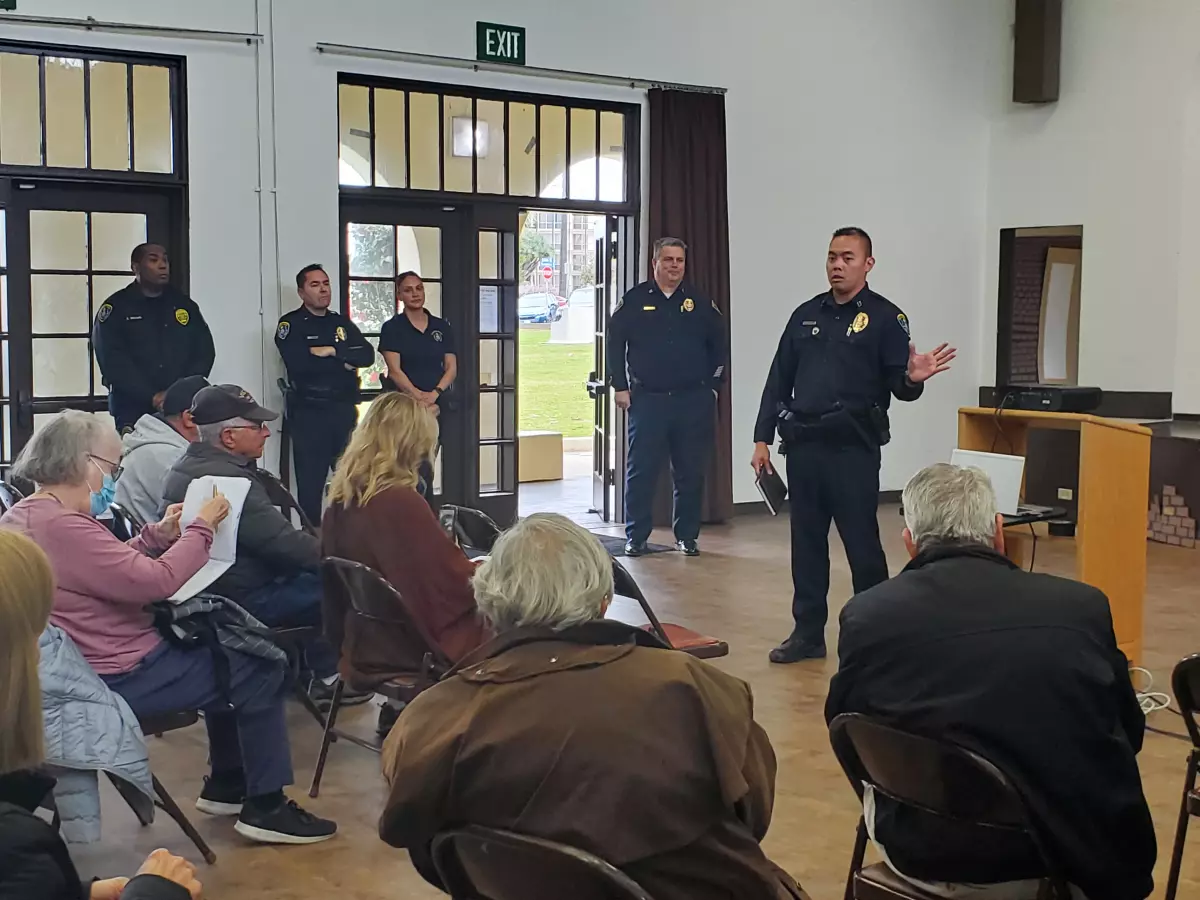 Mayor’s Effort To Weaken Surveillance Oversight Threatens Privacy and California Values
“Government surveillance technologies place progressive values at risk,” writes Lilly Irani of Communication in an opinion piece published in the San Diego Union-Tribune. Irani is concerned by the “laundry list of exempted technologies” proposed by Mayor Todd Gloria as part of the city’s adoption of the Transparent and Responsible Use of Surveillance Technology, or TRUST, ordinance. “Neither corporations nor the government should be given free rein to gather data on us without a damn good reason and protection from unintended consequences,” Irani writes.
The State of the World: Climate Change
Fonna Forman of Political Science appears with UC Irvine’s Richard Matthew in “The State of the World” podcast series from the UC Institute on Global Conflict and Cooperation. The new series is part of IGCC’s “Talking Policy” podcast, hosted by Lindsay Morgan. In this episode, Forman and Matthew speak about the role individuals play in finding climate change solutions.

Adapting to Growing Wildfire Property Risk
“With tens of millions of US homes now confronting a growing risk of destruction by wildfires, adaptation is an urgent policy and research challenge,” Judson Boomhower of Economics writes in a Science “Policy Forum'' piece. Featured in the magazine’s ScienceAdviser newsletter, Boomhower’s research explores how protections against wildfires can be more cost-effective and equitable. Boomhower also appears in this UC San Diego Magazine “Economies of Wildfire” story.
Culture Bearer on Campus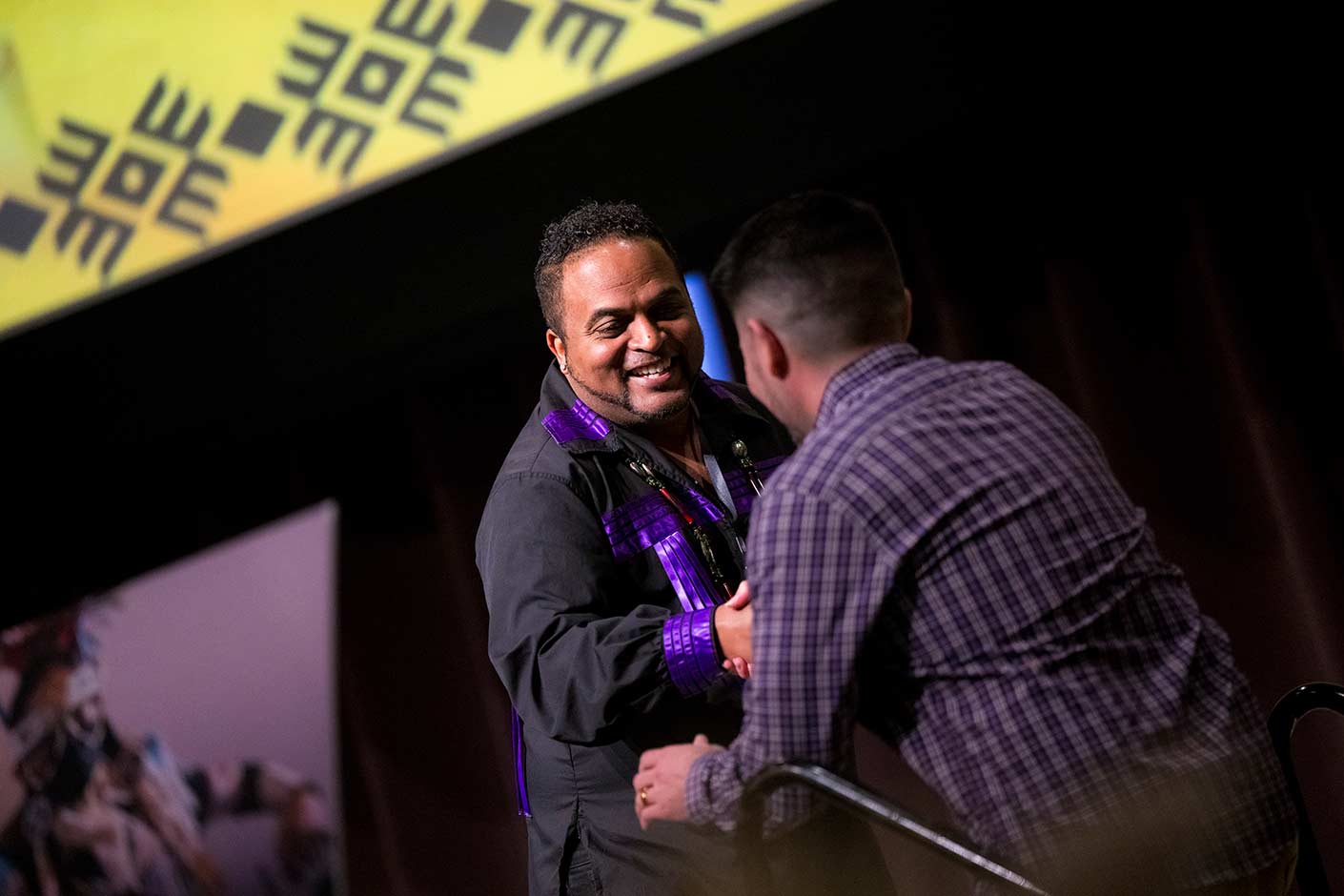
A new initiative of the Native American and Indigenous Studies program, led by Ethnic Studies chair Andrew Jolivétte, welcomes Kumeyaay historian Ethan Banegas as the university’s first Culture Bearer in Residence. Hosted in partnership with the Intertribal Cultural Resource Center, the role will help promote awareness and understanding of the history, culture and life experiences of Native Americans in the region. "I think it helps Native students to see themselves and to know that UC San Diego values the experiences of people like them in a really affirming way,” Jolivétte says. Read more about Banegas at the link above.
San Diego Taxi Drivers Get a Ride-Hailing App
“You can still call a dispatcher to get a ride from drivers with the United Taxi Workers of San Diego (UTWSD). But now those taxis also have an app, just like Uber and Lyft,” reports KPBS News. Lilly Irani of Communication helped to design the “Ride United” app with input from UTWSD drivers and partnered with the software company YAMSO LLC. Watch the video.
 How to Make Envy Work for You
Is envy taking over your life? Try practicing gratitude, Christine Harris of Psychology tells the New York Times. Listing reasons you appreciate your own life can help negate envious emotions, since “it is hard to simultaneously be in both states at once” according to Harris. Her research also shows that young adults feel envy more frequently than older adults, so these feelings can dissipate with age.
ChatGPT and Its AI Chatbot Cousins Ruled 2023: 4 Essential Reads that Puncture the Hype
An essay co-written by Cognitive Science graduate student Cameron Robert Jones – on how knowledge of the world depends as much on bodies as brains – made this top-four list from The Conversation.
 New Faculty Reshape the Meaning of Inclusive Research, Teaching and Service
Andrew Estrada Phoung, new assistant professor in Education Studies, is highlighted in UC San Diego Today as a “Teaching Transformer” for his work creating equitable teaching frameworks. “Being a scholar from a Latinx and Vietnamese immigrant household fuels my passion to research ways to examine and address equity barriers in higher education”, says Phoung. His expertise will support university efforts towards becoming a Hispanic-Serving Institution.
The State of Local Journalism and How It Affects Democracy
Marco Werman, host of “The World” and UC San Diego’s first journalist in residence, appeared on KPBS “Midday Edition” to discuss his role on campus, the Department of Communication’s Democracy Lab initiative and many other matters.
:format(webp)/cdn.vox-cdn.com/uploads/chorus_image/image/72911962/08_Paul_Niehaus_Final_Dims.0.jpg) Future Perfect 50: Paul Niehaus Is Changing How We Think About Fighting Global Poverty
Future Perfect 50: Paul Niehaus Is Changing How We Think About Fighting Global PovertyVox has named Paul Niehaus of Economics as one of 50 "thinkers, activists, and scholars working on solutions to today’s (and tomorrow’s) biggest problems." Niehaus is featured for his work co-founding GiveDirectly, a charity that has sent over $700 million to people living in poverty, primarily in sub-Saharan Africa. Niehaus is also celebrated for his research, mentorship and commitment to leveraging his background in economics for social change.
 Kutas Wins 2023 Revelle Medal
Kudos to Marta Kutas of Cognitive Science on receiving a 2023 Revelle Medal, UC San Diego’s highest honor for emeriti faculty, awarded to those who have demonstrated “sustained, distinguished and extraordinary service to the university.” You can watch the video celebrating Kutas on YouTube, as well as a video of the entire ceremony.
UC San Diego Delegation Advocates for Science-Driven Climate Solutions at COP28
Isabel Rivera-Collazo of Anthropology and the Scripps Institution of Oceanography is featured in a video that played in the Ocean Pavillion at the 2023 United Nations Climate Change Conference (COP28) in Dubai. Collazo’s research centers around the relationship between people and the ocean and how cultural identity can affect climate change responses.
 Creative License
Economics alum Moorisha Bey-Taylor ’08, now an entertainment and intellectual property lawyer, spoke to UC San Diego Magazine about her work protecting the rights of Black creatives and how AI might affect the future of creative industries.
Should San Diego Have More Parking Meters?
Finding parking in San Diego has become increasingly difficult. Are parking meters the solution? A member of the San Diego Union-Tribune’s Econometer panel, James Hamilton of Economics said yes: “People need incentives to use available space more efficiently and find better alternatives. Parking meters can raise revenue for the government without hurting businesses the way other taxes do.” Hamilton also contributed to the panels on whether enthusiasm for electric cars has waned and whether record holiday spending was a good sign for the U.S. economy.
Winkielman Elected to Academia Europea
Congratulations to Piotr Winkielman of Psychology on being elected to Academia Europea! Academia Europea is a non-governmental association acting as a pan-European academy to promote learning, education and research. Membership is by invitation only and includes “leading experts from the physical sciences and technology, biological sciences and medicine, mathematics, the letters and humanities, social and cognitive sciences, economics and the law."
 The World’s Worst Industrial Disaster Harmed People Even Before They Were Born
New research about the 1984 gas leak in Bhopal, India, considered the worst industrial disaster of all time, examines the effects on children in utero at the time of the accident. The study, co-authored by Prashant Bharadwaj of Economics and featured on NPR, found that males born in 1985 in Bhopal faced severe health and economic consequences, including higher risks of cancer and unemployment.
Can Information Campaigns Restore Public Trust?
Writing in Electionline Weekly, a non-partisan publication that reaches election officials around the country, Thad Kousser of Political Science, co-director of the Yankelovich Center for Social Science Research, reports on his team’s research on the effectiveness of informative videos and social media campaigns at rebuilding trust in election integrity. “As the 2024 presidential contest approaches, a robust public information campaign could play a significant role in restoring faith in American elections,” Kousser says. Separately, Kousser spoke to The Hill twice – about Governor Newsom’s China trip and potential 2028 presidential campaign – and to NPR about Governor Newsom debating Ron DeSantis.
 ‘Wasted Education'
John Skrentny of Sociology spoke to WGN-TV Chicago about his new book, “Wasted Education: How We Fail Our Graduates in Science, Technology, Engineering, and Math,” to explore why only 28% of STEM graduates work in STEM jobs. Skrentny noted that STEM workers must continually self-train to update their skills as technology changes throughout their careers, leading many to opt for non-STEM jobs.
No, You Shouldn’t ‘Date ’Em ’Til You Hate ’Em’
Can romance blossom without “spark” at first sight? Kevin Lewis of Sociology tells The Atlantic that being drawn to someone right away could be because they feel familiar. Dating coaches and scholars warn against giving up on potential partners too fast, since attraction can grow while getting to know someone. A combination of initial interest and patience is more important than “spark” in new relationships.
Can romance blossom without “spark” at first sight? Kevin Lewis of Sociology tells The Atlantic that being drawn to someone right away could be because they feel familiar. Dating coaches and scholars warn against giving up on potential partners too fast, since attraction can grow while getting to know someone. A combination of initial interest and patience is more important than “spark” in new relationships.
How Studying Indigenous Genetic Data Can Lead to a More Inclusive Future
Keolu Fox of Anthropology spoke to KPBS “Midday Edition” about the value of Indigenous genetic data in genome studies and the importance of prioritizing Indigenous peoples in scientific research.
Keolu Fox of Anthropology spoke to KPBS “Midday Edition” about the value of Indigenous genetic data in genome studies and the importance of prioritizing Indigenous peoples in scientific research.
Why Migration Is in Such a Mess Once More
Increased rates of migration to wealthy countries have sparked debates about the factors that push people to leave their home countries and how governments should respond to the influx of immigrants looking for jobs. Wayne Cornelius of Political Science told The Economist that there are many opportunities for migrants seeking work in the United States due to the current high demand for labor.
The Housing Market: ‘It’s Nuts To Sell Right Now!’
Economist Marc Muendler spoke to San Diego Metro about rising interest and mortgage rates, which could explain the 22% drop in California home sales this year. “In the upper end of the housing market, there’s less sensitivity to mortgage costs,” he said. Muendler also predicted further development in east San Diego: “The urban sprawl…has a ways to sprawl here.”
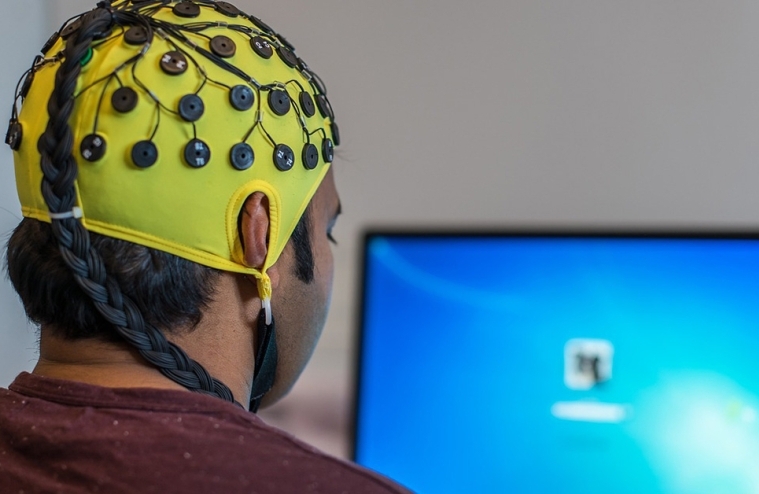 New Studies of Brain Activity Probe Mystery of Electroconvulsive Therapy
Electroconvulsive therapy (ECT), formerly known as electroshock therapy, involves inducing a brief seizure in the brain using controlled doses of electricity. While ECT is highly effective for certain mental illnesses, particularly depression, the reasons for its efficacy have long puzzled the fields of psychiatry and neuroscience. New research by Bradley Voytek of Cognitive Science and Neurosciences Ph.D. candidate Sydney Smith may have an answer. The research was covered by KPBS and by U.S. News (HealthDay), among others. Smith also wrote about their work for The Conversation.
The Future of AI Is Now
Stuart Geiger of Communication and HDSI told UC San Diego Magazine that AI will soon become the new normal. “It feels novel right now and it feels scary now, but I think in a few years, it’s going to be normalized – it’s going to be as ubiquitous as Photoshop.”
50 Years Ago, Psychiatrists Stopped Calling Homosexuality a Mental Illness
The Washington Post sought out the expertise of Andrew Scull of Sociology for a story on the landmark decision of the American Psychiatric Association to remove homosexuality from its list of mental illnesses 50 years ago. Scull explained that homosexuality was originally treated as a mental disorder due to Freudian psychoanalysis. And he noted the significance of this change: “That was the start of something quite profound – something that changed a lot of lives.”
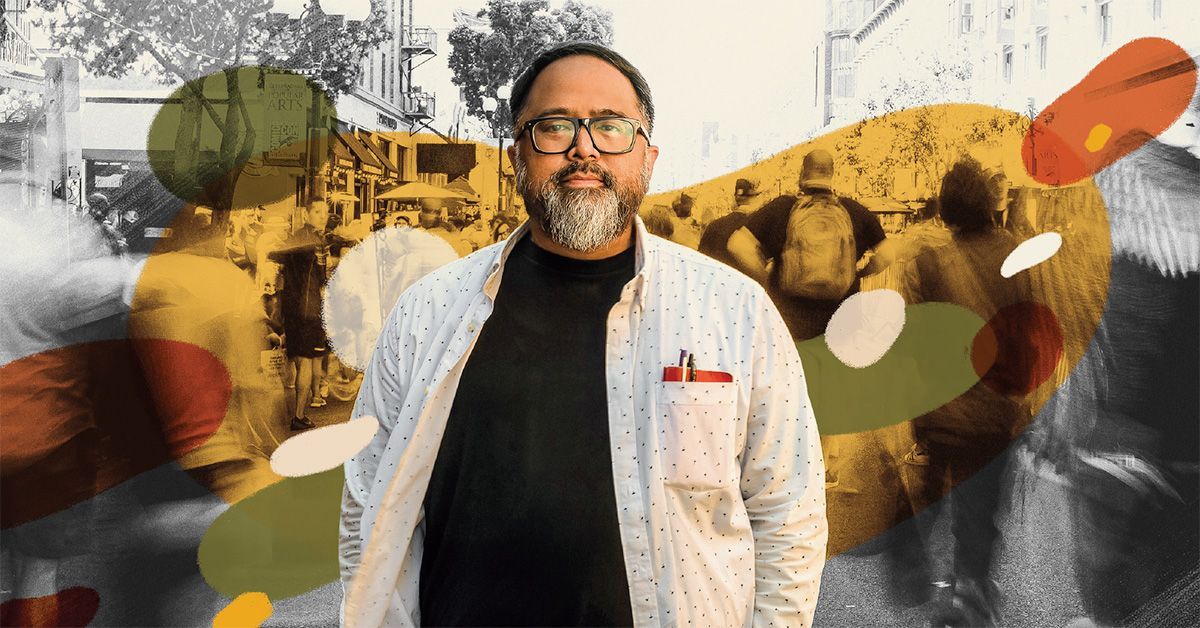 Power to the Poet
Alum Jason Magabo Perez, who earned a bachelor’s in Political Science and doctorate in Communication and Ethnic Studies, is the 2023-24 poet laureate of San Diego. Perez hopes to use his role to launch an ethnic studies-based writing program for San Diego’s youth. “Poetry is grounded in bigger questions of community building and empowerment to articulate ourselves, our desires and our visions,” he told UC San Diego Magazine. Perez also serves as an associate professor and director of ethnic studies at CSU San Marcos.
Model Citizen
Psychology alum Manuelita Brown ’76, creator of the iconic “Triton” and “Sojourner Truth” sculptures on campus, spoke to UC San Diego Magazine about how community influences her artwork. Brown currently serves as chair of the Black Alumni Scholarship Fund, which awards over $150,000 in scholarships to Black students each year, and hopes to increase campus diversity. "I do bronze because I want my sculptures to last," she says. "I like endowed scholarships because I want them to last, too."
Motivations for and Consequences of Federal COVID Relief
Forbes featured research conducted by Jeffrey Clemens of Economics about how federal grants affected state and local economies during the COVID pandemic. Among other findings, the study showed that “pandemic-era grants to state and local governments helped preserve employment in the state and local public sector but did so at an elevated cost per job.”
U.S. Universities Must Tackle Their Huge Carbon Footprints
“The carbon emissions from running large U.S. university campuses greatly exceed those produced by individual laboratories’ use of plastic and electricity,” writes Adam Aron of Psychology, with a UC Davis colleague, in Nature. “Those institutions have a responsibility to urgently retire their fossil-fuel infrastructure.”
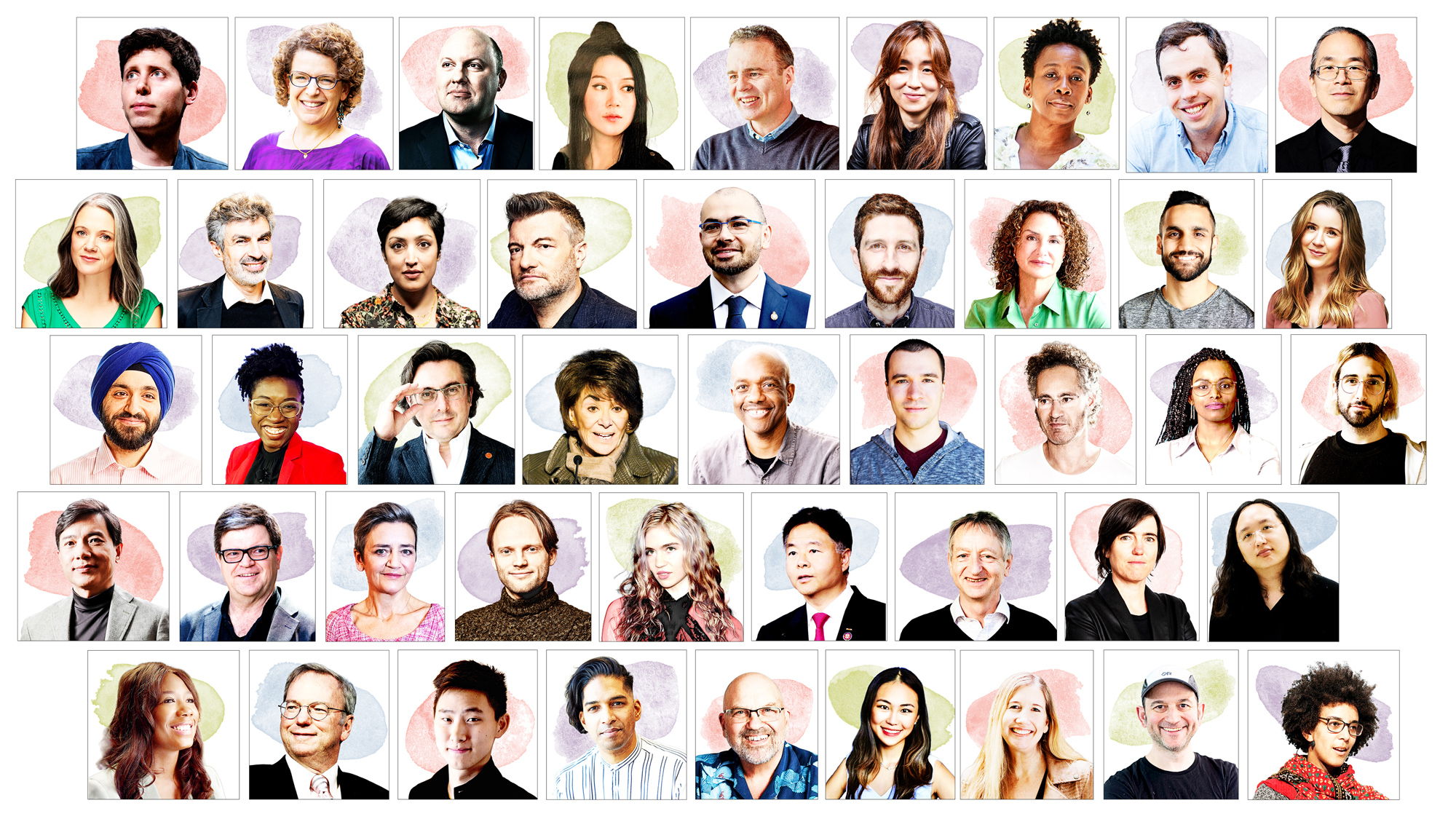 The 100 Most Influential People in AI 2023
TIME Magazine’s list of the most influential people in artificial intelligence includes two School of Social Sciences alums: Rumman Chowdhury of Political Science and Alondra Nelson of Anthropology. Chowdhury is an AI ethicist and founder of Humane Intelligence, a nonprofit that works to “break” AI systems so developers can fix their problems before they are released to the public. Nelson, a researcher for the Institute of Advanced Study and a fellow at the Center for American Progress, specializes in AI policy and facilitates connections between the AI industry and government officials.
It's Hard to Accept, but America's Dominance in Global Food Trade Is Ending
Brazil surpassed the U.S. as the leading exporter of corn this market year, one of several indicators of the U.S.’s declining presence in the global food trade. “You still hear about swings in the GDP or about poverty in Brazil, but agribusiness is in a pocket of the country where everything works just as well as in Minnesota,” Marc Muendler of Economics told Minneapolis Star Tribune business columnist Evan Ramstad. Muendler sees this change as having positive implications for both Americans and Brazilians: “This is what will make Brazil thrive.”
Can Dogs Communicate with Us via Talking Buttons? Scientists Weigh In
Newsweek mentions current research being run out of the Comparative Cognition Lab by Federico Rossano of Cognitive Science.
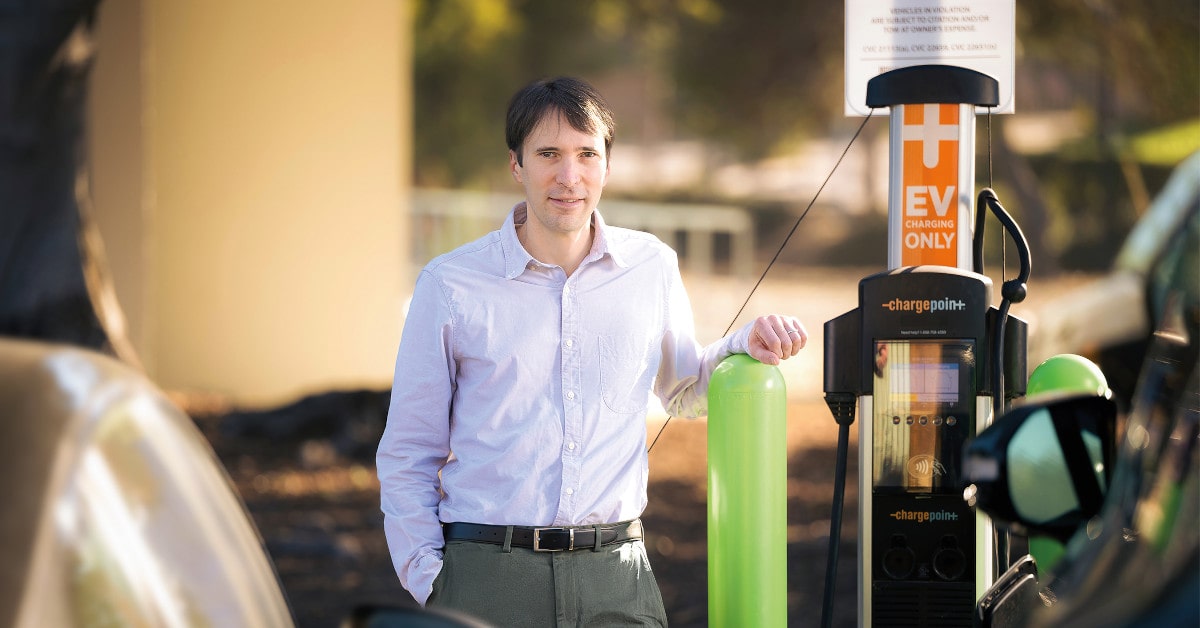
Kiki or Bouba?
The New York Times revisits and further explores – in a fun and interactive way – the kiki/bouba effect, “a classic psycho-linguistics experiment that explores the relationship between nonsense words and abstract shapes,” studied in the early 2000s by V.S. Ramachandran and then graduate student Edward Hubbard of Psychology. Check it out? See which alien, or fruit, or royal headwear you think is “kiki” and which “bouba”?
Breaking Barriers with Philanthropic Support
School of Social Sciences’ alumni, friends and philanthropic partners came together to make an incredible impact, raising nearly $100 million since the Campaign for UC San Diego began a decade ago, to support work on vital social issues.
Will Young Voters Save Democrats in the Midterm Elections?
In a normal year – one that simply followed the average of the 19 midterms since the end of World War II – the party in the White House would be expected to lose around 45 House seats, based on a widely used formula developed by Gary Jacobson of Political Science, the Los Angeles Times reports. But this hasn’t been a normal year. One big uncertainty is how many young voters will cast ballots. Separately, a New York Times column by Thomas Edsall, “The Left-Right Divide Might Help Democrats Avoid a Total Wipeout,” also cites Jacobson and his timely essay, “The 2022 U.S. Midterm Election: A Conventional Referendum or Something Different?”
Inflation Inequality: Poorest Americans Are Hit Hardest by Soaring Prices on Necessities
Economics graduate student Jacob Orchard in The Conversation: The fastest rate of inflation in 40 years is hurting families across the U.S. who are seeing ever-higher prices for everything from meat and potatoes to housing and gasoline. But behind the headline number that’s been widely reported is something that often gets overlooked: Inflation affects different households in different ways – and sometimes hurts those with the least, the most.
 The Bellagio Center Residency Program
Janis Jenkins and Thomas Csordas of Anthropology were awarded with a Rockefeller Foundation Bellagio Center residency for their demonstration of professional contributions to their field and their alignment with the beliefs of the Rockefeller Foundation, which works to promote the well-being of humanity, particularly through issues that have a direct impact on the lives of socially and economically disadvantaged populations around the world. They’ve now completed the four-week residency at the Rockefeller Foundation’s renowned Bellagio Center in Italy.
TRITON 5
Newsweek mentions current research being run out of the Comparative Cognition Lab by Federico Rossano of Cognitive Science.
Car Talk
The world has 1.4 billion passenger vehicles. That’s not planes or trains, buses, trucks or even motorbikes. It’s automobiles. And while today’s gas-powered cars are cleaner than they were decades ago, they still produce a tremendous amount of air pollution. Will zero-emission electric vehicles save the day? “Maybe,” says Mark Jacobsen of Economics “but we’re years away from a fully electric fleet.” In the meantime, Jacobsen is working on ways to drive the most polluting cars off the roads – equitably.
 Datnow Elected to National Academy of Education
Amanda Datnow of Education Studies is one of only 18 exceptional education leaders to be elected to the National Academy of Education in 2023. Datnow, who is a Chancellor’s Associates Endowed Chair and also associate dean of the School of Social Sciences, is in amazing company, with past elections of University of California President Emeritus Dick Atkinson of Psychology and Cognitive Science, Mike Cole of Communication and Bud Mehan of Sociology.
 Confessions of a Fainthearted Student Farmer: Strawberry Fields Forever
Undergraduate student Phoebe Skok – who is majoring in Anthropology/Climate Change and Human Solutions and also minoring in Linguistics – gives a firsthand account of some unexpected lessons from enrolling in the Climate Justice Action Resilience Scholars (CJARS) experiential course offered by Anthropology and Urban Studies and Planning.

‘I Am Forever Grateful’
UC San Diego Today asked graduating students “Who at the university made a difference in your life?” and got back an outpouring of love for students, postdocs, faculty and staff. Students featured for their inspiring responses include Amanda Corona of Education Studies (who is also an Advancement staff member), Casey Donovan of Political Science, Princess Labrador of Cognitive Science, Isabella Newell of Psychology and Saul Perez-Aragon of Political Science.
 Banet-Weiser Named Dean of U Penn’s Annenberg School
Communication alum Sarah Banet-Weiser – who earned her B.A., M.A. and Ph.D. from UC San Diego’s Department of Communication – has been named the new dean of the Annenberg School for Communication at the University of Pennsylvania.
Misconceptions Surrounding Homelessness Are Stifling Progress
“Homelessness is one of the biggest issues facing California,” write Mirle Rabinowitz Bussell, Leslie Lewis and Stacey Livingstone of the Homelessness Hub in Urban Studies and Planning. “With a problem so far-reaching in our state, you would think we would understand this crisis better. But new research shows that many common views on homelessness are unfounded stereotypes.” For one, most people don’t move to California for its weather and services; most become homeless in California, in the same county where they currently reside. And also: Mental health and substance-use issues often don’t precede homelessness but follow it. The co-authors dispel the myths through recent statewide research by the Benioff Homelessness and Housing Initiative at UC San Francisco, as well as through their own work with the Jewish Family Service Safe Parking Program in San Diego.
Who Was Robert Oppenheimer?
Sociologist Charles Thorpe, author of the book “Oppenheimer: The Tragic Intellect,“ spoke with QR Calgary Radio as a featured guest on the “Afternoons with Rob Breakenridge“ show.
 Industrial Disasters May Cause Higher Rates of Disability and Cancer for Future Generations
The Bhopal gas tragedy in India may have had a greater area of impact than previously believed – and a much longer time horizon. A study co-authored by Prashant Bharadwaj of Economics shows effects up to 62 miles away from one of the world’s worst industrial disasters and multi-generational health impacts. The study was covered by NPR, Salon, Forbes and others.
It Will Cost Up to $21.5 Billion to Clean Up California’s Oil Sites. The Industry Won’t Make Enough Money to Pay For It.
According to a recent Carbon Tracker study, ProPublica reports, “the cost of cleaning up California's onshore oil and gas industry will be triple the industry’s projected profits.” While there are inherent uncertainties in estimating future oil revenues, said Judson Boomhower of Economics, the report’s estimates for environmental liabilities track with his own research. “It’s a state in the twilight of its production period, and that means big liabilities,” he said, adding that now is the time for regulators to prevent companies from off-loading their wells to “thinly capitalized firms” that cannot manage the clean-up. The investigative story was picked up by Popular Science, among many other outlets.
 ChatGPT Tricks Teachers
Can you tell if what you’re reading right now was written by a human or generated by artificial intelligence? Do you care? Those are essentially the questions that researchers asked in an experiment with ChatGPT at a regional high school. The study – by Gail Heyman of Psychology, postdoc Tal Waltzer and local high school student Riley Cox – showed that even confident educators have trouble recognizing AI-generated essays.
Artificial Intelligence Is Already Changing How Teachers Teach
The Washington Post reports that Stuart Geiger of Communication and HDSI “completely redesigned a class on the social and cultural implications of data and AI after ChatGPT burst onto the scene.” Geiger’s “policy now requires students to write a reflective passage alongside each assignment about the writing process, asking them to document what sources they’re using and how a site such as Google Scholar or a certain database might skew their results. They can use AI but must provide their full dialogue with the bot.” For more on the topic from Geiger, check out the UC San Diego Today feature “Entering Our ChatGPT Era.”
How to Make Your Assignments and Activities More Equitable
The Chronicle of Higher Education’s “Teaching” newsletter reports on a new paper co-authored by Michel Estefan of Sociology that describes three strategies for more inclusive teaching. Making all students feel welcomed, Estefan says, is important but insufficient. Reckoning with structural barriers requires instructors to change their assignments and class activities.
Exemplary Staff Employee of the Year
Congratulations to Cecilia Ozkan, chief administrative officer in Ethnic Studies, on being recognized with a 2022-2023 UC San Diego Exemplary Staff Employee of the Year Award!
Gause Awarded Russell Sage Foundation Grant
As part of the Russell Sage Foundation program in “Social, Political and Economic Inequality,” LaGina Gause of Political Science will examine which legislators protest in Congress, their motivations for protesting, and the political consequences of protesting.
UC President’s Postdoctoral Fellowship
Linguistics doctoral alum Ray Huaute has been awarded a prestigious UC President's Postdoctoral Fellowship to UC Riverside to pursue his project of a new pedagogical grammar for Cahuilla, one of California’s critically endangered Indigenous languages.
 Take 10 with a Triton: Gerardo Arellano
Ethnic Studies alum Gerardo Arellano, director of the Raza Resource Centro on campus for the past nine years, has also just taken on the new role of executive director of Hispanic-Serving Institution (HSI) Initiatives. He talks with UC San Diego Today about “Community, Caballos and the Countryside.”
Former Foster Child, Mother of Two Earns Doctorate
CBS8 (linked above) and NBC San Diego featured the inspiring story of Education Studies graduate student Sade Burrell, who defied the odds to earn her doctoral degree. Burrell’s goal now: “To improve the lives of kids who find themselves in foster care. To help them get an education. And show them – anything is possible.”
 This Actress Has Been Breaking Barriers in a Big Way for Decades
Forbes profiles Psychology alum Marilee Talkington, who is legally blind and is now playing Morgan Le Fey in the musical “Camelot” at Lincoln Center Theater. Talkington was a senior at UC San Diego – a psych major/math minor – when she reluctantly signed up for an acting class. “By the second day of the course,” Forbes reports, “when she started working on her first monologue, Talkington knew that her life had forever changed.”
This Is One Republican Strategy That Isn’t Paying Off
New York Times columnist Thomas Edsall considers Republicans' “concerted drive to disenfranchise Democrats” with the help of Thad Kousser of Political Science, co-director of the Yankelovich Center for Social Science Research. The column also cites research by fellow Yankelovich Center co-director, political scientist Zoltan Hajnal, in which Hajnal and colleagues show that holding local elections on the same day as federal contests can significantly change who turns out to vote.
Inside the Quest to Engineer Climate-Saving “Super Trees”
At least one Silicon Valley start-up is now planting trees genetically modified to store more carbon. An MIT Technology Review story on the effort, picked up by Govtech.com and others, sought out the opinion of Keolu Fox of Anthropology. Fox, who is a geneticist by training and is also co-director of science at the nonprofit Lab to Land, said he isn’t convinced by this particular company’s approach, even while he understands desperation in the face of climate change.
The Failed Affirmative Action Campaign That Shook De mocrats
To make sense of Prop 16’s failure, the New York Times “spoke to dozens of voters,” among them Political Science undergraduate student Sunjay Muralitharan, a leader of the Democratic Party chapter at UC San Diego. Muralitharan, the New York Times reports, joined the campaign against race-conscious affirmative action in California in 2020, when he was just 16. A Bernie Sanders supporter, who favors universal basic income, a higher minimum wage and national health care, Muralitharan argues for a policy that gives weight to low-income college applicants: “Affirmative action should be about economic status,” he says.
2023 Dissertation Year Fellowship Award Recipients
Kudos to graduate students Rachel Fox of Communication and Mariela Declet Perez of Anthropology on being selected to receive the prestigious UC President’s Dissertation Year Fellowship.
Moore Reappointed Dean of Undergraduate Education
John Moore of Linguistics, praised as “a thoughtful and positive leader who is a valuable resource and collaborator with offices across campus,” has been reappointed Dean of the Division of Undergraduate Education at UC San Diego.
3 Lessons Past Hollywood Strikes Can Teach Us About the Current Moment
In a rare dual strike, actors have joined screenwriters on the picket line, effectively bringing Hollywood to a standstill. Erin Hill of Communication told NPR she’s both “terrified and optimistic about” the strike, which comes at a critical moment technologically and economically. In the story, Hill explains at length how past strikes have also been responses to the emergence of new technology and new content forms made possible by that tech, with streaming and AI being the latest.
When the Minimum Wage Rises, Does Homelessness Rise Too?
Boston Globe columnist Jeff Jacoby considers a working paper by Seth Hill of Political Science, in which Hill analyzes minimum-wage and homelessness data from 100 cities between 2006 and 2019. “I find,” Hill writes, “that minimum wage increases lead to increased point-in-time homeless population counts. Further analysis suggests disemployment and rental housing prices, but not migration, as mechanisms.”
Another Trump Legacy: Governor Troll Wars
While states have always competed with each other for residents and business, Thad Kousser of Political Science told Politico, “the particular personalization of these [governor] attacks on other states’ governors is a new trend.” Separately, Kousser also spoke with ABC News about increasing polarization of the U.S. into red states and blue states and with the Los Angeles Times about how Calif. Gov. Newsom aggravates his allies.
A Deep Look Inside Our Minds
UCTV video: “Adapting to Change and Stress” with Andrea Chiba of Cognitive Science, Karen Dobkins of Psychology and Nick Spitzer of Biology as featured guests.
Overturning Affirmative Action Will Change the College Application Process
John Skrentny of Sociology spoke with Axios about what might come next in college admissions in light of the Supreme Court decision to strike down affirmative action.
 2023’s Best States for Racial Equality in Education
Holly Okonkwo of Ethnic Studies was one of the experts featured in this WalletHub report. In response to one of three highlighted questions, Okonkwo said: “It is in our best interest that we provide equitable educational opportunities for all. An educated and well-balanced populace is central to an effective democracy. In addition, solving the complex societal issues that we face now and in the upcoming future requires that we educate all students, from all walks of life.”
2024 Boyd McCandless Award
Kudos to Caren Walker of Psychology! Walker has been recognized by the American Psychological Association “as a young scientist who has made a distinguished contribution to developmental psychology.” The award is for continued efforts rather than a single outstanding work.
 Pre-Law Program Provides Mentorship and Community Connections
Two dozen future lawyers recently spent a sunny day in downtown San Diego speaking with district attorneys, touring the San Diego Central Courthouse and observing the court in session. The 2023 Law School Launch – part of the Krinsk-Houston Law & Politics Initiative in the Department of Political Science – gave pre-law students at UC San Diego a glimpse into the law school admissions process and the courtroom. The UC San Diego Today story about the initiative features director Maysa Nichter, along with program alum Will Reynolds.
2023 Heinz I. Eulau Award
Congratulations to Agustina Paglayan of Political Science and the School of Global Policy and Strategy on winning the American Political Science Association’s award for best article published the previous calendar year in the discipline’s flagship journal, American Political Science Review. ICYMI, Paglayan’s paper, “Education or Indoctrination? The Violent Origins of Public School Systems in an Era of State-Building,” was described in this UC San Diego Today story.
Using Place-Based Learning to Explore Immigration History
Education Studies doctoral student Marco Chacon published a guest blog in Edutopia explaining how “high school teachers can give students a chance to gain insights into their community by exploring the nuances of immigration patterns.”
Serious Business: Expanding the Talent Pool for a More Inclusive Economy
The Department of Economics and the Rady School of Management have recently formed the Business and Economics Mentoring Program, which provides students with access to academic support, peer-to-peer mentoring, research opportunities and more. The program’s goal is to expand the diversity of students in the Business Economics major that was launched in 2021. The story includes the perspectives of student mentor Andrea Lai, mentee Grace Njuguna and participating Economics faculty member Emanuel Vespa, as well as Julie Cullen, then chair of the Economics Department.
 It Rocks in the Treetops, But Is That Bird Making Music?
“Birdsong has inspired musicians from Bob Marley to Mozart and perhaps as far back as the first hunter-gatherers who banged out a beat,” reports the New York Times,. “And a growing body of research is showing that the affinity human musicians feel toward birdsong has a strong scientific basis. Scientists are understanding more about avian species’ ability to learn, interpret and produce songs much like our own.” The story includes insights from Psychology graduate student Jeffrey Xing, describing some of his work with Timothy Gentner on the Australian pied butcherbird.
Kiki or Bouba?
The New York Times revisits and further explores – in a fun and interactive way – the kiki/bouba effect, “a classic psycho-linguistics experiment that explores the relationship between nonsense words and abstract shapes,” studied in the early 2000s by V.S. Ramachandran and then graduate student Edward Hubbard of Psychology. Check it out? See which alien, or fruit, or royal headwear you think is “kiki” and which “bouba”?
Car Talk
The world has 1.4 billion passenger vehicles. That’s not planes or trains, buses, trucks or even motorbikes. It’s automobiles. And while today’s gas-powered cars are cleaner than they were decades ago, they still produce a tremendous amount of air pollution. Will zero-emission electric vehicles save the day? “Maybe,” says Mark Jacobsen of Economics “but we’re years away from a fully electric fleet.” In the meantime, Jacobsen is working on ways to drive the most polluting cars off the roads – equitably.
Why Ukraine Shouldn’t Talk to Russia – Yet
For nearly as long as the Russia-Ukraine has raged, international leaders, not to mention pundits, have been calling for peace negotiations. “Though well-intentioned, these appeals fail to take into account the fundamental nature of war, which requires the fighting to play out before a lasting peace can be a realistic possibility,” writes Branislav Slantchev of Political Science, in a piece he co-authored for The Atlantic. “At this moment in the conflict, any calls for talks are more likely to prolong the war and increase the suffering they seek to end.”
 NSF CAREER Award
Congratulations to Sara Lowes of Economics on being selected for the National Science Foundation’s most prestigious award for junior faculty. Lowes' CAREER grant will support four projects on one theme – that “insights from anthropology, culture and local context can help explain differences in development policy success across countries.”
Degrees of Distress: How Higher Education Institutions Hurt and Help Student Mental Health
“Degrees of Distress,” co-authored by Sam Museus of Ethnic Studies and commissioned by the College Futures Foundation, “examines through a racial equity lens how higher education institutions hurt and help student mental health, with the goal of informing policy, practice, and narrative for a national movement toward students thriving and succeeding in postsecondary and beyond.”
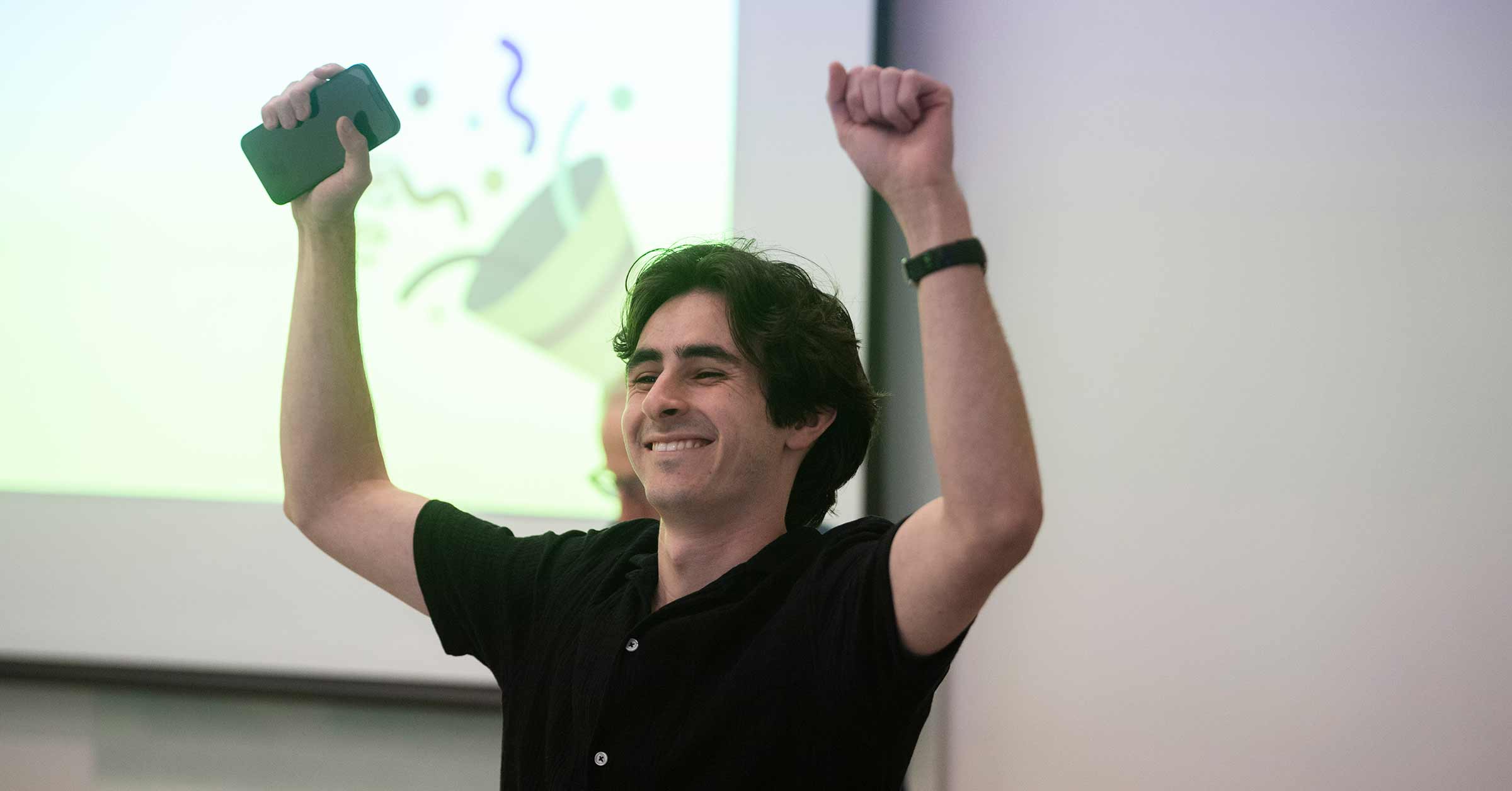 Class Act: Award-Winning Speech and Debate Team Also Becomes a Course
When was the last time you heard of a club becoming a class? UC San Diego’s award-winning Speech and Debate Team is still going strong as a student organization, but it has also become a course in the Department of Communication (COMM 80 - Public Presentation and Persuasion). Students are now able to receive academic credit for joining the Speech and Debate team and competing in intercollegiate tournaments, says head coach and course creator Robert Campbell.
An Update on Housing Inflation in the Consumer Price Index
The White House Council of Economic Advisors cited two papers on housing demand by Johannes Wieland of Economics.
Many San Diegans Live in Homes with Three Generations or More, Whether or Not There’s Space
Overcrowded conditions don’t lead to good outcomes. But, said Juan Pablo Pardo-Guerra of Sociology speaking with KPBS, when there is enough space, multi-generational homes provide more benefits than some might think, including a greater sense of community, college attendance, and women in the workforce.
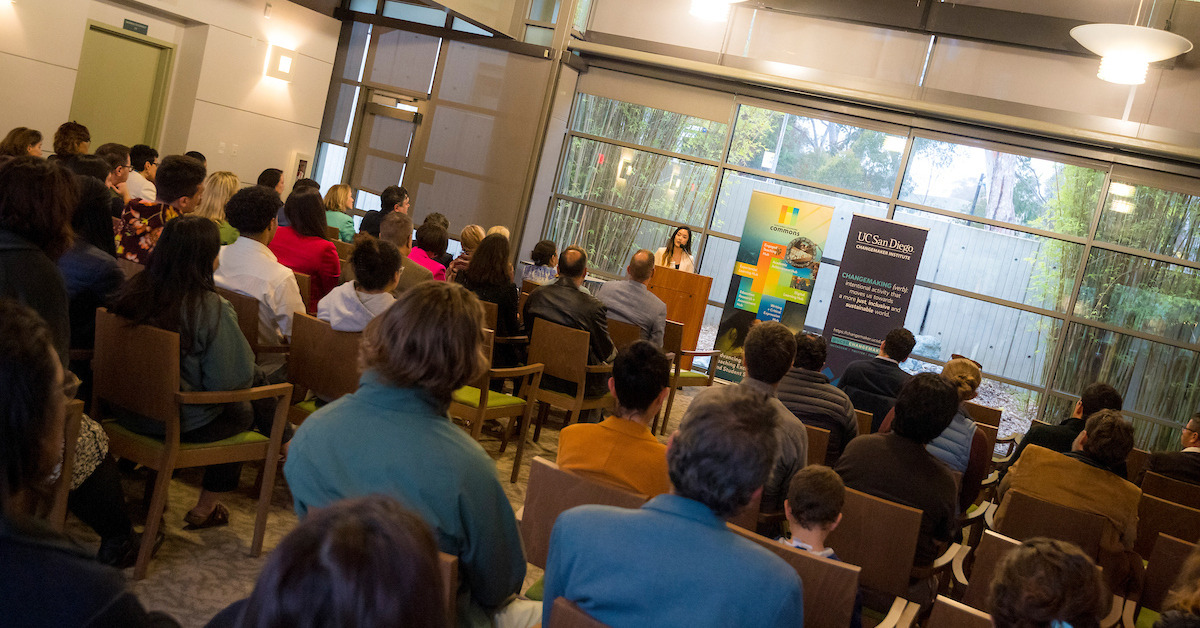 Stories of Transformative Impact
The 2023 Changemaker Fellow Showcase featured three fellows from the School of Social Sciences: Education Studies’ Amy Bintliff, Political Science Ph.D. candidate Leonardo Falabella and Education Studies Ph.D. candidate Vanessa Na, who shared how their projects are driving positive change inside and outside the classroom. The newest cohort of Teaching + Learning Commons Community Engaged Changemaker Fellows includes: Alison Black, Amy Eguchi and Rachel Millstone of Education Studies; David Pedersen of Anthropology; Sue Peerson of Urban Studies and Planning; and Lillian Walkover of Communication and Global Health.
2023 Alumni Award Honoree
Urban Studies and Planning alum Coleen Frost ’88 was one of four extraordinary Tritons honored at UC San Diego’s 44th Annual Alumni Awards Celebration. Frost is the Deputy Chief Executive Officer of San Diego’s regional planning agency, SANDAG. Working to reimagine a data-driven future where technology maximizes our transportation system, Frost has built her career around improving quality of life and bringing diverse perspectives together to achieve a greater good.
 UCSD Grad Breaking Barriers in Hollywood
Economics alumnus Peter Jang is “kicking down doors as a stuntman, actor, screenwriter and director in Hollywood,” reports FOX5. He’s got his own action figure and, in 2016, he launched his own production company, Simplicity Pictures.
Madam President
Cognitive Science alum Sian Beilock ’97 likes to push boundaries. Her most recent achievement might be her biggest breakthrough yet. She is president-elect of Dartmouth, the first woman to hold this position in the Ivy League institution’s 250-year history. Before Beilock assumes the prestigious role, she explains how UC San Diego helped her get to where she is today.
Community Oversight of San Diego Police Grinds to a Halt
The commission charged with reviewing cases of alleged police misconduct has ceased operations, reports KPBS News, and the backlog is so extensive that SDPD is closing internal investigations without input from the commission. “We can’t guarantee somebody who’s being pulled over right now that their complaint is going to be heard and given a fair shake by this commission,” said Patrick Anderson of Communication and Ethnic Studies, who served as a commissioner before resigning due to untenable workload. “That’s a tragedy. And it’s a political disaster.” An extended interview with Anderson is available on the “San Diego News Now” podcast from KPBS, and the Union-Tribune also sought out Anderson’s expertise.
 Are Children More Curious than Apes? Yes, and No, Finds New Study
Earth.com reports on a study by Federico Rossano of Cognitive Science and Alejandro Sánchez-Amaro, former postdoc at UC San Diego now with the Max Planck Institute for Evolutionary Anthropology. The study makes the first direct comparison between human children and great apes regarding their propensity for exploration and risk-taking.
It’s Time to Care About Pronouns
The Pronouns Project, a campus advocacy organization focused on gender inclusivity, acceptance and education was founded by three students: Aliyah Annis, who uses she/they pronouns and is a Political Science/public law major; Kyra Black (they/them), who is majoring in marine biology, and Angelina Lopez (they/them), who is studying international business and Critical Gender Studies.
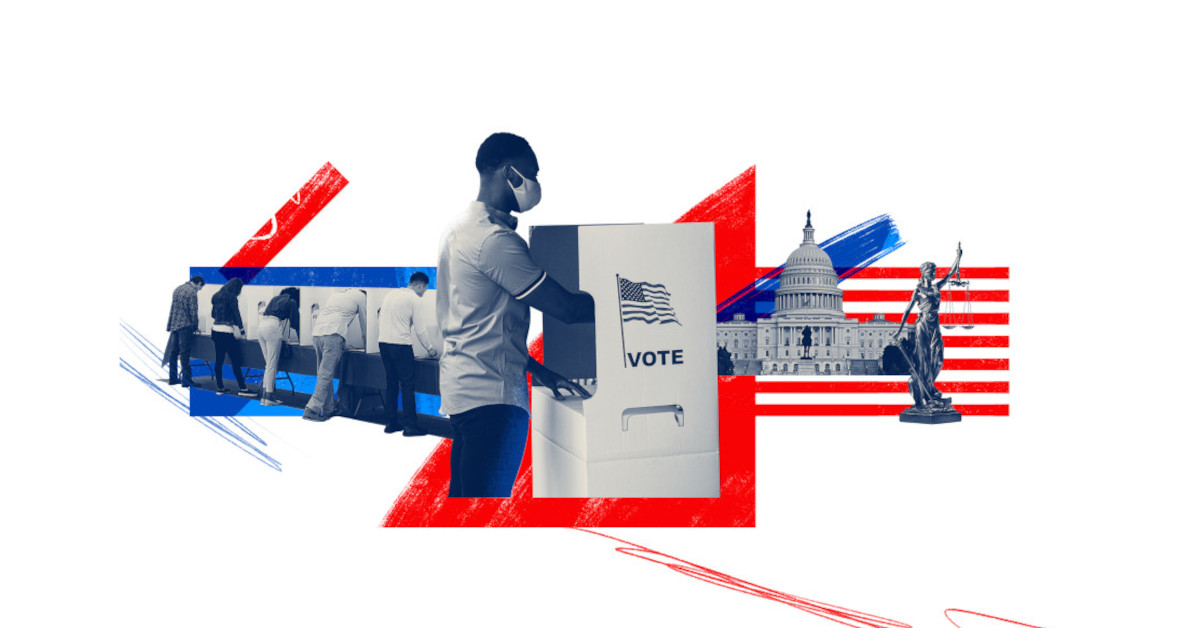 Our Divided States
Finding practical solutions to some of the most pressing problems in the U.S. drives the work of political scientists Zoltan Hajnal and Thad Kousser as co-directors of the Yankelovich Center for Social Science Research at UC San Diego. At the center, which serves as an incubator for pioneering ideas and supports a wide variety of research-practice partnerships that spur public engagement and civic improvements, Hajnal and Kousser also each lead their own projects – both related to democracy-building and voting reforms. Hajnal and Kousser recently sat down with UC San Diego Magazine to discuss what they see as the biggest threats to American democracy – and some possible solutions.
2023 Chancellor’s Dissertation Medal
Kudos to Daegyeong “D.G.” Kim of Political Science on earning the 2023 Chancellor’s Dissertation Medal for outstanding doctoral research.
Can $4,000 Lift a Family Out of Poverty? New San Diego County Program Aims to Find Out
A federally funded San Diego County program operated by Jewish Family Service of San Diego will give a direct cash payment of $4,000 to 2,250 low-income San Diegans and no payment to another similar group. Researchers will then study the two groups and see how their financial pictures evolve over time. Jeffrey Clemens of Economics told the San Diego Union-Tribune that he’s excited to learn of the local program as it presents a valuable learning opportunity. Pointing to Give Directly, a research and charity nonprofit co-founded by fellow UC San Diego economist Paul Niehaus, Clemens said that while the effect of cash transfers in lower-income countries has been studied and the results are promising , less is known about what happens in a higher income country like the United States. Separately, Clemens spoke with CNN and others about the possible economic fallout of the debt ceiling fight.
How the Migration of Southern Whites in the 20th Century Shaped America’s Landscape
NPR’s Michel Martin speaks to Samuel Bazzi of Economics and the School of Global Policy and Strategy about the lasting cultural and political impact of the northward movement of white Southerners in the early 20th century.
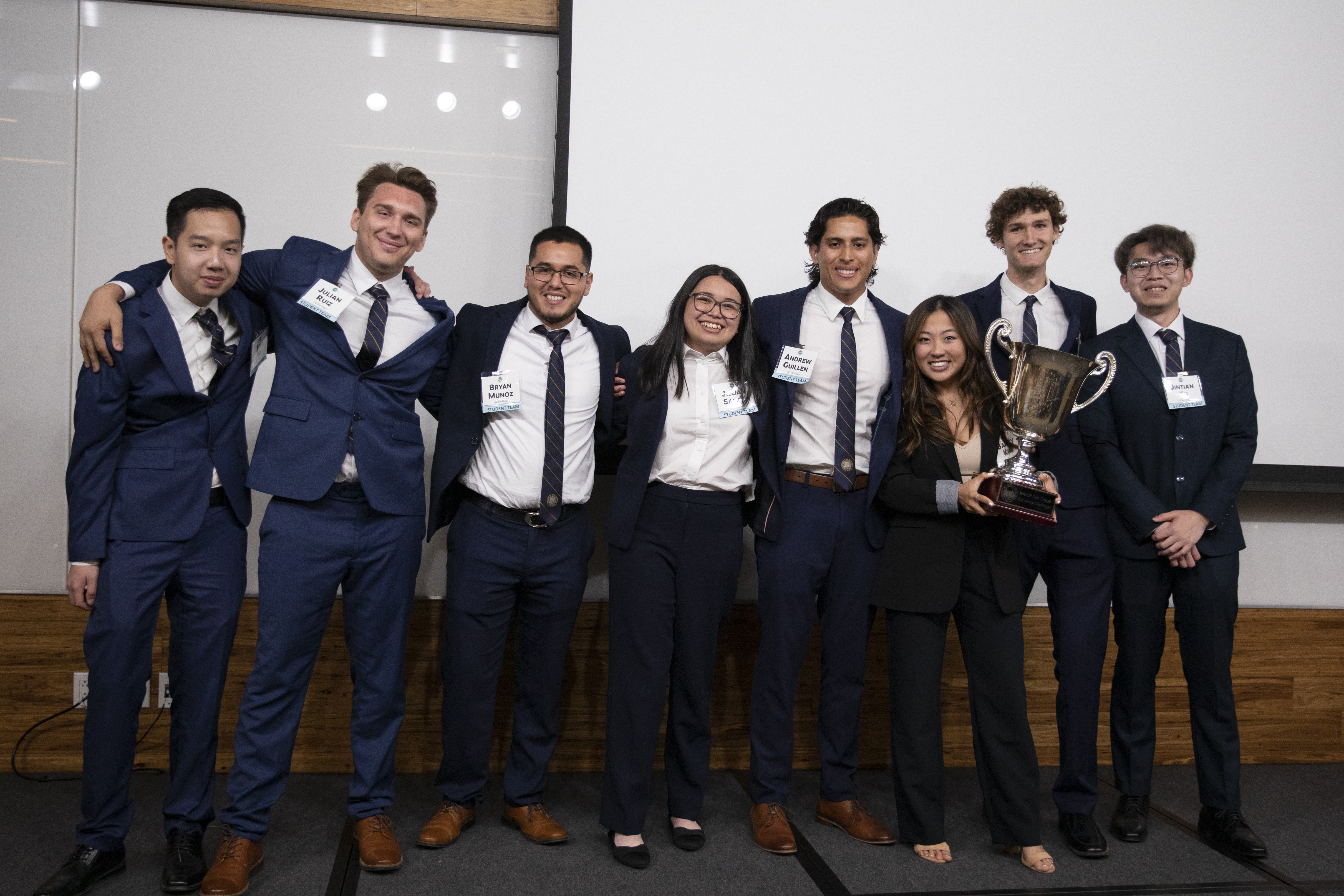 2023 UC San Diego NAIOP Team
Urban Studies and Planning students competed in and won the annual NAIOP San Diego University Challenge on Thursday, May 4, 2023. The challenge is a head-to-head real estate competition, sponsored by the San Diego chapter of NAIOP (the Commercial Real Estate Development Association), in which teams from UC San Diego, USD and SDSU compete to develop the highest and best use for an actual development site in San Diego County.
Harnessing Global Science Networks to Accelerate Cultures of Learning
Andrea Chiba of Cognitive Science is co-PI on an NSF-funded research project to help address global educational needs.
Culture Wars Intensify as Legislators Face Censures, Expulsions
Censures and expulsions in some state legislatures have become a growing consequence of the intensifying culture wars across the country, reports ABC News. Not only are both sides seemingly drifting further apart in policy, said Thad Kousser of Political Science, but blue states are getting bluer and red states are getting redder. “There’s no issue in which the states are not diverging further now than they did a generation ago,” Kousser said. Separately, Kousser also spoke with KPBS News about a poll finding that a large majority of San Diego County officeholders received political threats: “These findings are both terribly shocking, but unsurprising, given where we are in American politics.”
Title 42 Is Gone, but Not the Conditions Driving Migrants to the U.S.
Beyond the factors pushing migrants out of their home countries, the magnet drawing people to the United States is the labor market. Unemployment stands at its lowest level in decades, yet there are millions of unfilled jobs. “There has never been a better moment for migrants to seek work in the U.S.,” Wayne Cornelius of Political Science told the New York Times. Cornelius was also quoted in analysis by Bloomberg columnist Eduardo Porter that ran in the Washington Post, “Biden’s Wall Won’t Work Any Better Than Trump’s,” citing research conducted by UC San Diego’s Mexican Migration Field Research Program when Cornelius was its director.
First Human ‘Pangenome’ Aims to Catalog Genetic Diversity
More than two decades after the first human genome was sequenced, reports Nature News, scientists have completed a draft “pangenome,” which includes the genetic sequences of 47 people from Africa, the Americas, Asia and Europe. “This is like going from black-and-white television to 1080p,” said Keolu Fox of Anthropology, who was not involved in the study. The diversification will help scientists study the wide variation in human diseases, but Fox worries the data might be put to commercial use by the pharmaceutical industry without benefitting the study participants or their communities.
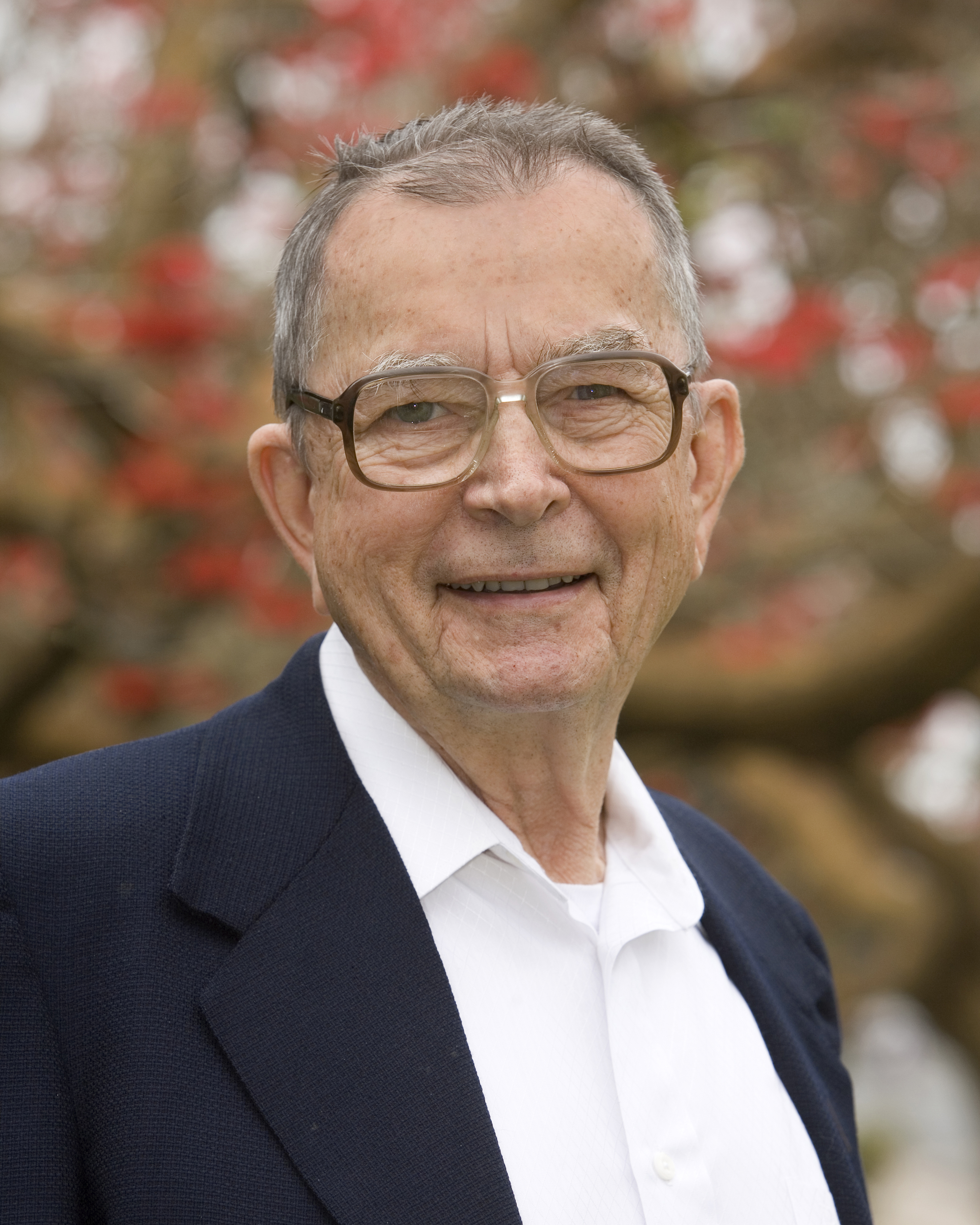 In Memoriam: Norman H. Anderson
Norman Anderson, one of the Department of Psychology’s three founding faculty members and one of its greatest benefactors, was 97 at his passing. Over the course of his long life, Anderson made profound contributions both to the field of psychology and to the UC San Diego department that he helped to build.
Does Your Dog Truly Love You? Science Has the Answer
A feature in Newsweek includes work by Federico Rossano of Cognitive Science, whose lab is evaluating the extent to which our furry friends can use word boards to communicate with their humans.
UC San Diego Experts Take ‘A Deep Look Inside Our Minds’
Andrea Chiba of Cognitive Science, Karen Dobkins of Psychology and neurobiologist Nick Spitzer were the featured speakers in a “Deep Look” webinar about adapting to change and stress. The La Jolla Light reports on their talks.
 Creating a Safe Space for Yourself and Others
Zoe Tait – who is majoring in cognitive behavioral neuroscience (Cognitive Science and Psychology) and minoring in Linguistics – is co-president of the campus chapter of Active Minds, a national student organization focused on destigmatizing mental illness. In this UC San Diego Today story, Tait and fellow student leaders share what led them to Active Minds and why mental health matters.
The Class of 2023: Resilient and Ready for the World
Members of UC San Diego’s Class of 2023 are diverse, perseverant and passionate about making a difference. Together, they have pushed the envelope of who a student can be and are ready to go out and give back. Some of the outstanding graduates that exemplify these qualities include Nelly Carreno of Sociology and Montana Gray of Anthropology. (Carreno and Gray are in the UC San Diego story linked above.) Another Class of 2023 piece, “Dedicated to their Dreams,” includes Saul Perez-Aragon of Political Science.
 Bring a Beginner’s Mind
Angela Booker of Communication is embarking on a new venture as inaugural provost of Eighth College – as well as training as a martial artist. Learn more in this UC San Diego Today feature about Booker and the university’s newest residential college.
Stiff EPA Emission Limits to Boost US Electric Vehicle Sales
Environmental economist Mark Jacobsen spoke with KPBS about the Biden administration proposing strict new automobile pollution limits that would require up to two-thirds of new vehicles sold in the U.S. to be electric by 2032, a nearly tenfold increase over current electric vehicle sales. Jacobsen said that the effects of this new proposal could greatly reduce the effects of climate change, especially if the country’s electric grid is also decarbonized. It’ll also improve the health of communities across the United States and in San Diego.”
 Listen Closely. Retired UC San Diego Prof. Researches the Power of Language
Ana Zentella of Ethnic Studies, known for her research on varieties of Spanish spoken in the United States, was recently inducted into the American Academy of Arts and Sciences. She talks with the San Diego Union-Tribune about her work as an “anthro-political linguist,” what she’d like to do as a new academy member and how what we speak (and the way that we speak) affects our material realities.
 Anderson Appointed Guggenheim Fellow
Patrick Anderson of Communication and Ethnic Studies has been appointed a 2023 Guggenheim Fellow. Anderson will use his fellowship to complete a book about his service on the San Diego Commission on Police Practices, and about his work with local groups who experience disproportionate rates of police encounters and police violence.
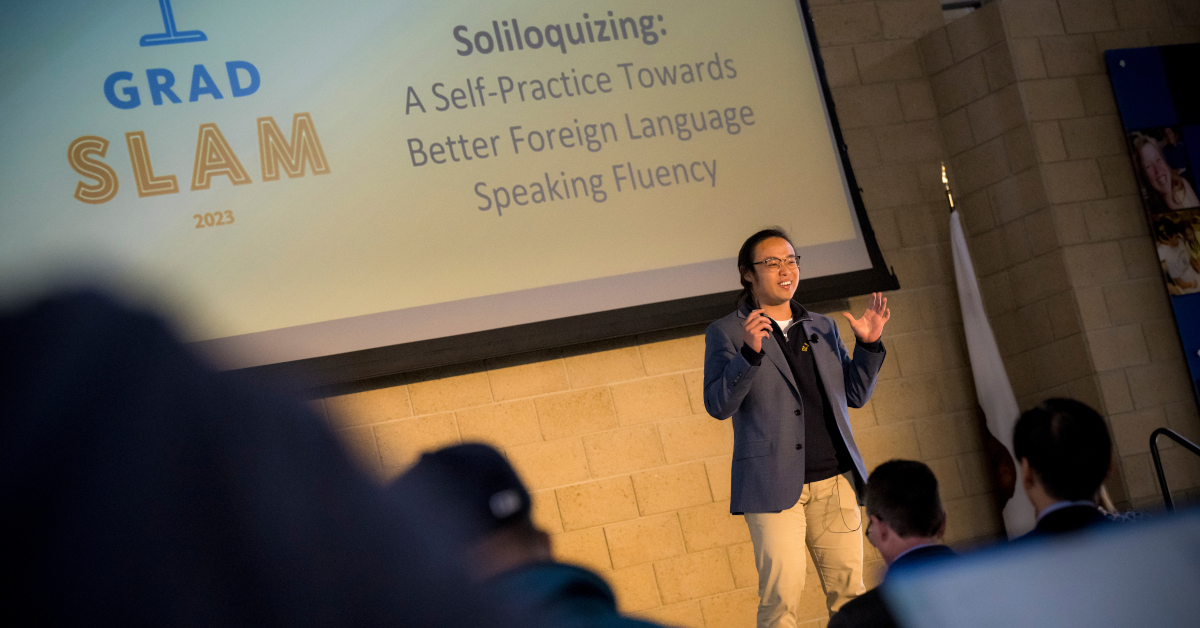 Cognitive Science Ph.D. Student Wins 10th Annual Grad SLAM Competition
Twelve minutes a day: That’s all it takes, says Ph.D. student Shang-En (Sean) Huang of Cognitive Science, to significantly improve speaking fluency in a foreign language by implementing a technique called soliloquizing – or, put more simply, talking to yourself. His engaging delivery of “Soliloquizing: A Self-Practice Toward Better Foreign Language Speaking Fluency” won over a panel of five judges from across UC San Diego, earning him the title of campus champion, a cash prize of $5,000 and a seat in the UC Final Round in San Francisco.
It Takes a Body to Understand the World – Why ChatGPT and Other Language AIs Don’t Know What They’re Saying
Cognitive Science doctoral student Cameron Robert Jones writes in The Conversation about how GPT-3, a popular artificial intelligence language system, does not understand language the way humans do. “Although GPT-3 is extremely good at learning the rules of what follows what in human language, it doesn’t have the foggiest idea what any of those words mean to a human being. And how could it? Humans are biological entities that evolved with bodies that need to operate in the physical and social worlds to get things done.”
California Takes on a New responsibility in U.S. Politics: Enlightening the Rest of the Country
“The first maps that European explorers drew of California showed it as an island. It was fully detached, separated by a wide gulf from the rest of the continental landmass... This is both one of the most famous cartographic mistakes in history and one of the most telling. Later, ever since California became a state, residents have viewed their land and their politics as a world apart,” writes Thad Kousser of Political Science in an opinion piece for the Los Angeles Times. “[But] three recent announcements signal a shift in the Island of California’s approach.”
 To Risk It All or Not? We Look to Others When Deciding
Research by Piotr Winkielman of Psychology and doctoral student Yueyi “Sherry” Jiang shows that we play it safe or take risks in our decision-making based on the perceived social norm. Even consequential decisions are influenced by other people’s choices. The findings, published in Scientific Reports and included in a special collection from the journal, could have implications for making informed decisions and for designing effective policies in a variety of fields.
 SPA Lifetime Achievement Award
The Society for Psychological Anthropology has awarded Tom Csordas of Anthropology, founding director of the Global Health program, a Lifetime Achievement Award. The award honors career-long contributions to psychological anthropology that have substantially influenced the field and its development – “a major impact on research directions, on the wider visibility and relevance of the field, and on the growth of a community of scholarship addressing issues of culture and psychology.”
 AERA Announces 2023 Award Winners in Education Research
Thandeka K. Chapman of Education Studies has been awarded the 2023 Scholars of Color Mid-Career Contribution Award for her “significant contributions to the understanding of issues that affect minority populations, and minority scholars who have made a contribution to education research and development.”
AERA Award for Outstanding Publication
Sociologist Mary Blair-Loy’s most recent book, “Misconceiving Merit: Paradoxes of Excellence and Devotion in Academic Science and Engineering,” has been selected as an Outstanding Publication in Postsecondary Education by the postsecondary division of the American Education Researchers Association.
NEH  Summer Stipend
Congratulations to Ivano Caponigro of Linguistics on winning a Summer Stipend Award from the National Endowment for the Humanities.The NEH received more than 800 proposals and only 14% were selected. Caponigro will spend Summer 2024 working on his intellectual and personal biography of Richard Montague, the philosopher and logician who fathered formal semantics before he was murdered.
Rural Mental Health’s Stressors, Barriers and Protective Factors
Dawn Morales, doctoral alum of Psychology – who is serving as program chief of the Office of Rural Mental Health Research, a part of the National Institute of Mental Health – is featured in a Q&A with the Rural Monitor, discussing recent stressors such as the financial impact of natural disasters on farmers and ranchers as well as the loss of revered elders in indigenous communities due to COVID-19. Morales also emphasizes the importance of cultural competence in mental healthcare and talks about rural-specific protective factors.
WRISE Announces 2023 Rudd Mayer Fellowship
Economics undergraduate student Chelsea Idahosa is one of six selected for the 2023 Rudd Mayer Fellowship from the national nonprofit WRISE, or Women of Renewable Industries and Sustainable Energy. The fellowship covers the cost to attend the annual CLEANPOWER Conference and Exhibition.
Undergraduate Scholars Honored for Living Out César E. Chávez’s Values
Remembering one’s roots and making progress toward the future has been at the core of UC San Diego’s 22nd annual César E. Chávez month-long celebration. Four undergraduates, including Briana Gomez of Anthropology, were awarded scholarships as part of the annual event for their demonstrated commitment to the advancement of Chávez’s core values on campus and beyond.
Engage People by Keeping It Simple
Just as we all like comfort food for dinner, we all also like familiar and friendly words. Studies confirm that the shorter your sentence, the simpler your words, the cleaner the syntax, the fewer circuits readers have to recruit for processing. “Our minds want to do things with minimum energy,” Piotr Winkielman of Psychology tells Psychology Today.
Venturing ‘Into the Woods’ with Muir Musical
This year’s Mulr Musical was directed by fourth-year undergraduate student Molly Lasher of Communication and Theatre.
 Comforts of Home
Communication alum Em Beihold ’20 is a former Triton fencing champion turned pop star with chart-topping hits and talk-show appearances. Mental health is a common theme in her music, but what does her UC San Diego hoodie have to do with it?
The DeSantis Crackdown on Immigration
Wayne Cornelius of Political Science recently published a letter to the editor in The New York Times on the Florida governor’s latest immigration measures: “The most immediate effect of this package of exclusionary measures may be on those seeking health care. I see immigrants every day during my hospital rounds. I wonder how many would be there if they were forced to report their immigration status. The chilling effect could be huge, and this would have significant adverse consequences for the health of Floridians in general.”
Some Politics Is Local: Local Orientation in the U.S. Congress
Pamela Ban of Political Science was featured in the Hoover Institution’s workshop series on “Using Text As Data In Policy Analysis.” Ban’s current work uses large, novel datasets and text-as-data methods to understand how and why political actors such as legislators, bureaucrats, and interest groups search for and exchange information.
San Diegans React to Trump's Arraignment
Thad Kousser of Political Science told ABC 10 News San Diego that while the arraignment of former President Donald Trump on criminal charges related to falsifying business records shows that no one is above the law, it may help Trump in his run for the presidency by focusing attention on him. “It’s been beneficial to him in the past primary and by causing many Republicans to rally to his side. If he were convicted, it doesn’t make him ineligible to run for president.” Separately, Kousser also spoke with the Los Angeles Times, NBC7 and others about the race to replace U.S. Senator Dianne Feinstein.
The Most Delicious Way to Support Climate Initiatives
Student groups exhibited at this year’s Sustainable Food Expo, sharing information on sustainable food resources on campus and beyond. Kieran Padgett, who is pursuing a major in cognitive and behavioral neuroscience, jointly offered by Cognitive Science and Psychology, represented the UC San Diego Food Co-Op, a nonprofit student-run restaurant working to provide affordable vegan options to students on campus.
It’s Never Too Late to Overcome Your Past and Go Back to School
“I want to inspire others who feel like they don’t have any options because of their past mistakes,” writes Stephanie Cagle, a junior majoring in Sociology and Communication, in the Union-Tribune.
Poor Mental Health and the Justice System Kept Me Out of College. Now I’m Studying Abroad.
Political Science and Sociology undergraduate student Colleen Murphy – who transferred to UC San Diego from Grossmont with three associate degrees and became the president of the Underground Scholars Initiative, a student collective dedicated to creating a prison-to-school pipeline for justice-impacted students – reflects in the Union-Tribune on her life so far. This includes thinking back to her time at a shelter while pregnant: “I promised myself that I would transcend these circumstances and dedicate my life to creating more equitable outcomes within our society.” Murphy will graduate this June.
Datnow Elected to National Academy of Education
Amanda Datnow of Education Studies is one of only 18 exceptional education leaders to be elected to the National Academy of Education in 2023. Datnow, who is a Chancellor’s Associates Endowed Chair and also associate dean of the School of Social Sciences, is in amazing company, with past elections of University of California President Emeritus Dick Atkinson of Psychology and Cognitive Science, Mike Cole of Communication and Bud Mehan of Sociology.
Economic Report of the President
Judson Boomhower and Valerie Ramey of Economics, as well as affiliated faculty Alexander Gelber, Joshua Graff Zivin and Allan Timmermann were among the UC San Diego scholars whose work was cited in the 2023 Economic Report of the President.
33rd Annual Urban Expo
In case you missed the annual celebration from Urban Studies and Planning of creative, civically-engaged student research, you can check out pictures of EXPO 2023 at the link above and also watch video of this year’s awards ceremony, with welcome by Social Sciences Dean Carol Padden and keynote by Design Lab Director Mai Nguyen.
 Two Transformative Campus Projects Get the Green Light
The UC Board of Regents approved two key campus projects during the March meeting: Triton Center, a new integrated central hub for student support, and Ridge Walk North Living and Learning Neighborhood, which will include a new building for the Department of Economics. Construction on both projects is anticipated to start this summer.
How Is AI Technology Being Implemented in K-12 Classrooms?
ChatGPT and Microsoft's Bing Chatbot are raising eyebrows as they make their way into educational settings. Amy Eguchi of Education Studies appeared on LAist 89.3 (formerly the Los Angeles-area NPR affiliate known as KPCC) to discuss the future of AI in classrooms.
The Future of American Democracy
A 23-minute chat on UCTV on meeting challenges to our democracy – between Thad Kousser of Political Science, who is also serving as co-director of the Yankelovich Center for Social Science Research at UC San Diego, and three election officials.
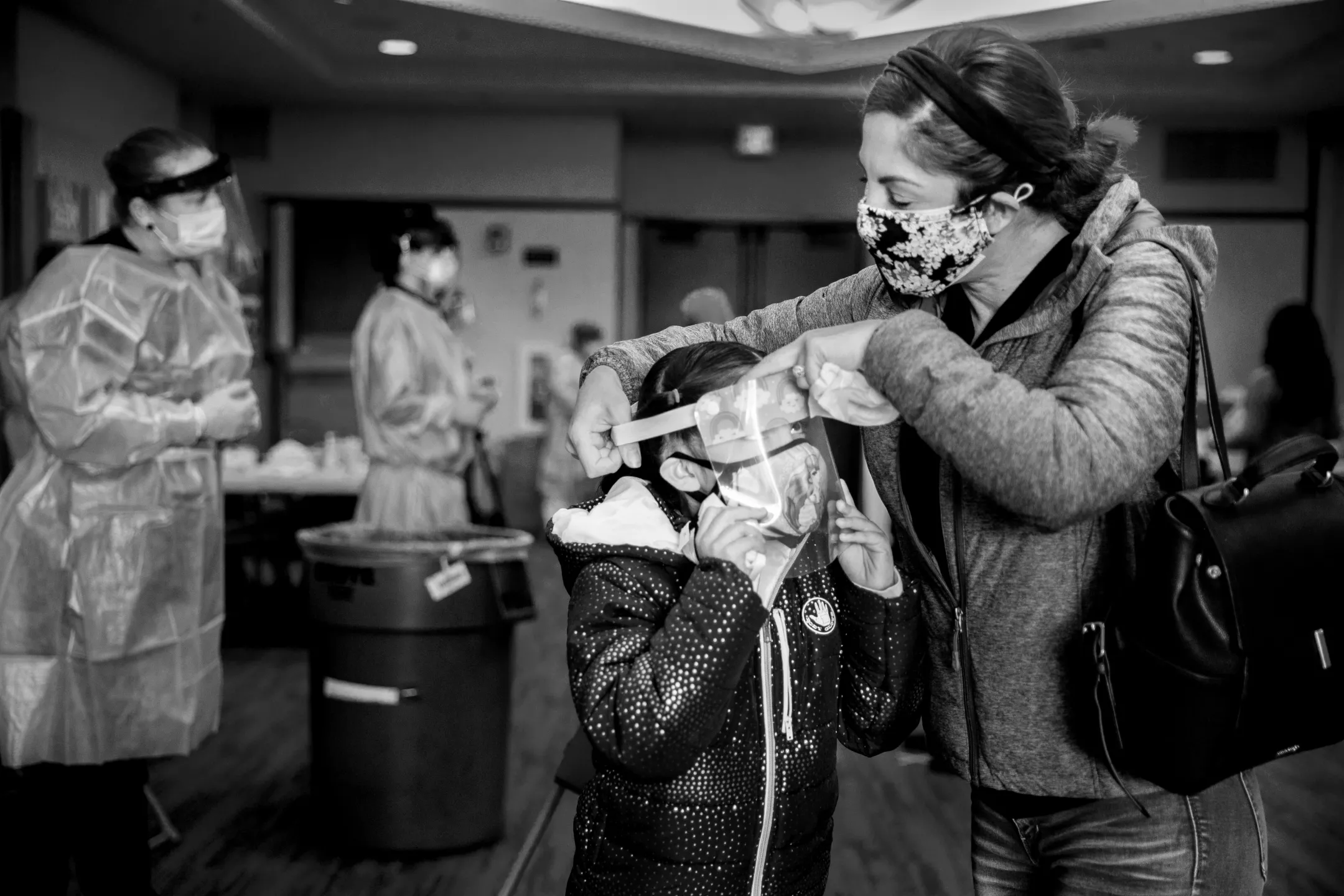 Three Years of COVID Have Changed Us. We’re Still Understanding How.
Karen Dobkins of Psychology speaks with the Union-Tribune about how differently introverts and extroverts experienced isolation.
Here’s How San Diego County Spent $1.4 Billion in COVID-19 Aid, and What It Could Mean for the Future
Jeffrey Clemens of Economics weighs in, in the Union-Tribune, with analysis of U.S. Treasury data on COVID-19 aid to state and local governments that he compiled and studied.
Political Scientist Says Biden's Trip to San Diego with Prime Ministers Is ‘Kind of Huge’
Erik Gartzke of Political Science spoke with ABC10 about President Joe Biden’s visit to San Diego with the prime ministers of the United Kingdom and Australia: "This is a very, very important meeting that’s going to shape the future of security across the world’s largest ocean expanse, and it’s happening here in San Diego and that’s not an accident."
Confessions of a Fainthearted Student Farmer: Strawberry Fields Forever
Undergraduate student Phoebe Skok – who is majoring in Anthropology/Climate Change and Human Solutions and also minoring in Linguistics – gives a firsthand account of some unexpected lessons from enrolling in the Climate Justice Action Resilience Scholars (CJARS) experiential course offered by Anthropology and Urban Studies and Planning.
The Media Swirl
Communication doctoral alum Carol Vernallis has published a book with Duke Press tackling the complexity of the contemporary media landscape. "By creating our own content and knowing what corporations, the wealthy and the government do through media," Vernallis contends, "we can create a more just world."
This Is Trump’s ‘Magic Trick’
New York Times columnist Thomas B. Edsall asked Gary Jacobson of Political Science about Trump’s 2024 strategy.
City Council's Rules Committee Advances New 'Safe Parking' Lot in Clairemont
A KFMB story on the city’s plan to open a safe parking lot in the Clairemont neighborhood for people who sleep overnight in campers or other vehicles cites research from the Homelessness Hub in the Department of Urban Studies and Planning. A three-year evaluation of the safe parking program to review the program's effectiveness, the study found that 70% of program participants are experiencing homelessness for the first time and that more than 25% are older than 60, with nearly half older than 50.
Can Dogs Talk By Pressing Buttons? What Science Says About The Debate.
The Washington Post features research led by Federico Rossano of Cognitive Science, "a large study underway at UC San Diego [that] is trying to determine whether the buttons can enable dogs to communicate meaningfully."
 Helping the ‘Unbanked’
As California mulls entering the banking business to serve disadvantaged consumers, KPBS sought out the expertise of economist James Hamilton. "Where a public bank gets its money to lend and how transparent it is will be important," Hamilton said. "A public banking system could mask lending practices that deserve public oversight."
‘My Mind Is Completely Shot'
An Ottawa Citizen story, which also ran in The Province, The Edmonton Journal and Calgary Herald, about the complex case of a transgender woman seeking assisted suicide for psychological suffering under Canada’s "MAID" law includes the expertise of Andrew Scull of Sociology. "Our understanding of mental illness remains so primitive," said Scull.
Unions and Environmentalists Push for California Referendum Reform
Assembly Bill 421, reports the Los Angeles Times, mandates that at least 10% of petition signatures must be obtained by unpaid volunteers and that paid signature gatherers must be educated about prohibited activities. "Dissatisfaction with paid signature gatherers is as old as direct democracy itself," Thad Kousser of Political Science told the paper. Kousser also commented to CBS News about Governor Gavin Newsom’s choice to skip the State of the State speech and tour California instead, and he spoke with NBC7 about Newsom’s tweet that "California won’t be doing business with Walgreens," when the company announced it would not sell abortion pills in 20 states where abortion is outlawed or restricted.
San Diego Police Host Meetings on Smart Streetlights for Community Input
A KPBS report on the proposed use of streetlights equipped with surveillance cameras and license-plate readers included commentary by Lilly Irani of Communication. Irani, who is also a member of the TRUST Coalition, which advocates for transparent and responsible use of surveillance technology by law enforcement. "One of the things that we just don’t know," Irani said, " is what exactly is the public safety problem that the police are trying to solve."
2 College Friends Created Energy Gum and Mints That Got The Attention of Kevin O'Leary and Robert Herjavec on 'Shark Tank.
Alumni and friends Kent Yoshimura (Cognitive Science) and Ryan Chen (Economics and Chemistry) came up with the idea of making caffeinated gum in 2013 and co-founded Neuro in 2015. In 2020, they appeared on "Shark Tank" and gained the support of two sharks that helped them grow their business, Business Insider reports. Yoshimura, 34, and Chen, 33, met at UC San Diego. There’s also a campus profile about the pair.
America’s Other Great Migration
The Economist reports on research co-authored by economist Samuel Bazzi of the School of Global Policy and Strategy and the Department of Economics, showing how white migrants from America’s South between 1900 and 1940 turned politics rightwards in the areas where they migrated.
 For the Love of Family
Human Developmental Sciences alum Sydney Brown, now working on a master’s in public health, is featured for her inspirational story and her continued accomplishments as a scholar and athlete on the women’s basketball team. As an active leader in UC San Diego’s Triton Athletes' Council (TAC), Brown has helped to organize community events and fundraisers to support a range of causes. But the event closest to her heart is the Kristin Brown LUNGevity Walk, which she created to honor her mother’s legacy and raise awareness about the importance of lung cancer screening and education, even for those who don’t smoke.
Neil Smith Charts the Future of Cyber-Archaeology
Anthropology alum Neil Smith volunteered for his first field expedition abroad when he was 19 and a sophomore, responding to Thomas Levy’s call for students interested in an excavation in southern Jordan. Today, Levy and Smith co-direct a center dedicated to studying, digitally preserving and sharing endangered cultural sites around the Eastern Mediterranean called the Center for Cyber-Archaeology and Sustainability at the UC San Diego’s Qualcomm Institute.
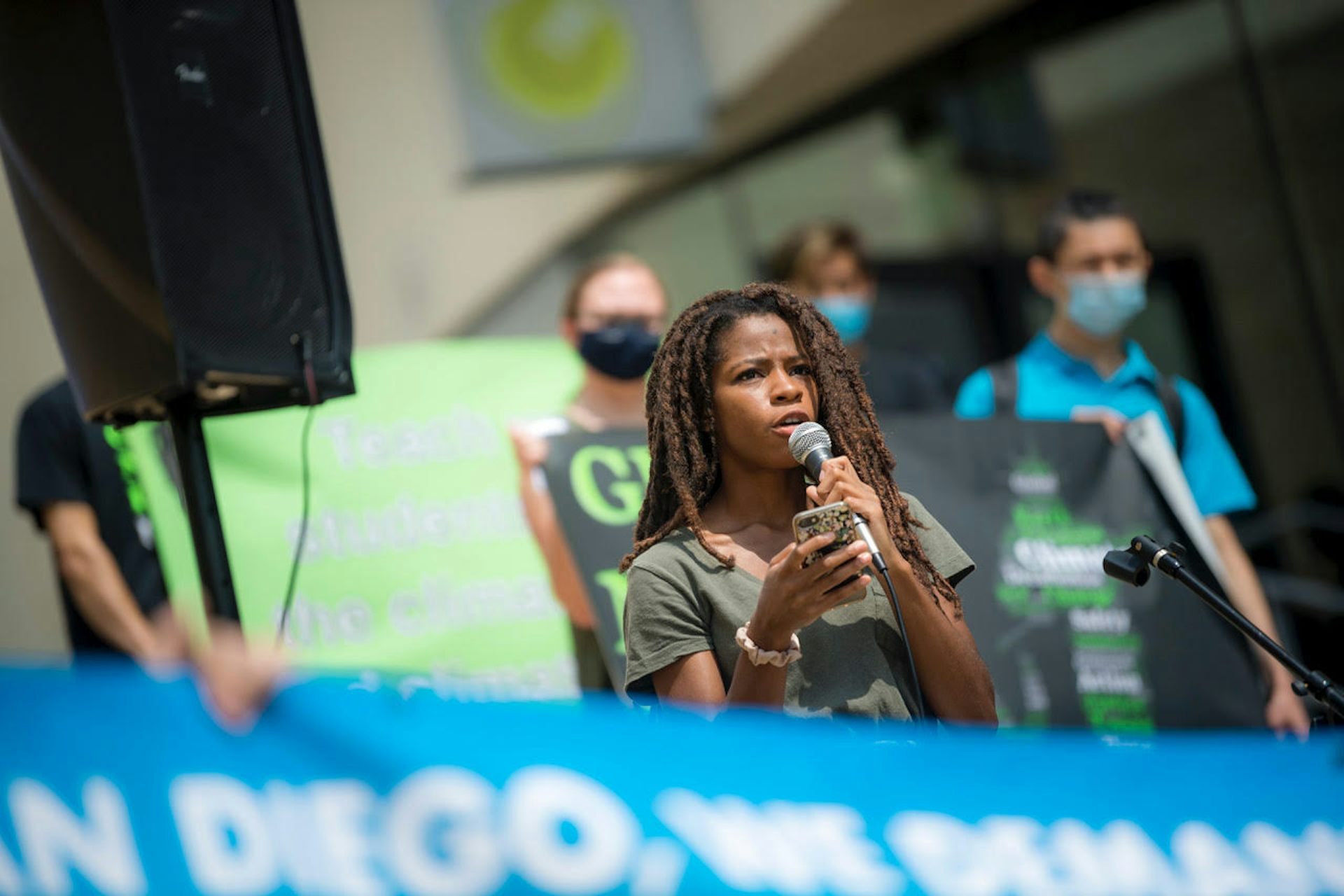 3 Reasons Local Climate Activism Is More Powerful Than People Realize
“Group action targeted at local decision-makers is a time-honored tradition – and I believe necessary in the current political environment for action on climate change,” writes Adam Aron of Psychology in The Conversation. The piece, which draws on research Aron did for his new book, “The Climate Crisis,” was picked up by Salon and other outlets.
Breaking Barriers with Philanthropic Support
School of Social Sciences’ alumni, friends and philanthropic partners came together to make an incredible impact, raising nearly $100 million since the Campaign for UC San Diego began a decade ago, to support work on vital social issues.
 Native American and Indigenous Studies Offers New Minor and New Doctoral Certificate
Students at UC San Diego can now study Indigenous communities in the United States and abroad by adding a concentration in Native American and Indigenous Studies (NAIS) to their degrees. Undergraduate students can pursue a minor. And, unusually, graduate students in any department at UC San Diego can complete a certificate in NAIS. The UC San Diego Today story features Andrew Jolivétte, chair of Ethnic Studies and director of the NAIS program, along with Sierra Sims, a doctoral student in Ethnic Studies pursuing the certificate, who was drawn in part by the program’s diverse faculty, and recent Communication alum Moriah HanJiaXiu Hayes, who picked up an NAIS minor before graduating.
 San Diego Has a New Poet Laureate. But He Sees You as the Voice of the City.
Jason Magabo Perez – a doctoral alum of both Communication and Ethnic Studies, as well as an undergrad alum of Political Science – is proud of his new job with the City of San Diego, a two-year appointment to write poems, hold workshops and add to the cultural richness here. “It’s affirming,” he said. “I’ve done this work for so long.” Born in Detroit, the son of Filipino immigrants, he spent his teen years in Oceanside and recalls being involved in social-justice campaigns during his time at UC San Diego. An associate professor at CSU San Marcos now, Magabo Perez made his first official appearance during Mayor Todd Gloria’s State of the City Address with his poem “We Draft Work Songs for This City,” which you can view on YouTube.
Social Sciences' Year in Stories, 2022
A look back at the past year: just a few of the ways we made an impact and made a difference, how we stood up and stood out, from January through December 2022.
 Does Language Shape How We Think?
Lera Boroditsky of Cognitive Science “discusses how even small variations in language may mean big distinctions in how we experience the world” in a TED Radio Hour on NPR. You can listen to the audio at the link above or you can read the transcript.
Signing in the City of Light
Flying to France to study American Sign Language (ASL) might seem strange at first glance. But, says Peggy Lott of Linguistics, setting a UC San Diego Global Seminar in sign language studies in Paris was far from random. The story, written by undergraduate student Phoebe Skok – who is earning a major from Anthropology in Climate Change and Human Solutions and a minor in French from Linguistics – also features Linguistics students Koes Koes and Haley Pritchard, both of whom were part of the 2022 cohort. “I highly recommend students enroll if they have even a passing interest in linguistics, ASL or Deaf culture,” Lott said. 
Rancho Peñasquitos Man Working With Thousands Online to Help Earthquake Victims
NBC7 celebrates the efforts of Alihan Polat, who teaches GIS in the Department of Urban Studies and Planning, to help victims of the devastating earthquakes in Turkey and Syria. Polat, who grew up in Turkey, says he didn’t know how to react at first: “You’re far away, thousands of miles away and I don’t really have search and rescue skills. But, I have digital skills.” Within a matter of days, Polat and others on Discord were able to create an interactive tool that uses social media posts to connect resources with those who need them most.
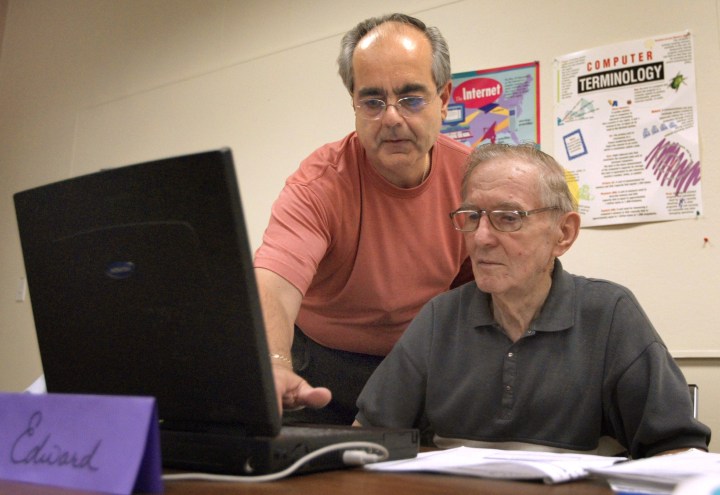 Are Companies More Likely to Fire Older Workers in Mass Layoffs?
A Marketplace report on whether older workers are more vulnerable during times of economic uncertainty includes research co-authored by Gordon Dahl of Economics – a working paper from the National Bureau of Economic Research that looks at age-discrimination charges filed with the Equal Employment Opportunity Commission between 2005 and 2015. Dahl and his co-author find that not only does the number of cases filed go up in a poor economy but also, importantly, the number of meritorious cases.
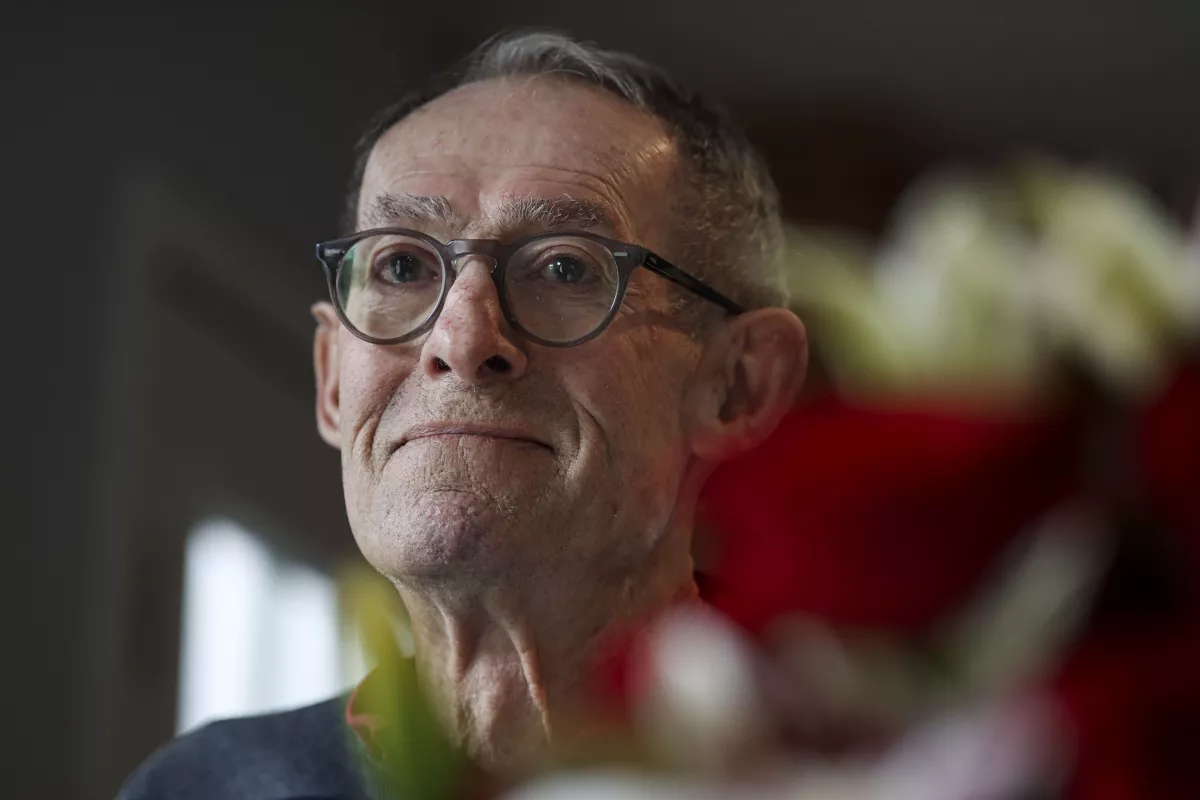 Peter Irons Honored at San Diego Day of Remembrance
On the 40th anniversary of the historic “Coram Nobis” court cases, political scientist Peter Irons was honored for his work in overturning, with his legal team of Nikkei attorneys, the WWII convictions of Fred Korematsu, Gordon Hirabayashi and Min Yasui in 1983. In the words of the Japanese American Historical Society of San Diego, the organization celebrating Irons’ efforts this time: “His research proved that the forced removal and incarceration of Japanese Americans was not a military necessity, and was, in fact, illegal.” Also: Irons published a first-person remembrance of Korematsu as an “activist for all Americans” in the San Diego Union-Tribune.
How to End the War in Ukraine
“The first year of the Russian invasion of Ukraine saw dramatic swings in military fortunes – and has revealed that, when it comes to its military and its economy, Vladimir Putin’s Russia is but a pale shadow of the Soviet Union,” writes Branislav Slantchev of Political Science in an opinion piece in the San Diego Union-Tribune. “For peace to have any chance, Putin’s war expectations must be reduced and the uncertainty about the war’s trajectory must be resolved on the battlefield. This requires the West to signal unwavering support for Ukraine as well as supplying all the required weapons, ammunition and logistical support right now.”
 Graduate Students Recognized as Equity and Diversity Champions
Five UC San Diego graduate students are joining the ranks of the Bouchet Graduate Honor Society, a distinguished organization that applauds scholars whose commitment to diversity, leadership and academic excellence pushes the boundaries of doctoral education. Alicia M. Wright of Anthropology is among the students being honored. Wright’s doctoral research investigates the relationship between Black Deaf signers and hearing interpreters in the United States through the lenses of identity, ideology, neutrality and language access.
Stories of Resistance: Amplifying Black Voices on Campus
This year’s Black History Month, on campus and nationally, was centered on the theme of “Black Resistance.” UC San Diego Today spoke to a selection of students, staff and faculty “who are living out the theme” in a variety of ways, from their research topics to their personal passions – including Psychology undergraduate student Angela Chapman and Education Studies doctoral student James Crawford.
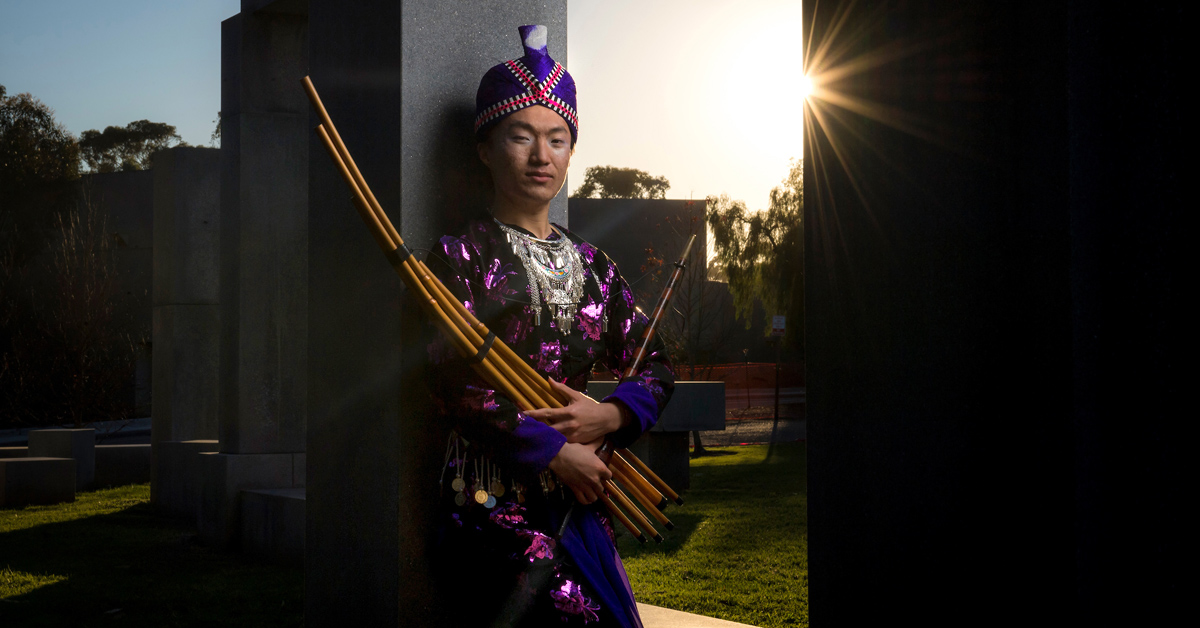 Enhancing the Experience of Diverse Asian American and Pacific Islander Students
There aren’t many Hmong students at UC San Diego, but that didn’t deter Eugene Tsim Nuj Vang of Ethnic Studies from deciding to enroll. Instead, Vang treated it as a challenge and helped to launch a Hmong Student Association to unite the approximately two dozen students who shared their identity. “Connecting with other Hmong students allowed me to find a home here on campus,” says Vang, who is featured as part of a story about UC San Diego’s new designation as an Asian American and Native American Pacific Islander Serving Institution.
How Did TikTok Bans Go Viral in State Legislatures?
The movement to ban Tik Tok on the devices of government employees has recently gained significant traction, but why? FiveThirtyEight sought out the expertise of political scientist Thad Kousser and reports that “the political stars may be aligning to make the bans an appealing issue for both parties.” Separately, among other media appearances, Kousser also commented on President Biden’s State of the Union Address to CBS8, noting that Biden’s calls for abortion rights, an assault weapons ban and higher taxes on the rich were policies already in place in California, and he commented on the race for U.S. Senator Dianne Feinstein’s seat to the Santa Cruz Sentinel and the Los Angeles Times, among others.
What to Expect in the Second Year of the Russia-Ukraine War
The most important lesson from the first year of the Russia-Ukraine war is that Russia is “utterly incapable of mounting large offensive operations,” said political scientist Branislav Slantchev to The Hill. “Their only hope is the West will wobble and collapse [and] I don’t think this is going to happen.”
Will California Continue to See a Population Decrease? San Diego Leaders Discuss
California’s population shrank by more than half a million people during the first two years of the pandemic. Can we expect this trend to continue? As part of the San Diego Union-Tribune’s Econometer panel, James Hamilton of Economics said: “The high cost of housing, taxes, traffic congestion, and burdens of running a business in California have been leading people and businesses to relocate to states like Texas and Florida. California could fix all these problems. But until we do, I don't expect population growth to return to its historical pace.” Hamilton was also part of the Econometer panel debating whether tipping has gotten out of control.
 Stephen Sanchez and Em Beihold: 'Until I Found You’
Communication alum and popular singer-songwriter Em Beihold performed on the Late Late Show with James Corden. You can watch the entire performance on CBS (linked above) or directly on YouTube. Beihold graduated from UC San Diego in 2020; here’s a campus story highlighting Beihold’s many talents.
The Conservative Challenge to Liberalism Goes Deeper Than Self-interest
“Two new high-quality studies suggest that American conservatives are more committed than liberals to two important procedural norms – federalism and free speech – independent of whose partisan interests they serve,” writes Washington Post columnist Jason Willick.One of these papers is co-authored by Margaret E. Roberts of Political Science with colleagues at Stanford University. Their study measured the propensity of Democrats and Republicans to remove partisan misinformation on social media, and the differences are stark.
 The Growing, UC San Diego-Backed Migrant Community in Tijuana
“A massive, already operational migrant community is being constructed in Tijuana, thanks to a pastor, his charitable work, and a groundbreaking partnership with UCSD’s Center on Global Justice,” reports San Diego Magazine. The in-depth feature on the innovative UC San Diego-Alacrán Community Station – a part of the Community Stations initiative within the Center on Global Justice – quotes at length the center’s founding director, Fonna Forman of Political Science, and the center’s director of urban research, Teddy Cruz of Visual Arts. The UCSD-Alacrán station, the magazine says, is “much more than a migrant shelter” and is “the first project of its scope in Mexico.”
Why Republican-Leaning Areas Saw a Rise in Births After Trump’s Election
A study co-authored by Gordan Dahl of Economics suggests that increased economic optimism among Republicans motivated them to have more children relative to Democrats. “The size of the change is equivalent to changes in birth rates that occur after economic shocks or in response to policies designed to affect birth rates.” Reported by SWNS, the story was picked up by the Sacramento Bee, the Independent in the U.K, (linked above) and Yahoo! Finance, among other outlets.
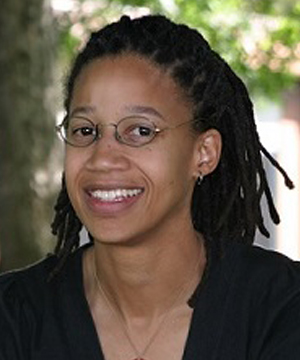 First Provost of Eighth College: Angela Booker
Angela Booker of Communication, an active, long-time member of the Democracy Lab in the Comm Dept. and also co-director of the Black Studies Project, has been appointed the inaugural provost of Eighth College. The college’s theme is “Engagement and Community.”
Brazil’s Economic Challenges Are Again Lula’s to Tackle – This Time Around They’re More Daunting
Having studied Brazil in their economic research, and having lived in the country for several years by birth or by choice, Marc-Andreas Muendler of Economics and doctoral candidate Carlos Góes argue in an article for The Conversation that it will not be easy for Luiz Inácio Lula da Silva – now in his third term as president of Brazil – to fulfill the economic promises he made on the campaign trail.
2023 RHSU Edu-Scholar Public Influence Rankings
Mica Pollock of CREATE and Education Studies has once again been recognized in Education Week as one of the nation’s most publicly influential university-based scholars. Out of more than 20,000 scholars in the United States who qualify, Pollock is one of 200, the ranking asserts, doing “the most to shape educational practice and policy.”
 ‘Talking’ Pets: The Citizen Science Project that Could Reshape What We Know about Animals and Language
Frederico Rossano of Cognitive Science is featured on WHYY for ongoing research with dogs and cats using soundboards to communicate. You can also listen to the entire “Communicating with Animals” episode on NPR’s The Pulse podcast.
This Land Becomes Their Land. New U.S. Citizens Hit a 15-Year High
The Biden administration has taken several steps to streamline the citizenship process, such as simplifying forms and redirecting interviewees from cities whose immigration offices are stretched to those that have capacity. These initiatives are a reversal of the previous administration’s policies, which made the legal immigration process more cumbersome. “Deliberately depressing naturalization rates was one of the most shortsighted strategies pursued by the Trump administration,” political scientist Wayne Cornelius told the New York Times. Separately, Cornelius also published a letter to the editor in the Times, urging fixes to the asylum-seeking process to help alleviate the “inevitable humanitarian crisis at our southern border”
Predict Who Your Frie nds Are?
Alison Black of Education Studies co-authored an article on core concepts in social-network analysis and why it matters in the innovative open-access journal Frontiers for Young Minds. The journal – in which “distinguished scientists are invited to write about their cutting-edge discoveries” – pairs authors with kid reviewers to help share science “in a language that is accessible for young readers.”
Russia Is Planning a Major Offensive. Here’s What That Might Look Like.
Analysis of the Russia-Ukraine war in The Hill sought out the expertise of political scientist Branislav Slantchev, who said that to beat back the renewed Russian effort, Ukraine will have to go on the offensive again. “Neither side is close to the objectives they have,” Slantchev said, “in the sense that the Russians still need to conquer territory they claim is theirs and Ukrainians need to liberate territory that the Russians have taken.”
In State Legislatures, Old Rivalries Are Reheated by National Politics
A New York Times story on the “nation’s barbed political divide, which splinters along the rural-urban axis as well,” cites forthcoming research co-authored by political scientist Thad Kousser, co-director of the Yankelovich Center for Social Science Research, showing that, between 1921 and 1961, state lawmakers deliberately underfunded cities with more immigrant and nonwhite residents. The story also quotes Kousser and cites some of his earlier research on the urban-rural divide.
Is Math Invented or Discovered?
Rafael Nuñez of Cognitive Science recently participated in a “Scientific Controversies” event at Pioneer Works in Brooklyn, N.Y., where he, another guest and the scientist-host discussed the origins of math. You can watch the video of the conversation on YouTube.
A Virtual Visit to T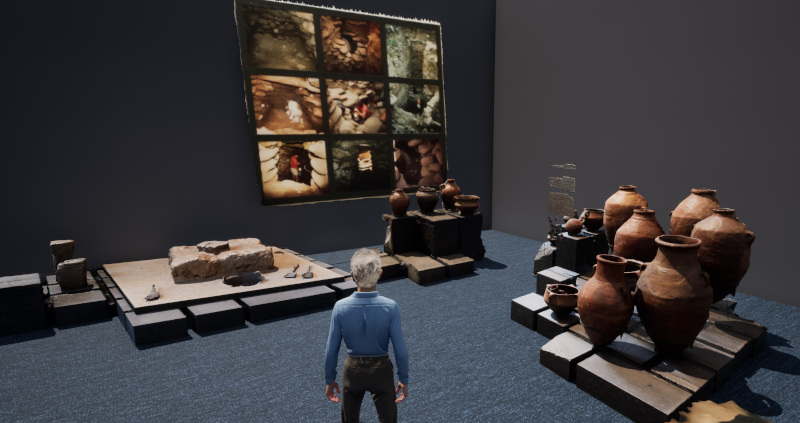 el Dan
“VR is the ultimate tool for sharing and conserving archaeological data. It enables people to experience cultural heritage sites from any Xbox or gaming computer, without traveling thousands of miles,” says Tom Levy of Anthropology and the Center for Cyber-Archaeology and Sustainability, in an American Society of Overseas Research (ASOR) article featuring his virtual re-creation of the Tel Dan archaeological site in Northern Israel.
2023’s Best & Worst Metro Areas for STEM Professionals
Mary Blair-Loy of Sociology contributed her expert opinion in a recent WalletHub article discussing the challenges of being a professional in STEM. “Many STEM jobs are not conducive to work-life balance,” Blair-Loy says. “Research using longitudinal (over-time) data on a nationally representative sample of STEM professionals finds that 43% of women and 23% of men leave full-time STEM employment after having their first child.”
UC San Diego Celebrates Fast-Acting Heroes
Among the people honored for saving a life on campus: Cognitive Science undergraduate student Kimberly Holland, who helped bring back the pulse of a person who collapsed at Canyonview Aquatic Center during the summer’s Transplant Games.
Five Podcast Episodes to Listen to During Black History Month
For Black History Month, KPBS highlights five Cinema Junkie episodes about Black culture and history. Among them is the episode titled “Black People and a Sense of Place,” with Communication doctoral alum Caroline Collins.
3 Reasons Local Climate Activism Is More Powerful Than People Realize
“Group action targeted at local decision-makers is a time-honored tradition – and I believe necessary in the current political environment for action on climate change,” writes Adam Aron of Psychology in The Conversation. The piece, which draws on research Aron did for his new book, “The Climate Crisis,” was picked up by Salon and other outlets.
 California Team Awarded Federal Grant to Uncover Pandemic Impact on PreK-12 Students
The U.S. Department of Education’s Institute for Education Sciences has awarded a $3 million grant to a research team led by the Public Policy Institute of California, UC Berkeley School of Education, UC San Diego and California Department of Education to conduct a three-year study of pandemic recovery and equitable outcomes across 1,000 PreK-12 districts in the state. Co-PI Julian Betts of Economics and the San Diego Education Research Alliance (SanDERA) said: “Our contribution at UC San Diego will be to test which types of student support programs are making the biggest difference in helping students get back on track.”

Two Gifts Help Establish San Diego’s First Large-Scale, University-Based Resource on Homelessness
UC San Diego has launched the region’s first large-scale, university-based research and data hub focused exclusively on homelessness, thanks to campus friends Phyllis and Dan Epstein and Hanna and Mark Gleiberman. Each couple has donated $1 million to the university to establish the Homelessness Hub, which will serve as a non-partisan hub for research, education, policy and action on homelessness in the Department of Urban Studies and Planning. “It’s not research for research’s sake,” said USP’s Mirle Rabinowitz-Bussell in the San Diego Union-Tribune. “Our questions aren’t driven by the research team, but conversations with different community partners who say, ‘We’ve got a program. How is it working? How can it work better?” The launch of the Homelessness Hub was also covered by KPBS, La Jolla Light, Del Mar Times and more. Rabinowitz-Bussell is co-director of the endeavor with Leslie Lewis, also of USP. The Homelessness Hub received early seed-funding support from the Yankelovich Center for Social Science Research at UC San Diego.
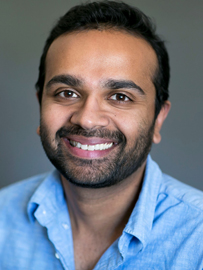 VoxDev’s Most-Read Article
Prashant Bharadwaj of Economics is co-author, along with a Stanford colleague, of VoxDev’s most-read article, “Drawing the Line: The Short- and Long-term Consequences of Partitioning India.”
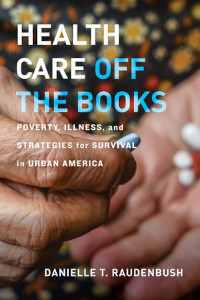 Health Care Off the Books
If people living in the United States don’t have access to health care, what do they do when they get sick? That’s one of the fundamental questions that Danielle Raudenbush of Sociology has been working to answer, first by conducting fieldwork with low-income African Americans in a public housing development and now with Mexican immigrants in San Diego. “I think until we really understand the roots of health inequality, until we really understand how people are getting care, or are not getting care, or the informal strategies they’re using, we won’t be able to effectively address these problems.”
9 Ways to Be a Better Conversationalist
People consistently underestimate how much other people like them, a phenomenon social psychologists have dubbed “the liking gap.” Research also shows that we underestimate how much others think of us after a conversation. “Many people spend a lot of time evaluating themselves or thinking about what other people will think of them. In general, this interferes with connecting with others,” says Gail Heyman of Psychology in Popular Science.
 Tackling Sexual Harassment Could Bring Sizeable Economic Dividends
“Five years after the MeToo movement gripped the world, the problem of sexual harassment continues to dog the economics profession,” reports the Economist. The story cites research by UC San Diego economist Gordon Dahl and Matthew Knepper of the University of Georgia showing that workers’ fears of being unemployed may help drive underreporting. Dahl and Knepper’s study also shows the way to possible solutions: They find that before unemployment benefits were cut in North Carolina in 2013, workers were more likely to report harassment.
A World Gone Mad: Schizophrenia and a Journey Through California’s Failed Mental Health System
“The great failure of public policy over the last 50 years is how we discharged people from mental hospitals with no replacement,” Andrew Scull of Sociology told the Los Angeles Times. The in-depth feature quotes not only Scull, who has for decades been studying the history of mental illness and its treatment, but also UC San Diego sociologist Neil Gong, whose in-progress book examines inequality in mental health care.
Only One Safe Parking Lot for Homeless People in San Diego Accepts RVs
A story in the Los Angeles Times and the San Diego Union-Tribune reports that in 2022, the San Diego City Council agreed to fund 24-hour service at a safe parking lot in Mission Valley after the release of a study by the Homelessness Hub/Department of Urban Studies and Planning. Among the findings in the two-year study was that RV owners strongly wanted a parking lot where they could stay around the clock.
 A Legacy of Support for UC San Diego Students
Retired lecturer Peter Galderisi, and his wife, Holly Gottschalk Galderisi, have designated support to internships for undergraduate students in the Krinsk-Houston Law and Politics Initiative within the Department of Political Science, as well as to scholarships for women scholar-athletes.
Partisan Gap on Trust in U.S. Elections Has Grown Even Wider, Survey Finds
While Democrats and independents reported greater confidence in election accuracy and integrity after the 2022 midterms, Republican confidence did not increase – widening the partisan gap. This is one of the key findings of a national survey from the Yankelovich Center for Social Science Research at UC San Diego, led by political scientist Thad Kousser. A more hopeful finding, with important implications for solutions: Real-world public information efforts to assure voters of election safeguards create an uptick in confidence across the political spectrum. The research was featured in The San Diego Union-Tribune and on KPBS Midday Edition.
 Voting Boost
Election research pioneered by political scientist Zoltan Hajnal, co-director of the Yankelovich Center for Social Science Research, is not only having a real-world impact in California but is starting to take root beyond the state. In the 2022 midterms, voters approved measures requiring that municipal elections be held on the same day as state or national races – a move that is expected to significantly boost turnout and broaden the electorate. The story was also distributed by the University of California.
Curse Words Around the World Have Something in Common (We Swear)
Ben Bergen of Cognitive Science comments on a study about curse words worldwide in a New York Times piece. “What this paper finds for the first time is that taboo words across languages, unrelated to each other, may pattern similarly,” Bergen says.
How Big a Comeback Did Ticket Splitting Make This Year?
Gary Jacobson of Political Science provided his expert opinion in a Governing piece that discusses an increase in ticket splitting in this year’s elections. Separately, research by Jacobson was referenced in a Bloomberg analysis of the midterms that ran in the Washington Post and, looking ahead to 2024, Jacobson spoke with New York Times columnist Tom Edsall about fractures in the Republican party and the possible effects of former President Donald Trump’s bid for the presidency.
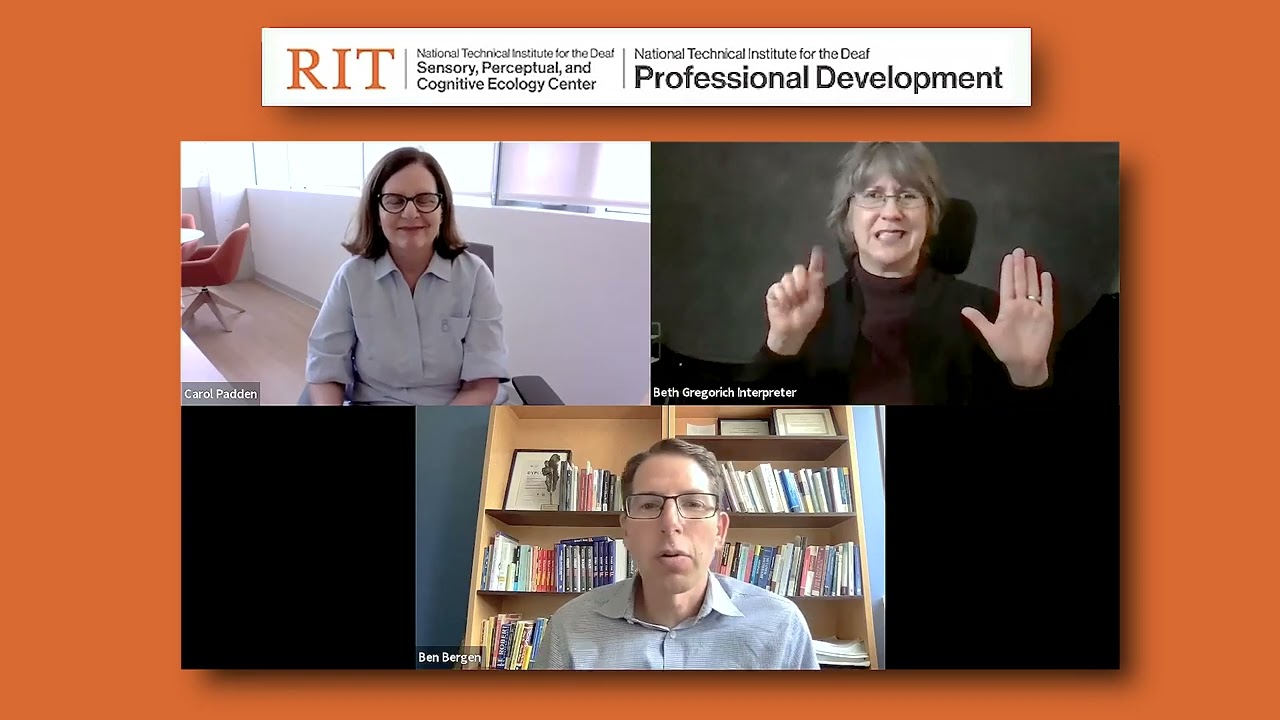 Signing Science Series: Carol Padden
Dean of the School of Social Sciences, a doctoral alumna of Linguistics, and professor in Communication Carol Padden is featured in an hour-long video part of the Signing Science series from the National Technical Institute for the Deaf at the Rochester Institute of Technology. The interview is conducted by Ben Bergen of Cognitive Science, who also serves as one of the school’s associate deans. The entire series can be viewed online at Rochester Institute of Technology.
Econometer: Should Businesses Pause Advertising on Twitter?
Twitter has had a rough time under Elon Musk’s new ownership, and some large companies have stopped advertising on the platform, citing a rise in hate speech and misinformation. James Hamilton of Economics comments on the matter as a member of the San Diego Union-Tribune’s Econometer panel, stating “I’m deeply troubled by the fragmentation of America into isolated groups who won’t talk with or listen to each other. … The suggested boycott of Twitter is not about hate speech. It’s a coordinated effort by those in power to bring Elon Musk down.” The piece also appeared in the Kansas City Star. Another Econometer article asked whether U.S. viewership of the World Cup might exceed the Super Bowl in 2026 and Hamilton says he doesn’t think so.
 A Deep Look into Mental Health
Bonnie Kaiser of Anthropology and Global Health was a featured guest speaker in this virtual panel examining multiple aspects of mental health. If you missed the live event, a UCTV YouTube video is now available.
Archaeologists Devise a Better Clock for Biblical Times
The New York Times reports that new research harnesses information from 20 international scholars to map out a geomagnetic data set of 21 layers of historical destruction across 17 sites in the Holy Land in an attempt to check the historical authenticity of Old Testament accounts of conflicts. With this new data set, we can narrow things down to a decadal level,” said Tom Levy of Anthropology, who was not involved with the study. “That is super important when trying to connect ancient historical events to the archaeological record.”
As More GOP Governors Race to Ban TikTok on State Devices, a Federal Ban Looms
Thad Kousser of Political Science provided his expertise to NPR as the U.S. Senate considered banning TikTok on federal devices: “A central tenet of what unites Republicans now,” Kousser said, “ is taking a strong stance [and] standing up to China.”
Opinion: Those Who Say Ukraine Should Negotiate with Russia Don’t Understand How Putin Sees the War
“Every day, commentators assert that it is time for Ukraine to negotiate with Russia, to give diplomacy a chance,” writes war-termination expert Branislav Slantchev of Political Science in the San Diego Union-Tribune. “But these calls for concessions are premised on misunderstanding how the war might look to Putin and those around him. The domestic, international and military actions of the Kremlin indicate that Putin believes Russia can win this war, and that he is hunkering down for a protracted conflict.”
 Small Acts of Gratitude Go a Long Way
Any season is a good season to be grateful, and even small acts of gratitude can go a long way to helping us feel better. Michael McCullough of Psychology discusses the positive effect on psychological well-being in a Thanksgiving special on KPBS Midday Edition.
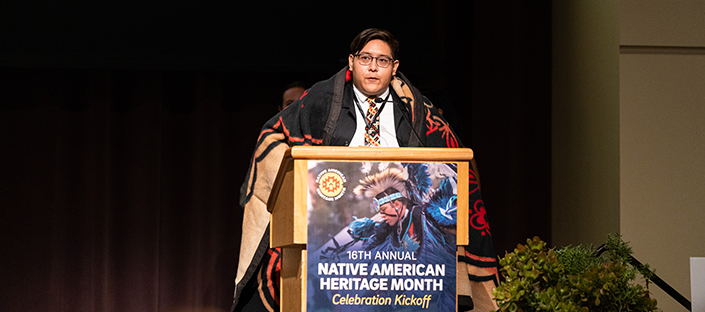 2022 Outstanding Native Triton
Political Science doctoral student Alex Zhao, a member of the Navajo Nation, is this year’s Outstanding Native Triton. Zhao, who is conducting research on Indigenous American politics,was selected for the honor by demonstrating leadership and commitment to the Native American community at the university. In this UC San Diego Today story, Zhao’s contributions are celebrated by Elena Hood, director of UC San Diego’s Intertribal Resource Center Director and a doctoral alumna of Education Studies.
A Deep Look into Mental Health: Campus, Community & Around the World
Bonnie Kaiser of Anthropology and Global Health was a featured panelist in the “Deep Look” public speaker series, discussing her work to identify and address disparities in global mental health care. The webinar was covered by La Jolla Light, noting that Kaiser spoke about the different ways people around the globe experience and conceptualize mental health and how important it is to match treatment to those experiences.
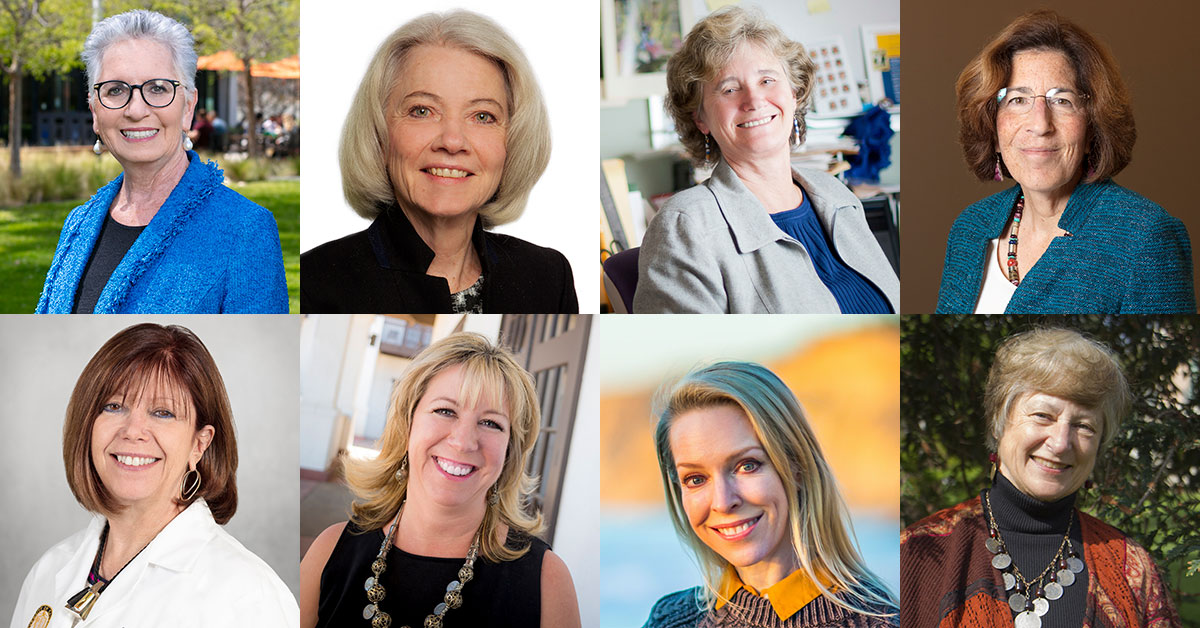 Eight UC San Diego Researchers Among ‘1,000 Best Female Scientists in the World’
Terry Jernigan and Marta Kutas of Cognitive Science are among eight scientists at UC San Diego – and just 11 in all of San Diego, as reported by the San Diego Union-Tribune – to be selected in this first-ever ranking by Research.com. The analytics platform based its choices on the productivity, impact and contribution of the scholars, as well as their awards and achievements.
In the UC Strike, Professors Can’t Keep Up With Grading. Students Will Suffer
Lilly Irani of Communication published an op-ed in the Los Angeles Times addressing the strike by 48,000 academic workers across UC campuses. Irani elaborates on the daily struggle she has witnessed, stating that TAs will often take on multiple jobs in order to pay rent, thus prolonging the length of their PhD programs. In addition to the well-being of the TAs, Irani is also concerned for her undergraduate students. “The teaching assistants connect the material to students' aspirations and struggles. The teaching assistants are the ones who figure out how to engage students or notice when they fall through the cracks.”
 Latinos Who Use Spanish-language Social Media Get More Misinformation
A study by researchers at UC San Diego and the Center for Social Media at NYU finds that “Latino people use social media differently than do White Americans. What’s more, Latino people who rely on Spanish-language social media are more likely to believe misinformation about election issues and are more likely to rely on social media for information about the coronavirus.” The researchers, including Marisa Abrajano of Political Science and Political Science Ph.D. student Marianna Garcia, described their work in a Washington Post “Monkey Cage” analysis.
The Turnout Story Emerging From The 2022 Midterm Elections
Political scientist Zoltan Hajnal, co-director of the Yankelovich Center for Social Science Research, spoke with KPBS Midday Edition about voter turnout and representation.
What Does It Take to Reawaken a Native Language?
“Home to over 200 tribes and tribal communities speaking over 80 distinct languages, California is both a biocultural diversity hotspot and the epicenter of a linguistic crisis,” reports PBS station KCET. Yet there are numerous notable successes to reawaken Native languages and tribes are contesting the extinction stereotype. “One of the main things we've been pushing for,” explained Linguistics doctoral candidate Ray Huaute (Chumash/Cahuilla), “is to eliminate the use of the E-word (extinction), the D-word (dead) or the M-word (moribund), as if the language was a dying patient. We prefer to use the terms ‘sleeping language’ or ‘resting language.’”
Control of Congress Matters. But Which Party Now Runs Your State Might Matter More
“Where you live now increasingly determines what policies you live under,” Thad Kousser of Political Science told NPR. With gridlock at the federal level, governors and state legislatures shape daily life in the United States by making policy on guns, abortion,education and the environment. Kousser spoke with numerous outlets throughout the election season, including, among many others, the Associated Press, the San Diego Union-Tribune and NBC San Diego. With KPBS, Kousser discussed “How San Diego's Political Map Shifted From Red to Blue and What Comes Next.”
 2022 UC San Diego Veteran of the Year
Carlos Martinez, information technology support supervisor in the School of Social Sciences, is UC San Diego Veteran of the Year. In total, Martinez, who is also a UC San Diego alum, has served the university for a combined 15 years. “As someone who has come from a poor, first-generation college graduate, Latino-Asian-Black background – and to overcome everything that I've kind of had to deal with – this nomination is an honor,” said Martinez.
Why 2022 May Bring a New Peak of Political Instability
Speaking with CNN ahead of the election, Gary Jacobson of Political Science said: “I don’t see either side getting a durable advantage. They are highly polarized parties, and they are very closely balanced overall.” Jacobson also spoke with USA Today.
Twelve New Faculty to Be Hired to Design Just Futures
School of Social Sciences’ departments where faculty will be hired in conjunction with the Design Lab are: Communication, Political Science, and Urban Studies and Planning. The story about the hiring initiative quotes Design Lab Director Mai Nguyen, who has an academic appointment in Urban Studies and Planning, AVC FEDI Vic Ferreira of Psychology and Teresa Ambo of Education Studies; it also mentions Keolu Fox of Anthropology and Muir Provost Wayne Yang of Ethnic Studies.
 Reversing Losses in Learning After Covid
Karthik Muralidharan of Economics writes in the Hindustan Times (linked above) about his working paper investigating COVID-19 learning loss and recovery in India. Muralidharan elaborates on the different avenues to reverse the loss, such as keeping schools open and advocating for after-school programs that can aid marginalized students. The research was also featured in The Hindu.
How Well Are Pandemic Learning Recovery Tactics Working? UC San Diego Will Help Lead 3-Year Study
How have California’s 1,000 school districts been spending their COVID-19 recovery funds and how successful are they in curbing the loss of learning from the pandemic? UC San Diego, the Public Policy Institute of California, UC Berkeley School of Education, and the state Department of Education assembled a team of researchers to answer these questions, including co-PI Julian Betts of Economics. The federally funded project is featured in the San Diego Union-Tribune.
 UC San Diego Grads Make an Ugly Christmas Sweater on a Massive Scale
Economics and Psychology alum Evan Mendelsohn and Nick Morton (Biology and Chemistry alum) “met when they were students at UC San Diego,” writes local columnist Diane Bell. “They since have followed their dream of creating what they believe to be the world’s largest ugly Christmas sweater as a big way to celebrate the 10th year of their iconic business, Tipsy Elves.” The company’s motto, or “manifesto,” Bell reports both in the La Jolla Light and the Union-Tribune, is to “make the most outrageous clothes known to mankind in order to make your life more fun.”
Origin Story
UC San Diego has always been at the forefront of leading-edge research and innovation in the sciences, but not many know it is also a fertile ground for storytellers, especially in the speculative fiction realm. In the Fall 2022 issue of UC San Diego Magazine, Psychology alumna and speculative fiction author Sarina Dahlan of Psychology explores this phenomenon through interviews with sci-fi and speculative fiction writers who also are UC San Diego alumni.
ICYMI: Tom Wong Day
The City of San Diego declared July 11, 2022 to be “Tom Wong Day.” And on Oct.17, the County did the same. Tom Wong of Political Science and the U.S. Immigration Policy Center was celebrated in both declarations for his impactful work on immigration.
California Team Awarded Federal Grant to Uncover Pandemic Impact on PreK-12 Students
The U.S. Department of Education’s Institute for Education Sciences has awarded a $3 million grant to a research team led by the Public Policy Institute of California, UC Berkeley School of Education, UC San Diego and California Department of Education to conduct a three-year study of pandemic recovery and equitable outcomes across 1,000 PreK-12 districts in the state. Co-PI Julian Betts of Economics and the San Diego Education Research Alliance (SanDERA) said: “Our contribution at UC San Diego will be to test which types of student support programs are making the biggest difference in helping students get back on track.”
 Math to Make a Difference
A myth-busting Q&A with Economics Department Chair Julie Cullen about the field and its future.
Will Young Voters Save Democrats in the Midterm Elections?
In a normal year – one that simply followed the average of the 19 midterms since the end of World War II – the party in the White House would be expected to lose around 45 House seats, based on a widely used formula developed by Gary Jacobson of Political Science, the Los Angeles Times reports. But this hasn’t been a normal year. One big uncertainty is how many young voters will cast ballots. Separately, a New York Times column by Thomas Edsall, “The Left-Right Divide Might Help Democrats Avoid a Total Wipeout,” also cites Jacobson and his timely essay, “The 2022 U.S. Midterm Election: A Conventional Referendum or Something Different?”
 What Happens When Politicians Meet TikTok?
“Proving that no form of escapism is a safe refuge from the people who want your vote in November, politicians are invading TikTok,” writes Thad Kousser in an opinion piece for The Hill, in which he argues that this particular social-media medium has a number of worrying features that provide a “schematic for a perpetual motion machine of disinformation.”
Can Biden Save Democracy One US Factory Job at a Time?
President Joe Biden is betting on what he has called a “historic manufacturing boom” to spread prosperity across the country, renew the middle class and rebuild pride in the nation itself. This Associated Press story, picked up by US News among many other outlets, cites research by J. Lawrence Broz of Political Science, which showed that populist support was strongest in communities that endured long-term economic and social decline. But, Broz said, “it is unlikely that recent efforts to reshore manufacturing jobs will produce the intended effects, either economically or politically.”
Kroner Center for Financial Research Established to Strengthen and Protect Retiree Investments
Economics alumnus Kenneth Kroner and his wife, Jennifer, have pledged $5 million to establish the Kroner Center for Financial Research. The center, housed at the Rady School of Management in collaboration with the School of Social Sciences, is co-directed by Michael Melvin of the Rady School and Graham Elliott of Economics. It is the only research center of its kind – linking major asset owners around the world with the academic economics and finance community – to address relevant investing questions that ultimately affect the living standards for retirees around the globe.
 UC San Diego Launches Two Projects on the Impact of Climate Change on Coastlines and People
Leading a $1.6 million project focused on Puerto Rico is Isabel Rivera-Collazo of Anthropology and Scripps Oceanography. Her lab will collaborate with the University of Puerto Rico-Río Piedras as part of a $20 million National Science Foundation grant administered by the Haskell Indian Nations University in Kansas, “Rising Voices, Changing Coastlines.” Through the Rising Voices initiative, Rivera-Collazo, a Native of Puerto Rico, will explore social justice and ecosystem restoration issues that sea-level rise and climate change have imposed upon Native residents and Indigenous communities. The project will mesh elements of multiple sciences along with traditional ways of being and traditional knowledge.
Sacheen Littlefeather and the Question of Native Identity
Andrew Jolivette of Ethnic Studies weighed in with the New York Times on the controversy stirred by research from Jacqueline Keeler, a citizen of Navajo Nation, disputing the late Sacheen Littlefeather’s claims that her father was White Mountain Apache and Yaqui. Keeler’s work to expose what she calls “pretendians,” critics say, casts a cloud of suspicion over all Indigenous people. It suggests that “Native people need to create a system where they have to prove who they say they are,” said Jolivette, who directs Native American and Indigenous Studies at UC San Diego and describes himself as Creole of Opelousa, Atakapa Ishak, French, African, Irish, Italian and Spanish descent. “Why do American Indians have to do that and not other people?”
 The Diamond ‘Slow Street’ in Pacific Beach Is a Success. Closing it Would Be a Mistake.
Katie Crist of Urban Studies and Planning published an opinion piece in The San Diego Union-Tribune featuring the urban design concept of “slow streets” that San Diego experimented with at the beginning of the COVID-19 pandemic. Slow streets divert non-residential vehicle traffic and provide a place for people to walk, bike or roll. Diamond Street in Pacific Beach is the only slow street that remains today, and the city’s commitment to retaining it is uncertain. Crist's research shows that removing the slow street would be a mistake – both for people’s health and the health of our environment.
Meet Your New Student Government Leaders
Political Science undergraduate student Sky Yang and Ph.D. student Giulia Corno are taking on important new roles this year as they lead organizations on campus that seek to give students a voice of their own and improve their well-being. Yang is the president of Associated Students, and he strives for transparency and engagement with students. Corno is president of the Graduate and Professional Student Association, and she is working on drawing attention to important issues among graduate students, such as living and housing costs.
DACA Is Slowly Dying Unless Congress Steps In to Save It
TIME reports that the Deferred Action for Childhood Arrivals (DACA) program may be reaching the end of its slow demise. “We are at a point now,” said Tom Wong of Political Science and U.S. Immigration Policy Center, “where unless there’s a legislative solution to provide permanent protections for DACA recipients, many will likely lose what they have built over the last decade.” The Los Angeles Times, meanwhile, sought out Wong’s expertise on a story about “red-baiting” campaign mailers sent to Vietnamese Americans in Orange County.
 Racial and Gender Disparities in Publishing Start Early for Doctors and Scientists
Among approximately 30,000 medical school graduates who matriculated from accredited U.S. medical schools between 2014 and 2016, white men had higher publication rates than white women and both men and women from underrepresented racial and ethnic groups, reports a Science Careers article. “No more students should be going through this situation,” said Anita Raj of Education Studies and Medicine, director of the Center on Gender Equity and Health. “We need to figure out now how to make sure that [students] have equitable research opportunities and ability to publish.”
What Is Even Left of the Voting Rights Act?
Recent efforts to update the landmark 1965 Voting Rights Act have failed, and research suggests that strict voter ID laws passed over the last decade may reduce turnout in more racially diverse areas. CNN talked to political scientist Zoltan Hajnal, co-director of the Yankelovich Center for Social Science Research, who has studied the effect of voter ID laws and argues that voter turnout alone does not tell the story of access to voting.
Democrats Hoping Biden Can Provide West Coast Election Boost
While Democratic Governor Gavin Newsom easily survived a recall election, voters in the rural north and agricultural inland largely opposed Newsom, and such anger with Democrats could be a driving force in this upcoming election. “Just as the nation is divided into red, blue and purple states, we have those same internal divisions in California,” Thad Kousser of Political Science told the Associated Press. The AP story enjoyed wide pickup, including US News. Separately, Kousser also spoke with Marketplace about a bill making it easier for farm workers to unionize, to the Los Angeles Times about Orange County Coast voters who “fume about gas prices but fear for climate’s future,” and again to the Los Angeles Times about propositions 26 and 27 that would legalize sports betting in the state, among many other outlets on many other topics.
How Latest Strikes Show Putin Will Stick With Russia’s Hawks on Ukraine War
The Hill sought out the expertise of Branislav Slantchev of Political Science, who studies conflict and is blogging about the Russia-Ukraine war.
 Can California Fix Its High-Priced Gasoline Problem?
Our state has particularly high gas prices, says James Hamilton of Economics as a member of the San Diego Union-Tribune’s Econometer panel, in part because California lacks interstate oil and gasoline pipelines: “Sacramento should stop discouraging investment in energy infrastructure.”
The Era of Quiet Quitting Is Already Over
Business Insider reports that workers are again terrified of getting laid off and speaks with Mary Blair-Loy of Sociology, who “has spent her career documenting what she calls the ‘work devotion schema.’”
 Political Moderates Are Having Their Moment
About 4 in 10 Americans identify as moderates, but both Republicans and Democrats have been pushing to mobilize committed members of their party and have paid little attention to persuading swing voters. Seth Hill of Political Science co-authored a study featured in the Los Angeles Times that addresses the importance of moderate voters in American elections. According to Hill’s research, many swing voters are neither inconsistent nor uninterested in politics, rather they’re “ambivalent centrists” – voters who are “confronted by two party coalitions that each express views that are more extreme on some issues than the moderates would prefer.”'
How the War in Ukraine Might End
The New Yorker recently spoke to a number of war-termination theorists, including Branislav Slantchev of Political Science, to see what their perspectives could tell us about the war in Ukraine. “In a terrifying blog post,” the New Yorker writes, Slantchev outlines how and why Putin might make a nuclear strike. After reading the New Yorker piece linked above and what Slantchev had to say to the reporter, you can also read “Endgame” post.
 Remote Work Drove Over 60% of House-Price Surge, Fed Study Finds
“The shift to working from home drove more than half of the increase in house and rent prices during the pandemic and will likely drive up costs and inflation going forward as the shift becomes permanent,” writes Bloomberg news, according to research co-authored by Johannes Wieland of Economics and a colleague from the Federal Reserve Bank of San Francisco. The research also caught the attention of New York Times’ columnist Paul Krugman.
California Approves a Wave of Aggressive New Climate Measures
The world’s fifth-largest economy has embarked on “its most aggressive effort yet to confront climate change, after lawmakers passed a flurry of bills designed to cut emissions and speed away from fossil fuels,” the New York Times reports, portraying these also as a political victory for Calif. Governor Gavin Newsom. Thad Kousser of Political Science weighed in.
 Econ Alum, Mongabay Founder Wins Heinz Award
Economics alumnus Rhett Ayers Butler ’99, founder and CEO of the environmental news platform Mongabay, has won the 2022 Heinz Award for the Environment. The nonprofit Mongabay produces original reporting on conservation and the environment in 10 languages with more than 800 correspondents in some 70 countries.
 Annual Convocation Inspires New Tritons to Embrace Their Curiosity
The New Student Welcome Convocation ceremony on RIMAC Field welcomed first-year and transfer students into UC San Diego’s scholarly community with Angela Booker of Communication as the event’s keynote speaker. Booker shared her vibrant sense of humor and wisdom with the audience, in part through the story of her yellow hat, encouraging students to embrace this new chapter in their lives and prioritize their well-being during their time on campus. “While you’re here, it’s okay to grieve the things you let go,” Booker said. “Releasing them lets you step bravely into this beautiful period in your life where who you are and who you are becoming can make the most important things happen for you, for our community, and for society.”
 More Stress, Fewer Coping Resources for Latina Mothers Post-Trump
The sociopolitical climate in the United States has taken its toll on the mental health of Latina mothers, according to new research co-authored by Amy Non of Anthropology and published in PLOS ONE. “Latinx Americans have been historically disadvantaged on many fronts, including access to quality education, job security and healthcare, making them particularly vulnerable to stressors that can lead to poor mental health,” Non said. “Our findings indicate that in a more hostile political landscape their well-being is even more threatened.” Newsweek was among the outlets reporting on the study.
Federal Interest Rate Hike on Consumers
Marc Muendler of Economics speaks with San Diego’s NBC station.
 Transforming Education for Holistic Student Development
In a Brookings Institution blog post, Amanda Datnow of Education Studies helps summarize a report that she and her co-authors put together for Brookings on the urgent need “to build and rebuild academically focused education systems into humanistic education systems that also support the social, emotional, moral, and civic development of students.” The report, “Transforming education for holistic student development: Learning from education system (re)building around the world,” focuses on the journeys of seven different education systems “as they make the whole child the center of their work.”
Violence Is Common and Increasing in Pandemic-Era California
According to the latest annual report from the California Study on Violence Experiences across the Lifespan (CalVEX), the nation’s only multi-year statewide assessment of violent experiences, violence is on the rise in California, with significant increases observed during the COVID-19 pandemic. Anita Raj of Education Studies and the School of Medicine is the principal investigator. She says: “Current violence prevention efforts are clearly woefully inadequate and often ignore the gendered nature of violence, its intersections with other socioeconomic vulnerabilities and its disproportionate effects on marginalized populations.”
Karthik Muralidharan Examines the Indian State
The Seen and the Unseen, a “deep dive interview” podcast by influential Indian journalist Amit Varma, features Karthik Muralidharan of Economics.
Students Should Learn About the Human Impact of War
Thinking about news coverage of the war in Ukraine, former history teacher and current Education Studies doctoral student Marco Chacón published an opinion piece in Ed Source arguing it’s important to reform K-12 history curricula to include the devastating wartime stories of individuals. “Few students will need to recite dates, presidents or military strategies as adults, but most will cross paths with people displaced by violence, and others from invading countries. They will elect officials who promote and oppose wars and refugee-related legislation,” Chacón writes.
 Max Planck-Humboldt Research Award for Studies on Censorship and Disinformation
Margaret “Molly” Roberts of Political Science has been selected for the 2022 Max Planck-Humboldt Research Award. In announcing the competitive award, which supports collaboration with German universities, the award committee noted Roberts’ pioneering work and the central question of her research: “How is it that individual authoritarian regimes and criminals can effectively spread fake news on the Internet and manipulate the public?” Roberts will carry out her project, analyzing “the opaque moderation procedures of social media platforms,” with colleagues at the Technical University of Munich and the University of Konstanz.
What Are Animals Thinking?
National Geographic magazine’s cover story features the work of Federico Rossano of Cognitive Science and his Comparative Cognition Lab. (Note: Link is for subscribers.)
Address STEM Inequality by Reconceiving Merit
“Academic scientists value scientific excellence and believe they can judge it accurately. Yet women, people of color and LGBTQ+ scientists, who are just as productive as their white heterosexual male peers, are routinely marginalized and devalued,” write Mary Blair-Loy of Sociology and doctoral alum Erin Cech in their article for Times Higher Education. Their recently published book, “Misconceiving Merit,” addresses two schemas that “anchor sexism, racism and heteronormativity in academic STEM,” and in their piece for THE Campus, the co-authors propose four strategies for solutions.
 San Diego Citizens Wrest Control of Surveillance Tech Away From Police
Community-led efforts to address potential civil liberties violations, spurred by the deployment of more 3,000 police cameras across the city, paid off when the San Diego City Council voted unanimously to stop police from making any future decisions about surveillance unilaterally. Under a new ordinance, the city will assemble a privacy advisory board comprised of community leaders and technology experts to determine the impact of surveillance products and policies on San Diegans’ civil liberties. Lilly Irani of Communication, who is a member of the TRUST SD Coalition that backed the ordinance, told Gizmodo the group researched ordinances in other cities such as Seattle and Oakland in an effort to devise a broader regulatory scheme that incorporated community approval.
In Kansans’ Landslide Turnout for Abortion Rights, a Glimpse of Post-Dobbs Politics
“When the Supreme Court overturned federal protections for abortion rights in Dobbs vs. Jackson Women’s Health Organization in June, that didn’t end the debate. It rolled a political grenade into every statehouse across the nation, writes Thad Kousser of Political Science in the Los Angeles Times. In his opinion piece, Kousser dives into the world of “post-Dobbs politics,” focusing on states’ political actions, increasing tensions amongst political parties, and what this means for our future elections.
 We’re Afraid to Talk About Sex. This UCSD Professor Says We Shouldn’t Be
The San Diego Union-Tribune sat down for a Q&A with Janna Dickenson of Psychology. “I envision a world – or, at least, a campus – where accessing scientific information about sexuality is easy, and that’s why I started the SWAG Lab,” she said, referring to the Sexual Well-being and Gender Lab that she leads at UC San Diego.
As California Strengthens Abortion Protections, SoCal Leader Proposes ‘Sanctuary City' For the Unborn
California is one step closer to becoming a sanctuary state for abortion access, but a Temecula councilwoman is drawing attention for proposing an abortion ban within city limits. Speaking with NBC7, Thad Kousser of Political Science said a city doesn't have the power to override state law. Kousser made numerous other media appearances, on a variety of different political matters. These included: speaking with the Los Angeles Times about politicians trying to connect with young voters on TikTok; with KPBS on how student loan forgiveness might help Biden with some voters; and with the Bay Area News Group about a poll showing that most Californians oppose a Biden second term.
The Man Who Did the Math on America’s Partisan Divisions
Samuel Popkin of Political Science spoke with the New York Times about his sometime collaborator, the late Howard Rosenthal, who helped develop a formula to give Congressional votes a partisan score and helped explain the rise of Donald Trump and Trumpism: “Howard was the person who started pointing out that the median income of a white man in America hasn’t increased against inflation since the late 1960s. Nobody wants to say that.”
Is the Border More Secure Under Biden Than Trump? What We Know
A wide-ranging piece in Newsweek discussing the partisan claims about migrant crossing and what the (flawed) government data show quotes Wayne Cornelius of Political Science extensively, including with this: “the differences from the Obama and Trump years to Biden are not that striking.”
Underlying Energy Market Conditions Could Signal Pain for Consumers This Winter and Beyond
In the aftermath of Russia's invasion of Ukraine, the European Union (EU) has attempted to cut itself off from natural gas imports from Russia. A Fox Business exploration of what that might mean not only internationally but nationally turned to James Hamilton of Economics for some insights.
In Memoriam: Victor Magagna, Associate Professor of Political Science
We are saddened to share that longtime faculty member Victor Valentine Magagna of Political Science – who dedicated himself to teaching thousands of students over the course of three decades at UC San Diego – passed away Aug. 3, 2022.
This Hawaiian Geneticist Works to Empower Indigenous Peoples
National Geographic profiles Keolu Fox of Anthropology. Fox, who says it’s critical for “historically vulnerable communities to be in control of their information,” has co-founded the Indigenous Futures Institute and the Native BioData Consortium.
Making Sense: How Sound Becomes Hearing
Psychologist Diana Deutsch is featured in an “Unexplainable” podcast from Vox Media that has now won the Online Journalism Award: 2022 Excellence in Audio Digital Storytelling.
‘Gonzo Governance: The Media Logic of Donald Trump’
Sociology doctoral alum David L. Altheide ’74, who recently retired from teaching in the School of Social Transformation at Arizona State University for 37 years, has a forthcoming book that “offers a new interpretation of presidential power that shifts focus to the media dynamics that surrounded Donald Trump.”
Anaheim’s ‘Little Arabia’ Neighborhood Is Finally Official
A poll conducted in 2021 by political scientist Tom Wong’s U.S. Immigration Policy Center in collaboration with the Arab American Civic Council found that 58% of registered Anaheim voters supported designating Little Arabia.
 New Grant Program to Help Aspiring School Counselors
The new California state budget includes $184 million to pay for the teaching grants and other efforts to recruit more counselors and mental health clinicians. Amy Bintliff of Education Studies told KPBS’s “Midday Edition” program that the need for counselors in California is great. “One in 300 California youth have lost a parent or direct caregiver to COVID-19. That's higher in California than nationally,” Bintliff said. “So, we're a state that's full of grieving children. And schools don't necessarily have the resources at hand to work through all of that without having quality counselors.”
This Is Why Disability Advocates Say It’s Not OK to Use ‘Spazz’ in Lyrics
“Both Beyoncé and Lizzo have been called out recently for using the ableist term 'spazz' on album tracks. And, to their credit, both women reacted quickly to the backlash,” writes Billboard magazine. “In both cases, the apparent intention was to refer to someone who appears to be out of control/not able to control their actions, employing it as colloquial slang.” David Serlin of Communication commented: “When I first read about it, I attributed it less to cruelty or somehow more to their cluelessness about the power and stigma of the word,” Serlin said. And while that’s not an excuse to use a potentially offensive word, Serlin distinguishes it from people who deliberately use language to stigmatize and hurt people.
 Sian Beilock Is First Woman Named President of Dartmouth College
In Dartmouth College’s 252-year history, Cognitive Science alum Sian Beilock will be the first woman to assume its presidency. Beilock, 46, who will start at Dartmouth July 2023 and is currently president of Barnard College in New York, explained to The Washington Post that her multiple identities are all “front and center” in her work: “President, mother, researcher – they all contribute to one’s ability to lead. I really embrace them all.” Beilock’s accomplishments are also featured in the San Francisco Gate, among many other outlets.
The 8 Economists Who Decide If the U.S. Is in a Recession
While famous politicians and pundits are already publicly arguing about it, the official pronouncement of whether the U.S. economy is in a recession will be made by a “little-known group of economists selected by the National Bureau of Economic Research called the ‘Business Cycle Dating Committee,’ which stubbornly takes its time and tries to wall itself off from political interference or attempts to spin its findings,” reports The Washington Post. “The eight economists on the committee,” the story continues, “are among the most respected in their field,” and include Valerie Ramey of UC San Diego’s Department of Economics.
 The Channels of Student Activism: How the Left and Right Are Winning (and Losing) in Campus Politics Today‘
The Next Big Idea Club – a virtual subscription book club co-founded by Malcolm Gladwell and other well-known public intellectuals so as to have “a better way to discover and interact with today’s great writers and thinkers” – features Amy Binder of Sociology and doctoral alum Jeffrey Kidder, now at Northern Illinois University. On the Next Big Idea, Binder and Kidder share five key insights from their new book, one of which is this: “We need renewed dedication to productive civic engagement within the academy.”
NSF Awards $1M to Multi-Disciplinary Team to Plan Pandemic Prevention Hub
A multi-campus, multi-disciplinary team led by scientists at UC San Diego has been awarded $1 million from the National Science Foundation to plan a new center to prevent and rapidly contain disease outbreaks and their negative effects on health, the economy and society. The team includes Anita Raj of Medicine and Education Studies.
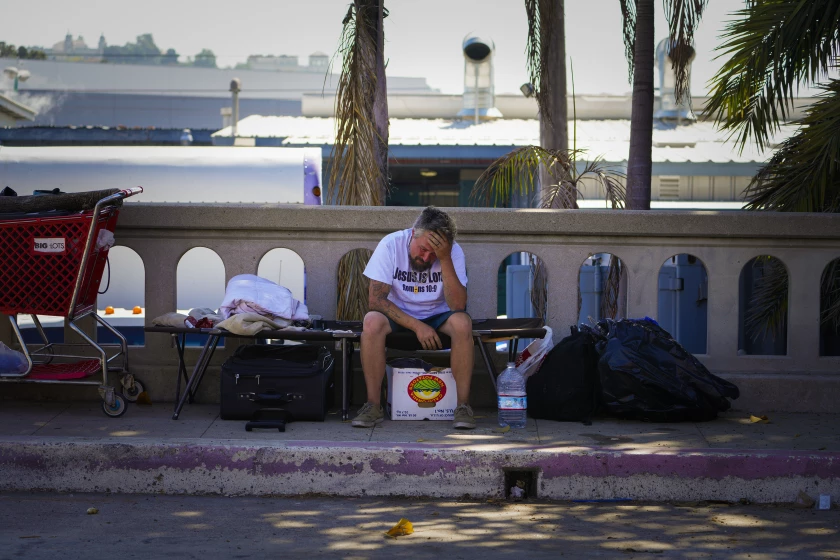 People Who Live in Their Cars See 24-Hour Parking as Long Overdue
The San Diego City Council unanimously agreed to fund 24-hour operations at an 86-space parking lot in Mission Valley for people living in vehicles, thanks in part to research led by Mirle Rabinowitz Bussell and Leslie Lewis, co-directors of the Homelessness Hub in Urban Studies and Planning. Sociology doctoral candidate Stacey Livingstone, who worked on the research to evaluate the city’s Safe Parking Program operated by Jewish Family Service, was present for the vote. Livingstone, the Union-Tribune reports, “told council members that 180 people were interviewed in the study, and it was resoundingly clear that a 24-hour safe parking lot was desired.” Learn more about how the research contributed to Mayor Todd Gloria’s decision to expand the Safe Parking Program and about the recent establishment of the Homelessness Hub with generous gifts from the Epsteins and the Gleibermans.
2021-22 Exemplary Staff Employee of the Year Award Recipients
Two staff members from Linguistics are among the university’s most exemplary employees: Christina Knerr Frink, the department’s chief administrative officer, and Jeffrey Lau, academic human resources analyst. Big congrats to Christina and Jeffrey – and to the department as a whole! No other academic unit has two winners of this competitive award, and Linguistics only has six staff in total. Read more about the winners on the department’s news page.
 Science Inequity Rooted in ‘Moralized’ Worship of ‘Hard Work’
Times Higher Education reports on a new book by sociologist Mary Blair-Loy, co-authored with doctoral alum Erin Cech, now at the University of Michigan. A decade-long study of scientists’ output and attitudes, “Misconceiving Merit“ shows why structural tactics to tackle gender and race inequalities in the sciences continue to fail. A key discovery according to Blair-Loy, the THE reports, “is that many scientific leaders truly believe that hard work will win out in the end – even though the reality is clearly at odds with that.”
Ventura County Proposes Steep Increases in Bond Requirements for Oil and Gas Operators
An in-depth story on efforts to mitigate the financial and environmental impacts of abandoned oil and gas wells that haven’t been properly plugged or decommissioned cites a 2018 California Council on Science and Technology report led by Judson Boomhower of Economics. “When you start digging in to just what it is going to cost to eventually take care of that problem,” Boomhower says, “the numbers get big pretty quickly.”
''Language Is Incredible’
You can now watch the video of the “2022 Legacy Lecture” delivered by Will Styler of Linguistics in which he explains why language may just be the most complicated and amazing thing any of us will ever do. A “Legacy Lecture” responds to the prompt “If this were the last lecture you ever gave, what would you want to share with the world?”
 Why Overturning Roe Will Unleash a Legal Storm for the Supreme Court
Harry Litman of Political Science, in an opinion piece for the New York Times: “While laying waste to 50 years of abortion jurisprudence, the Supreme Court – or at least four of the five members of the new hard-right majority – took pains to reassure the country that it had executed an isolated hit on an ‘egregiously wrong’ precedent that would not reverberate in other areas of constitutional law. But the court will not fully control whether and when it will have to confront demands for similarly breathtaking changes. In fact, the justices’ agenda will be driven primarily by the political ferment in red states that are racing to capitalize on one of the most conservative blocs of five justices in at least 100 years. And that in turn means that overturning Roe v. Wade will not take the issue of abortion out of the courts but rather intensify the battle there.”
Let’s Not Pretend We’re Keeping Our Promises on Asylum
Wealthy nations are experimenting with “quasi-legal methods to repel asylum seekers,” subverting the spirit of international law, writes Megan Stack, contributing opinion writer for the New York Times – with the United States turning back migrants for the past two years on “the pretext of the pandemic and a rarely used health ordinance known as Title 42.” David FitzGerald of Sociology, co-director of the Center for Comparative Immigration Studies, spoke with Stack: “These policies are very much a race to the bottom,” FitzGerald said. “The governments are all keenly aware of what other governments are doing to keep out asylum seekers. They copy each other. They’re clearly inspired by each other.”
This May Be Democrats’ Only Chance to Blunt a Red Wave in November
“The tightening correlation between voters’ attitudes toward a president and their support for U.S. House, Senate and even gubernatorial candidates from [the same] party” threatens Democrats as Joe Biden’s ratings continue to drop, writes CNN political analyst Ronald Brownstein in his Fault Lines column, turning to Gary Jacobson of Political Science for his expertise. There’s “a growing tendency of voters to treat congressional elections in particular as parliamentary contests,” Jacobson said, “that are less a choice between individuals than between which party they want to control the majority and set the agenda.”
2022 Dissertation Year Fellowship Award Recipients
Social Sciences doctoral students Andrew Matschiner of Education Studies, Pamela Riviere of Cognitive Science and Melanie West of Ethnic Studies are among those selected for the UC President’s Dissertation Year Fellowship. Congrats to all three!
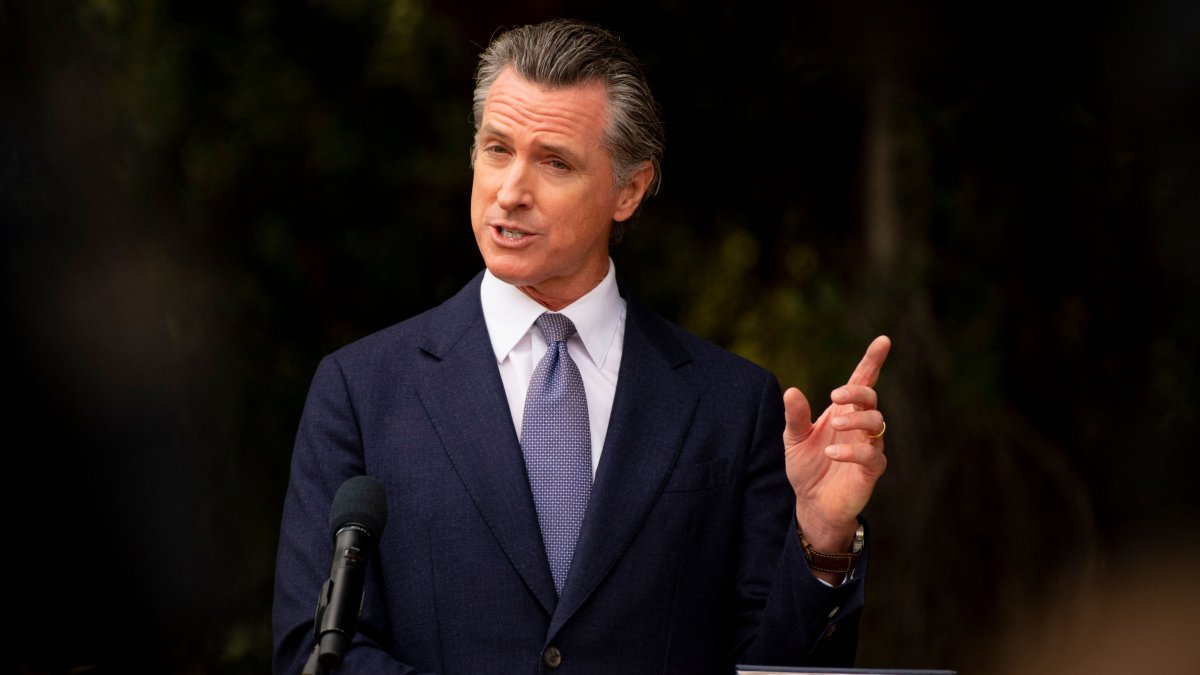 California’s Newsom Goes to Washington; 2024 Chatter Follows
As Governor Newsom headed to the nation’s capital to receive an award on behalf of his home state, the Associated Press predicted there would be speculation about his presidential ambitions. Thad Kousser of Political Science weighed in with “This is Gavin Newsom building his national brand for whatever opportunities might come up in the future.” The AP story ran in numerous outlets, including NBC 7 San Diego, San Francisco Gate, Chron, WTOP News, The Denver Post, The Hamilton Spectator, Toronto Star and CBS Los Angeles. Separately if relatedly, Kousser was also quoted by CalMatters columnist Dan Walters in a commentary picked up by Yahoo News, Napa Valley Register and The Hanford Sentinel.
US, Allies Aim to Cap Russian Oil Prices to Hinder Invasion
James Hamilton of Economics says that garnering the participation of China and India will be key to enforcing any price cap plan. “It’s an international diplomatic challenge on how you get people to agree. It’s one thing if you get the U.S. to stop buying oil, but if India and China continue to buy” at elevated prices, “there’s no impact on Russian revenues,” Hamilton told the AP in a story that ran around the world, including in U.S. News, CTV News, Global News Online, The Atlanta Journal Constitution, Los Angeles Times, Orange County Register, The Denver Post, Daily Herald, News Tribune, among others.
Is San Diego on the Right Track With its New Wage Theft Proposal?
San Diego is considering a proposal that would mandate those applying for building permits to complete detailed paperwork on their workers. James Hamilton of Economics weighs in on the matter as a member of the San Diego Union-Tribune “Econometer” panel, stating that this proposal would slow down the construction of housing units that San Diego desperately needs.
 Meet the Authors’ Webinar
The July 2022 installment of a webinar series from the Linguistics Society of America featured Linguistics graduate student Tory Sampson and faculty member Rachel Mayberry, authors of “An Emerging SELF: The Copula Cycle in American Sign Language.” Sampson and Mayberry’s work documents the emergence of the copula – a word meaning to be (e.g., is, was, are, were) – in ASL, something that has been overlooked in previous linguistic analyses. Here’s video of the webinar.
14 New Latinx Studies Faculty to be Hired at UC San Diego
The Latinx Cluster Hire Initiative, supported by a $500,000 grant awarded through UC’s Advancing Faculty Diversity Program, aims to increase faculty diversity, spur innovative research and infuse culture into the curriculum. There are currently seven ladder-rank faculty searches underway at UC San Diego, including within the School of Social Sciences’ departments of Urban Studies and Planning, Ethnic Studies and Anthropology.
 Supporting the “Grandmother Hypothesis”
Humans are one of the only species known to live well past menopause. According to the “grandmother hypothesis,” this is because older women provide important support in raising human infants and children, who require more care than the young of other species. A new paper co-authored by Pascal Gagneux of Anthropology and the School of Medicine, supports the hypothesis by tracking the evolution of a gene variant that supports cognitive health in older humans.
Mitigating Bias Through Rubrics
Inside Higher Ed reports on a case study to investigate faculty hiring rubrics, led by Mary Blair-Loy of Sociology with colleagues at the Jacobs School of Engineering. The research, detailed in a Science ‘Policy Forum’ paper, shows that while the hiring rubrics – also called criterion checklists or evaluation tools – helped mitigate some gender bias as on STEM department made its hiring decisions, a lot of bias still persisted.
Turning Point USA Donations Surged During the Pandemic
“Ten anonymous donors helped boost the organization’s revenue in the 2020 fiscal year,” writes NBC News, “helping it expand its focus on culture war activism and become a political powerhouse.” The in-depth story quotes sociologist Amy Binder.
Research Evaluations Are Narrowing the British Social Sciences
Juan Pablo Pardo-Guerra of Sociology writes in the Times Higher Education Supplement about the evidence detailed in his new book, “The Quantified Scholar,” showing that “slowly but surely, UK [social science] disciplines have been moved in the direction of greater intellectual homogeneity.” And this is not a good thing, he explains, as “study after study demonstrates that serendipity and diversity are critical for innovation and the advancement of knowledge. Homogeneity constrains our imaginations and our ability to find solutions to collective problems.”
 Why Billionaires Like MacKenzie Scott and Jack Dorsey Are Donating Millions to This Nonprofit That Gives Cash to the Poor
Forbes presents an extensive story on the nonprofit GiveDirectly, co-founded by Paul Niehaus of Economics.
Campus Raises $3.05 Billion as Campaign for UC San Diego Concludes
UC San Diego is the nation’s youngest university to reach a multibillion-dollar fundraising campaign thanks to gifts of all sizes from more than 163,000 donors. The campus success story, “Changing the World Through Philanthropy,” includes such significant donations to the School of Social Sciences as gifts from Phyllis and Dan Epstein and Hanna and Mark Gleiberman to establish the Homelessness Hub and ongoing support from Jerri-Ann and Gary E. Jacobs for K-12 education and graduate fellowships. Thousands of people gave to support Social Sciences’ student career preparation and community-driven programs addressing housing, health and racial inequality, diversifying the tech industry, and police accountability, among many impact areas.
 Authors Discuss Book on Science and Definitions of Merit
“Science is a meritocracy. The merit of scientists’ ideas matters much more than whether a scientist is Black or white, a man or a woman, and is gay or straight. Right? Not so fast,” writes Inside Higher Ed in prefacing correspondence with Mary Blair-Loy of Sociology and doctoral alum Erin Cech, now at the University of Michigan, about their new book, “Misconceiving Merit.” The book studies more than 500 STEM professors at a top research university to show how cultural ideas of merit nonetheless produce unfair and unequal outcomes for professors who are women, people of color and/or LGBTQ. Read more in Blair-Loy’s “Tweetorial“ on the book. Relatedly, Blair-Loy and colleagues at the Jacobs School of Engineering show in a Science “Policy Forum” paper how bias in hiring women engineering professors persists even when a well-intentioned group uses a method considered a best practice.
Marco Werman of the ‘The World’ to Host Public Radio Program from UC San Diego
The host of the international news program “The World“ from GBH and PRX, Marco Werman, will serve as the university’s first Journalist in Residence and will host the public radio show from a new broadcast studio in the Department of Communication built as part of its “Democracy Lab” initiative. In making the announcement, Communication Chair Brian Goldfarb said, in part: “Our collaboration with ‘The World’ comes at an exciting and critical time. Communication is inextricably tethered to questions of democracy, diversity, and justice.” The Union-Tribune, the Times of San Diego and others reported on the news.
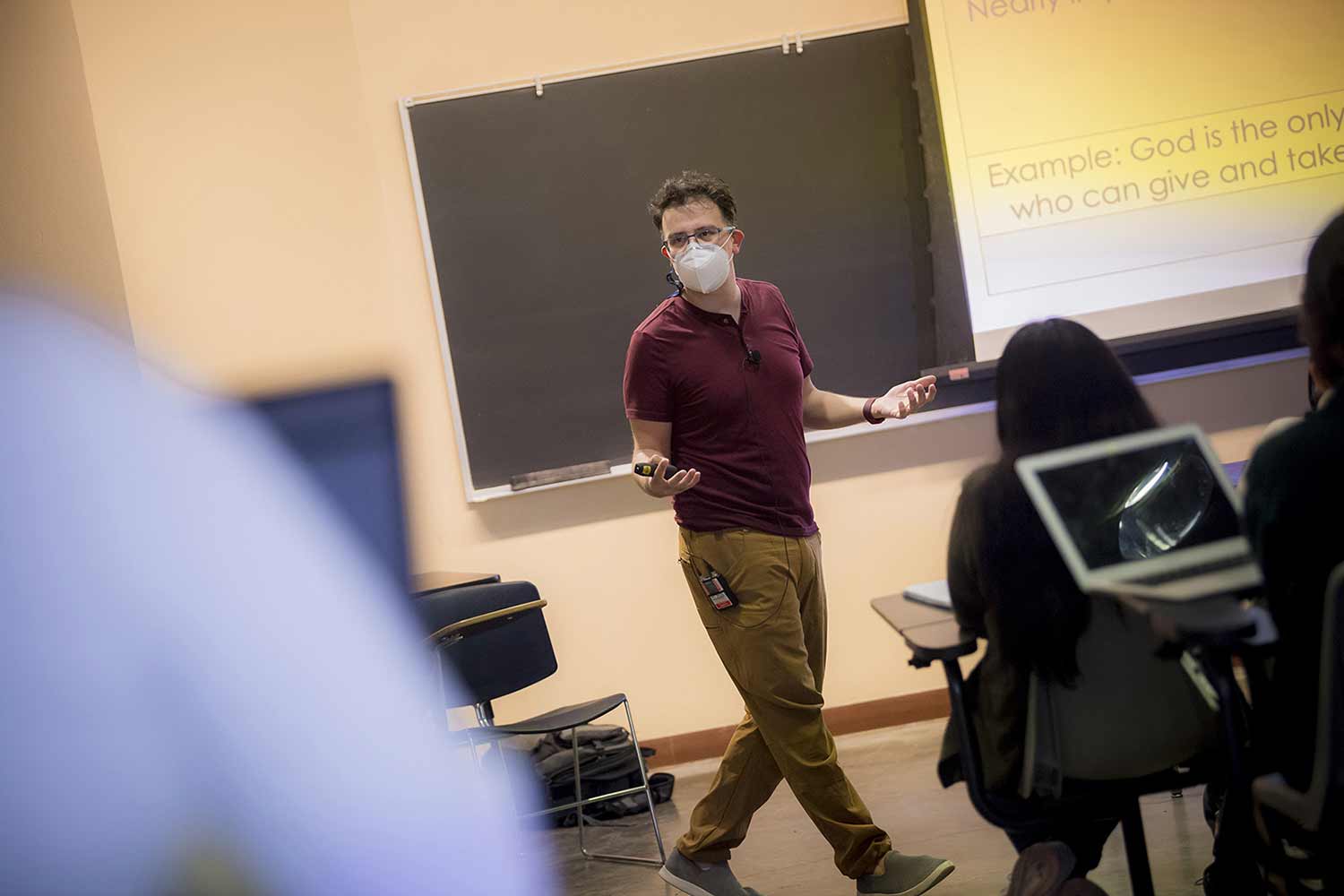 Short Group Quizzes Go a Long Way to Building a Class Community
Sociologist Michel Estefan implements fresh teaching techniques to ensure an education that’s genuinely inclusive and student-centered. These techniques needn’t be whiz-bang or complicated to be effective. And students have noticed. Sociology Chair Amy Binder remarks that not only are Estefan’s classes wait-listed but also that “he’s brought in new courses that students really appreciate – the sociology of social justice, for example, and another on race and racism in the United States.”
Commentary: Foreign Policy on Ukraine Shows West’s Arrogance
“It makes no sense for Western pundits, from nations that are not fighting, to debate whether the war should continue,” writes Erik Gartzke of Political Science in an opinion piece published by News Tribune. “It is not up to officials in the West whether Ukraine continues to resist Russian aggression or whether President Vladimir Putin persists or pulls the plug on his ill-conceived military campaign. The West has quite carefully, and consciously, absented its armies from Ukraine’s battlefields. … With a policy of restraint comes the obligation not to engage in hubris (or timidity) by proxy.”
 Dogs With Something to Say Press Buttons for Words in UCSD Cognition Study
KPBS features what scientists at UC San Diego are calling the biggest community science project ever done on animal communication. Dogs use soundboards, whose buttons they press with a paw or a nose, to communicate human words, thoughts – maybe even sentences. The project is led by Federico Rossano of Cognitive Science. He said the goal of studying cognition in animals is to understand what is uniquely human and what kind of thinking is shared with other creatures.
New Prenatal Genetic Screens Pose Underappreciated Ethical Dilemmas
Writing in Scientific American, Daniel Navon of Sociology considers “the myriad dilemmas unleashed” by cutting-edge prenatal screening technologies such as NIPT (or NIPS) and PGT. With often hard-to-interpret results, the tests raise ethical issues, says Navon, “that do not fit neatly into futuristic discussions of ‘designer babies’ or entrenched debates about abortion,” but we as a society must grapple with them nonetheless.
California Survey Finds Hot-Button Issues May Spark Voter Turnout in November
Despite low turnout in the June primary elections, the national political battle over the issue of abortion could spur greater voter participation in November, according to a survey experiment run by the Yankelovich Center for Social Science Research at UC San Diego, reports the San Diego Union-Tribune. The center’s latest survey [PDF] – “Looking Ahead to November: How Will Reproductive Rights, Crime Rates and Top Two Dynamics Shape California’s General Election?” – was covered by several different outlets, including the Los Angeles Times, which focused on how California is likely to remain blue even if a red wave sweeps the nation later this year. The report’s lead author, Yankelovich Center Co-Director Thad Kousser of Political Science joined KPBS “Midday Edition” to discuss how, if voter turnout remains low, California voters will skew older and wealthier than the state’s demographics.
 Appointment of Victor Ferreira as AVC-FEDI
Victor Ferreira of Psychology has been appointed associate vice chancellor for Faculty Equity, Diversion, and Inclusion. Ferreira will work in partnership with the director of the Center for Faculty, Diversity and Inclusion and collaborate numerous units across campus to provide academic leadership and direction in advancing the university’s goal of achieving and sustaining equity, diversity, and inclusion for all faculty at UC San Diego.
 2022 Distinguished Teaching Awards
Kudos to Abigail Andrews of Sociology and to graduate student Ethan Hurwitz of Psychology, who are among this year’s recipients of the Academic Senate awards for distinguished teaching.
Did the Federal Reserve Make the Right Call Increasing Interest Rates?
To try and slow inflation, the Federal Reserve has approved the largest interest-rate increase since 1994. “It will be very hard at this point to bring inflation down without causing a recession,” said James Hamilton as a member of the San Diego Union-Tribune’s Econometer panel. “The Fed will likely be forced to keep raising rates through the end of the year, and that could slow economic growth significantly.”
Mayor Gloria Announces Funding to Operate Safe Parking Lot 24 Hours
In announcing a proposed expansion to the city’s Safe Parking Program, operated under contract by Jewish Family Service of San Diego, the San Diego mayor’s office shared research on the effectiveness of the program [PDF], conducted by faculty and students in the Department of Urban Studies and Planning. “Our research showed that [safe parking] is a critical tool in our collective toolbox for addressing homelessness in San Diego,” said Mirle Rabinowitz-Bussell, co-director of the new Homelessness Hub at UC San Diego and a co-author of the cited report. Leslie Lewis, also co-director and co-author, added: “We are pleased that our report findings could contribute to the mayor’s decision to increase the hours of the Safe Parking Program. Research is made meaningful through its policy, practice and human impacts.” KPBS reported the news following a unanimous vote by the city council to approve the expansion.
Three Years After a Referendum in Which Colombians Rejected an Agreement with FARC, the Pact Signed by Santos Faces Difficulties
Alexander Fattal of Communication was quoted in a recent story about the Columbian election in prominent Brazilian outlet G1 Globo.
Humans Didn’t Evolve to Count so Numbers Remain a Challenge
Rafael Núñez of Cognitive Science is featured on KPBS for his research on numbers vs. inexact discrimination of quantities. “We are a species that has been around for 250,000 years and numbers have not been around that long,” Núñez explains.
 Event Celebrates $1M Gift in Cyber-Archaeology from Philanthropist Norma Kershaw
The Qualcomm Institute held a celebratory showcase of cyber-archaeology research made possible in part by the generosity of the late Norma Kershaw and led by Thomas Levy of Anthropology, director of the QI’s Center for Cyber-Archaeology and Sustainability. The Union-Tribune reported on the bequest, noting that Levy, who also holds a chair endowed by Kershaw, is “especially interested in examining how the culture, climate and environment of the eastern Mediterranean have changed over the past 10,000 years.”
Should The U.S. Impose a Windfall Tax on Oil and Gas Companies?
Oil and gas companies in the United Kingdom will be taxed an additional 25% on their profits to fund a new benefits package that will aid low-income households. In the San Diego Union-Tribune, James Hamilton of Economics expresses his concern regarding a similar conversation among economists in the U.S.: “If “windfall” taxes are imposed on oil producers, the U.S. will produce significantly less oil. That would mean higher prices for U.S. consumers and make it harder for the world to get by without Russian production,” Hamilton said.
California Election: Who Will Newsom, Bonta, Padilla Face in November?
Republican State Sen. Brian Dahle is soon to face Governor Newsom, but will he be able to compete with the state’s most powerful Democrat, who has already defeated a recall effort? Thad Kousser of Political Science weighed in on the matter with the Bay Area News Group, stating “The governor won this race last September.” In addition to East Bay Times, the article also ran in Mercury News, The Santa Cruz Sentinel and Marin Independent Journal. Kousser also weighed in with the Coast News Group as a fraud lawsuit against Oceanside Councilman Chris Rodriguez headed to jury trial.
 In Memoriam: Founding Chair of Linguistics, Leonard D. Newmark
We deeply regret to share that Professor Emeritus Leonard D. Newmark, founding chair of the UC San Diego Department of Linguistics – who came to the nascent university in 1963 and helped build the campus in innumerable ways – has died. After years of challenges with Parkinson’s disease and dementia, Newmark died from COVID-19 on May 2, 2022. He was 93.
Class of 2022 Shining Stars
Among the inspiring students featured in this end-of-year story is Kayla Monnette of Cognitive Science, president of the UC San Diego Student Foundation, a student-run nonprofit philanthropic organization. Monnette, who is graduating with Provost Honors and a 3.9 major GPA, failed her first major-related class. She attributes her ultimate success to the “beautiful support system” she found in the Student Foundation’s community of peers and alumni mentors who lifted her up and believed in her even when she didn’t – or couldn’t – believe in herself.
 It Starts from Within
Preparing to congratulate 7,000 of his peers on graduation, Commencement 2022 student speaker Lucas Anthony Lima of Political Science “draws inspiration from the lessons he has instilled in his little brother,” shared a ThisWeek@UCSanDiego feature story. “The most important of these,” the story continued, “is believing in yourself, especially when the road gets rocky. As someone who has faced persistent immigration barriers and made the courageous decision to embrace his transgender identity, Lima knows firsthand how persistence and self-love can help overcome any obstacle.” To read more about this year’s graduation celebrations, including Lima’s speech, check out this All Campus Commencement story. The story also notes a crowd-pleasing performance of the national anthem by Psychology student Arisa Namioka and includes reflections by Shimika Basuray of Cognitive Science on the emotions of graduating.
 Class of 2022 Outstanding Grads
Another end-of-year piece features Salad Omar of Economics. A first-generation college student who transferred to UC San Diego in 2020, Omar was encouraged to pursue higher education by his mother, who never learned to read or write. “I came to the United States in 2017 as a refugee; I didn’t know how to take the bus or use a GPS,” Omar said, remembering. “Seeing a blind man go to work every day and visiting him gave me the hope I needed to know that I can overcome every challenge as I become someone who helps my family.”
Take 10 With a Triton: Alumnus Jose Perez Shares Why His Heart Belongs to Triton Transit
Urban Studies and Planning alum Jose Perez ‘05 has a special relationship with Triton Transit that dates back almost two decades. He started as a shuttle driver when still a student and met his wife while both were driving buses on campus – and he’s now returned as general manager. Passionate about inclusivity, sustainability and leadership, Perez is energized by recent efforts to secure federal funding for the Voigt Electric Mobility Hub and looks forward to contributing to the university’s sustainability efforts.
 UCSD Professor Tom Wong Wins National Civil Rights Award
For his work on immigrant rights, including research cited in a number of prominent court cases, the American Civil Liberties Union has honored Tom Wong of Political Science with its Presidential Award. “I have never imagined myself as an academic who writes books and articles that only a handful of other academics read,” Wong told the San Diego Union-Tribune, which covered the award. “I have always seen my job as a professor as a platform to have broader impact.” The ACLU award is presented biennially to academics “for outstanding contributions to civil liberties.”
 Elected to the Academy
Ana Celia Zentella of Ethnic Studies, one of the world’s leading researchers on multilingualism, linguistic diversity and language intolerance, has been elected to the American Academy of Arts and Sciences, one of the nation’s oldest and most esteemed honorary societies. Zentella’s approach is one she calls “anthro-political linguistics.”
 He’s Studied Mental Illness for 50 Years. Here Are All the Things We’re Doing Wrong
The Los Angeles Times ran an extended interview with Andrew Scull of Sociology, “a singular authority on more than 200 years of the medical profession’s tangled relationship with mental illness,” about his new book, “Desperate Remedies: Psychiatry’s Turbulent Quest to Cure Mental Illness.” Scull, the L.A. Times noted, is “especially critical of the last 20 years when research narrowed its focus onto possible biological factors for mental illness. The lack of concern with the social and psychological dimensions of mental disturbance, he argues, has precipitated inequities in treatment and led to the consignment of the mentally ill to the streets and jails of this country.” Scull also joined KPBS Midday Edition for an interview.
Leading From the S tern
tern
Urban Studies and Planning undergraduate student Bailey Kim, who is majoring in real estate and development, is recognized for her hard work in two competitive arenas – rowing and real estate. She is a coxswain for UC San Diego men’s rowing and is also a part of the university’s NAIOP real estate development competition team.
Forcing Homeless People Into Treatment Can Backfire. What About a Firm Nudge?
Neil Gong of Sociology published an op-ed in The Washington Post on the intertwined crises of homelessness and mental illness. “In March,” write Gong and coauthor, “California Governor Gavin Newsom proposed tackling the problem with a sweeping new plan involving something called Care Courts that could push people with psychosis into treatment. The Care Courts, if implemented with sensitivity and robust resources, could actually be a step forward. But for that to happen, each side will have to acknowledge some hard truths. The hard truth that advocates of forced treatment ought to concede is that coercion often backfires.” The piece was reprinted by SFGate.
The ‘Great Reshuffling’ Played a Big Part in Pushing Home Prices Higher
CNN explores the connections between social changes brought about by the COVID pandemic and their role in the U.S. housing market with Johannes Wieland of Economics. In a working paper for the National Bureau of Economic Research, Wieland and a coauthor from the Federal Reserve Bank of San Francisco show that the shift to working from home played a bigger role than previously thought. “We were pretty shocked remote work had this impact, once we saw the estimates,” Wieland said. “We thought about how people moving to different locations would be important. And it is. But it is the people who are remaining in a metro area – the people who need more space at home if they work at home -- that is really pushing up prices. That is the majority of the story.”
Under Pressure
Sociologist Mary Blair-Loy says the COVID-19 pandemic has exposed gender inequities for working parents, but “new attention to these problems means we can begin to address them.”
Focus on Preventing Sexual and Domestic Violence
“Prevention of sexual and domestic violence is fundamentally important to strengthening our communities and state as part of how we contend with the COVID-19 pandemic and its harmful lingering effects. Why? Because prevention efforts have multifold benefits beyond just reducing incidents of violence now. They also help stop the cycle of intergenerational violence.” – Anita Raj of Education Studies and the School of Medicine, in an opinion piece for The San Diego Union-Tribune on the need for ongoing rather than one-time funding of violence prevention.
Family Stories
Tritons recount what it means to be a family – the ancestry, the history, the traditions and the importance of preserving stories for future generations. This Triton Magazine story features profiles of alumni Nyssa P. Chopra ’07 of Political Science, Joel Poremba ’89 of Political Science and Michael Genhart ‘84 of Psychology, among others.
Abortion Opinion Leak Unprecedented But Not a Supreme Court First
“More distrust” of the high court is likely now that the leak of a draft opinion that would overturn Roe v. Wade was released, experts tell NBC News. “Basically what we're facing right now is totally unprecedented, and it’s going to have political repercussions that are pretty severe,” said Peter Irons of Political Science.
Will San Diego County’s Population Continue to Decline?
Within the last year, San Diego decreased in population by 11,183 residents. And there is debate among analysts about what might be driving residents out of the city. James Hamilton of Economics provided his expert opinion to the San Diego Union-Tribune: “The high cost of living – and in particular housing – is a big factor. I don’t see San Diego’s housing problem being solved soon, which is why I think the exodus could well continue.”
Meet the Candidates in the 49th Congressional Battleground District
The 49th Congressional district has been redrawn based on the last census and now spans from Del Mar to Dana Point. The new boundaries make the 49th a swing district: 36% of the voters are registered Democrats, 33.6% are registered Republicans and the rest are independents. “That’s now going to be the battleground district for San Diego that I think you’re going to see Republicans contesting and Democrats putting a lot of resources into,” Thad Kousser of Political Science said to NBC7.
Four Candidates Compete for Open Seat in 80th Assembly District
There are a lot of twists and turns to contest in the recently redrawn 80th Assembly district, which includes most of South Bay, Chula Vista, National City, Imperial Beach and Otay Mesa. Political scientist Thad Kousser weighed in on the matter in the San Diego Union-Tribune. “It’s leaving voters to have two elections for two different candidates, for two different 80th assembly districts,” Kousser said. “If many voters are confused by this, they should be.”
 Do E-Scooter Companies in San Diego Need Additional Regulation?
James Hamilton of Economics says “yes”: “We want to encourage alternatives to cars but need to ensure public safety. It should be as easy to report riders who pose a danger as it is to rent a scooter.” The Union-Tribune Q&A with experts was picked up by Government Technology and others.
A Decade Ago, California Adopted a Strange Top-Two Primary System. How’s It Working Out?
Proposition 14 created the “top-two primary” a decade ago, and it has since been tested in five, soon to be six, elections. Some reformers, writes Los Angeles Times columnist Nicholas Goldberg, are now suggesting that the system, which was originally meant to subvert political gridlock in California, be expanded to other states in an effort to combat the nation’s growing political polarization. Thad Kousser of Political Science expressed his skepticism: “...it hasn’t changed who voters have elected or the type of candidate they’ve elected. It hasn’t been a silver bullet to end the march toward partisan polarization.” The column also ran in The Mercury News.
Like Sisters
Lifelong friends and alums Audrey Natal ’89 of Economics and Susan Balch ’87 of Urban Studies and Planning have a bond that is literally bound by blood, as Audrey donated a kidney to her dear friend Susan, despite the hundreds of miles physically separating them.
Judge Orders Government to Continue Migrant Expulsions on Border
The Biden administration was blocked by a federal judge from lifting Title 42, a sweeping pandemic-related health order that has been preventing thousands of asylum seekers at the border from entering the U.S. since March 2020. Wayne Cornelius of Political Science, director emeritus of the Center for Comparative Immigration Studies, said to the New York Times: “The Biden administration is probably breathing a sigh of relief because they weren’t ready for the rule to be lifted.” In addition to this piece, Cornelius was also quoted in a New York Times story written before the judge’s decision.
Is East Village Green Worth the Cost?
The total cost of San Diego’s East Village Green is now $79.6 million, and some are starting to wonder if the investment will pay off. James Hamilton of Economics weighs in as part of the San Diego Union-Tribune’s Econometer panel of experts, stating that the project’s price tag is troubling, especially in light of other issues: “We have more pressing priorities such as addressing the many homeless in San Diego.”
 Undergraduate Research Gives Rise to Doctoral Dreams
A ThisWeek@UCSanDiego feature story celebrating a milestone moment for the McNair Program includes a profile of Psychology student Angela Chapman. The McNair Program helps prepare underrepresented students for enrollment in Ph.D. programs. Chapman, who has been researching neurophysiological biomarkers in the brain among patients with schizophrenia, aspires to earn a doctorate in clinical psychology specializing in neuropsychology.
Lifting Up Youth Voices
The winners of the #USvsHate Spring 2022 youth messaging contest are in! A national project of UC San Diego CREATE and Education Studies’ Mica Pollock, #USvsHate received entries from across the country, from elementary school to college. In their messages, young people tackled issues ranging from censorship to women’s rights to environmental injustice, with passion and clarity.
2022 Chancellor’s Dissertation Medal Recipients
Kudos to Lauren Nippoldt of Anthropology! Nippoldt and the other recipients of this prestigious campus award are recognized for outstanding doctoral research.
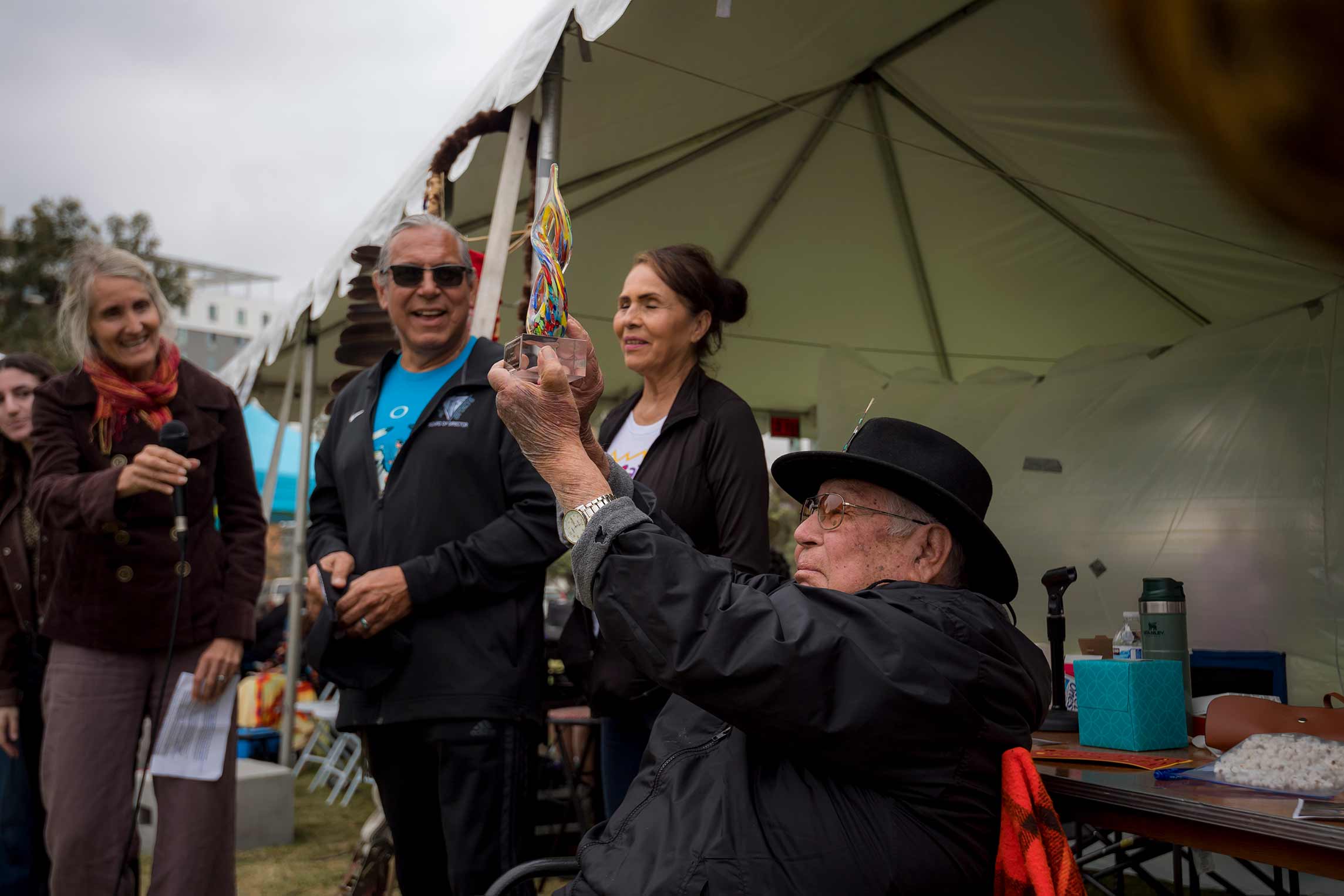 11th Annual UC San Diego Powwow
Check out this slideshow on the annual event to celebrate the traditions of Native American people and their culture on campus. This year’s event included a presentation of the inaugural “Wise Elder Changemaker” Award from the Life Course Scholars program, by Leslie Lewis of Urban Studies and Planning, to Randy Edmonds, founder of the Indian Human Resource Center, San Diego.
 Americans See Afghan and Ukrainian Refugees Very Differently. Why?
Writing in the Washington Post’s “Monkey Cage” blog, Claire Adida of Political Science and colleagues describe their recent survey experiment showing striking differences between how Americans view Afghan and Ukrainian refugees, with a lot more positive sentiment for Ukrainians. The research echoes the group’s earlier work comparing attitudes toward Christian vs. Muslim refugees from Syria. However, that isn’t to say nothing can be done. The research also suggests solutions: To help refugees integrate, Adida’s group and other researchers say, “it’s important to encourage empathy toward refugees and emphasize the host community’s commonalities with them.”
Is Vladimir Putin Sunk?
Coauthored by Michael McCullough of Psychology, this opinion piece in The Hill debunks the “madman theory” and suggests instead that Russian President Vladimir Putin is suffering from something “much more mundane and commonplace” – namely confirmation bias and the sunk-cost dilemma.
 California’s Wildfire Building Codes Make Newer Homes Less Likely to Burn
Marketplace features the research of economist Judson Boomhower on the protective effects of wildfire building codes, published by the National Bureau of Economic Research. “These codes have really clear benefits in terms of improving the probability that a home will survive a wildfire,” Boomhower said. Remarkably, Boomhower’s research shows that the codes not only help newly constructed buildings to not catch flame but also older neighboring homes built pre-code. The Wall Street Journal cited the research in its story “Neighbors Take the Fight Against Fire Threats to the Next Level.”
V . Ramey = No. 1
Economist Valerie Ramey has been ranked the top female economist based on publications over the last 10 years by RePEc, a go-to resource in the field of Economics. RePEc, or Research Papers in Economics, is a collaborative effort of hundreds of volunteers in 102 countries to enhance the dissemination of research in economics.
Two Factors May Keep Putin’s Finger Off the Nuclear Button
Erik Gartzke of Political Science, founding director of the Center for Peace and Security Studies at UC San Diego, published a piece in Business Insider (linked above) discussing the war in Ukraine and what factors may keep nuclear warfare at bay. Gartzke also published an essay in The Conversation about cyberattacks on Ukraine, which was republished by Buffalo News, ZME Science, and more. From the start of the crisis, Gartzke has been lending his expertise to numerous print and broadcast outlets, including CBS8 and Defense One, among many others.
President Biden Announces Key Nominees
Political Science alum Jaime Lizárraga has been nominated for Commissioner of the Securities and Exchange Commission. “Throughout his 31-year public service career, Lizárraga has advised Congressional leaders and heads of executive agencies on policy and legislative strategy,” the White House announcement reads. Lizárraga’s nomination was featured in the Bloomberg and Reuters newswires, as well as on Politico.
 NSF Early CAREER Award
Kudos to Sherice Clarke of Education Studies, who has been selected by the National Science Foundation for a prestigious and highly competitive Early CAREER Award. Clarke’s project, “Designing teacher professional development to leverage the brilliance of learners of color,” is a five-year research-practice partnership in collaboration with a school district that serves a 75% minoritized student body. The project starts with this premise: “Students of color must have access to robust and meaningful opportunities to learn science in classrooms that center their assets and humanity.”
William T. Grant Scholars Class of 2027
Theresa Stewart-Ambo of Education Studies is one of five early-career researchers selected for the William T. Grant Scholars Class of 2027. The program “supports the professional development of promising researchers in the social, behavioral and health sciences who have received their terminal degrees within the past seven years.” Stewart-Ambo’s five-year research project will explore the relationship between the educational outcomes of American Indian youth and Native nation-building and how higher education can fortify Indigenous futures.
 Indigenous Futures Institute Receives Grant from Lumina Foundation
An innovative, interdisciplinary community-action research incubator at UC San Diego is now further empowered to continue its work in educational, scientific and environmental co-design with Indigenous peoples. The Indigenous Futures Institute (IFI) has received a $400,000 grant from Lumina Foundation’s Racial Justice and Equity Fund. Theresa Stewart Ambo (Tongva/Luiseño) of Education Studies co-founded the IFI with Keolu Fox (Kānaka Maoli) of Anthropology and Wayne Yang of Ethnic Studies, who is also provost of Muir.
UC San Diego Honors 2022 Integrity Champions
This year’s integrity champions include Jade d’Alpoim Guedes of Anthropology and the Scripps Institution of Oceanography, who came forward with evidence of sexual harassment by a Harvard professor. “Our community of trust depends on the integrity of everyone,” said Guedes. “A ‘leaky pipeline’ has forced generations of women and minoritized communities to leave academia because there are too few inroads to remove racial, gender and sexual violence perpetrators. We can only change this when we end the culture of silence that allows perpetrators to operate. My story is one of ending this culture of silence.”
Linguistics Undergrad Wins Boren Scholarship
Bridget Egan, a Linguistics and Machine Learning double major at UC San Diego, has won a Boren Scholarship for 2022-23, a prestigious award from the U.S. Department of Defense. The scholarship provides up to $25,000 to support a U.S. student who wants to study abroad for a year, with special emphasis on learning or improving their knowledge of a foreign language.
African Refugees See Racial Bias as US Welcomes Ukrainians
Tom Wong of Political Science, founding director of the U.S. Immigration Policy Center, weighed in with VOA News: “The U.S. has responded without hesitation by extending humanitarian protections to predominantly white and European refugees,” Wong said. “All the while, predominantly people of color from Africa, the Middle East, and Asia continue to languish.”
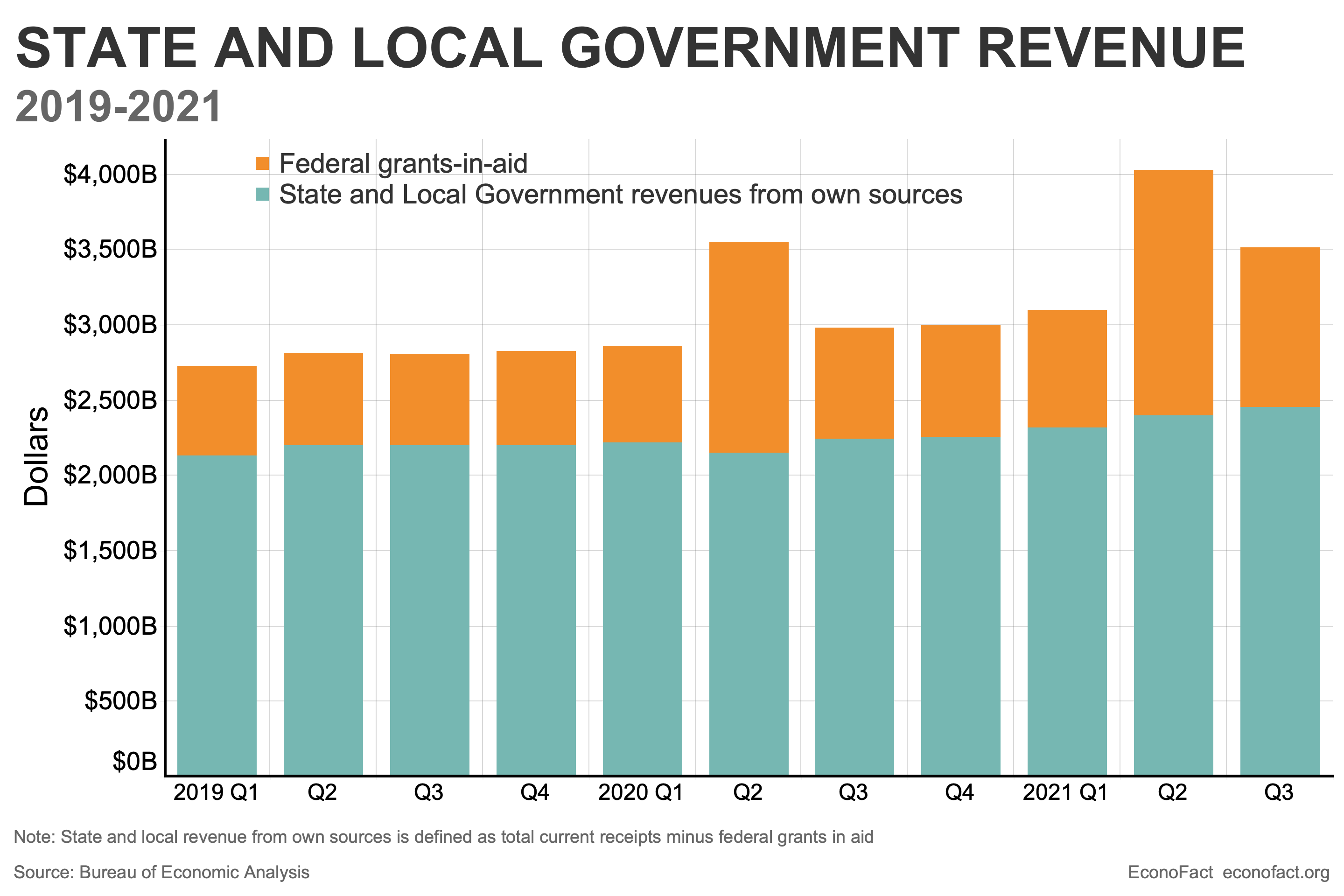 The Resilience of State and Local Government Budgets in the Pandemic
Jeffrey Clemens of Economics recently published an Econofact memo describing his research on the unexpected stability of state and local governments’ budgets during the COVID-19 pandemic. “Predictions from the pandemic’s early days were dire. By the spring of 2021, however, many states were awash with surplus cash,” Clemens writes. Read on for Clemens’ analysis of why and what this means going forward.
Brain Scans May Reveal a Lot About Mental Illness, But Not Until Studies Get Bigger
To really get insights into intelligence or anxiety and depression, NPR reports, brain scan studies may require thousands of scans. The ABCD Study, the National Institutes of Health study on adolescent brain development, for example, has enrolled more than 11,000 young people. The study’s large size is, in part, an effort to address the problems found in smaller studies, said one of the study’s principal investigators, Terry Jernigan of Cognitive Science. But it’s not enough to be big. Studies must also be more diverse than they typically have been, Jernigan said: "You want to know to what extent your observations are generalizable to all the groups in our society.”
 Here Are the 28 Andrew Carnegie Fellows for 2022
Forbes: The Carnegie Corporation of New York announced the 2022 class of Andrew Carnegie Fellows. Among the new fellows is Judson Boomhower of Economics. Boomhower’s project, “Learning about Climate Risk and Adaptation from Catastrophic Wildfires,” will document lessons for successful adaptation. More on the Carnegie website.
With ARPA Funds, Newfane Considers Infrastructure Improvements
Newfane, Vt. is set on getting the best bang for their buck with $400,936 from ARPA funds. In the Brattleboro (Vt) Reformer, Juli Beth Hinds of Urban Studies and Planning weighs in on the potential infrastructure upgrade of a new wastewater system for the town. “...the good news is that we really do have a bigger suite of solutions and financing options than we did even five, six years ago,” Hinds said.
Katzin Prize Recipients 2022
Round 2: Coryna Ogunseitan of Anthropology and Zaiyao Zhang of Psychology are among the prospective doctoral students that have been selected for the prestigious Katzin Prize, which is reserved for “a select group of scholars, demonstrating outstanding talent and promise.”
 First ‘Wise Elder Changemaker’ Awards Celebrate San Diegans Age 65+
Born out of a desire to highlight the life work and current accomplishments of San Diegans 65 years and older “who have had a significant impact on people, land, communities and movements for change across our region,” the inaugural awards recognize change-making work that ranges from food justice to housing advocacy, from the arts to gender and racial equity, to community healing. Nominations for the award were solicited and then selected by students in the Life Course Scholars Program. Now in its seventh year, the LCS program is co-directed by Anthropology doctoral alum and Urban Studies and Planning continuing lecturer Leslie Lewis. The program brings together UC San Diego students with elders in the region for project-based learning in order to design communities that are accessible and friendly to all ages.
Soaring Energy Costs Fuel Fastest Inflation in 40 Years: 3 Essential Reads
A round-up of “essential reads” by The Conversation includes a piece by Economics doctoral candidate Jacob Orchard on how Americans with the lowest incomes are being hit much harder by inflation than the richest Americans. This gap is explained by something known as inflation inequality: The poorest spend a lot more of their incomes on energy and food, which are the categories climbing the most right now.
Videos Now Available of 2021 Revelle Medal Winners
Dick Attiyeh of Economics and Wayne A. Cornelius of Political Science were each honored with a 2021 Revelle Medal, which recognizes sustained, distinguished and extraordinary service to the campus. You can now watch the videos celebrating Attiyeh and Cornelius on YouTube.
Did Biden Make the Right Call Extending the Student Loan Payment Moratorium?
The Biden administration has extended a moratorium on student loan payments through August in an effort to aid households in stretching their budgets. However, economists have criticized the extension because of its potential to add to the already rising inflation. James Hamilton of Economics responds to the situation in the San Diego Union-Tribune, stating “We need to change to an honest accounting system that’s fully funded with tax dollars. But getting there requires political compromise and courage, which are lacking in Washington, D.C., these days. So for now, extending the moratorium will have to do.”
COVID: Have We Reached the End For Vaccine Mandates?
Policymakers aren’t junking mandates entirely but they certainly don’t seem to be as popular as they had been earlier. Thad Kousser of Political Science weighs in on the matter with the Bay Area News Group. “The political will for mandates is directly proportional to caseloads and hospitalization,” Kousser said. “Maybe this simply isn’t the time to push them.” The story was picked up by Mercury News, Press-Telegram, Redlands Daily Facts and The Press-Enterprise.
Spanish Language Disinformation Crisis (video)
The San Diego Public Library, together with the National Association of HIspanic Journalists, is addressing the Spanish language disinformation crisis with a series of “Fact o Ficción” panels in local libraries. The featured panelists, in addition to journalists from Univision, CBS8 and more, include UC San Diego’s Juan Pablo Pardo-Guerra of Sociology.
Meet the 2022 Alumni Award Honorees
Alumni Jamie Montgomery ’81 of Political Science, Liliana Pao ’99 of Psychology and Political Science, as well as School of Global Policy and Strategy, Tanya A. Menendez ’09 of Sociology and Pauline L. Nuth ’13 of Economics and Biology are among eight individuals who will be honored at the 43rd Annual Alumni Awards this year. The awards celebrate the distinguished work and personal accomplishments of extraordinary alums “who are innovating new possibilities around the globe.”
CWUR: UC San Diego Among Top 10 Public Universities in U.S.
The university is once again ranked one of the top 10 public universities in the country, according to the Center for World University Rankings (CWUR). In these annual rankings, the campus placed No. 8 among public U.S. universities and No. 22 among all universities nationwide.
Supreme Court Hears ‘Remain in Mexico’ Repeal Case
Ahead of a Supreme Court hearing to repeal the "Migrant Protection Protocols" (MPP), the Trump-era policy better known as “Remain in Mexico,” ABC News cited a 2019 UC San Diego report of more than 600 asylum seekers subjected to the MPP program, which found about a quarter of them reported receiving violent threats, about half of which resulted in physical violence, beatings and robbery. The report was led by Tom Wong of Political Science and the U.S. Immigration Policy Center.
 The Trump Baby Bump Among Republicans After the 2016 Election
Research suggests that Republicans’ increased economic optimism during the Trump presidency may have motivated them to have more children, compared to Democrats. The study, to be published by American Economic Review: Insights, is co-authored by Gordon Dahl of Economics, with William Mullins of the Rady School and Runjing Lu, a doctoral alum of Economics now at the University of Alberta. It is the first study to establish a link between a presidential election and the birth rates of politically aligned groups, documenting a partisan shift that amounts to between 1 and 2% of the national birth rate. That’s a seismic shift, “equivalent to changes in birth rates that occur after economic shocks or in response to policies designed to affect birth rates,” Dahl said. Covering the study were KPBS and many others, including this CBS8 news segment in which Dahl, Mullins and Lu were able to appear together.
Kavli Foundation Donates $5M to UC San Diego Brain and Cognition Research
Matching funds from The Kavli Foundation, paired with private gifts from generous donors, support the Kavli Institute for Brain and Mind, which was co-founded by the late Social Sciences Dean Jeff Elman of Cognitive Science. The story includes mention of KIBM-supported research by Tim Gentner of Psychology, being conducted in partnership with a Jacobs Engineering colleague, as well as the establishment of the Elman Chancellor’s Endowed Chair in Cognitive Science, and more.
Educate to Indoctrinate: Education Systems Were First Designed to Suppress Dissent
New research by Agustina Paglayan of Political Science and the School of Global Policy and Strategy explores the origins of state-funded schools across 40 different countries. Public primary schools were created by states to reinforce obedience among the masses and maintain social order, rather than serve as a tool for upward social mobility, suggests the study published in American Political Science Review. “The key prediction of the research,” Paglayan said, “is that when there are periods of internal conflict, states will introduce education reform that is designed to indoctrinate people to accept the status quo.”
Oil And Gas Prices Are ‘a Drag on the Economy’ But Won't Trigger Recession: Expert
James Hamilton of Economics joined Yahoo Finance Live to “discuss how rising oil and gas prices amid COVID-19 lockdowns in China and the Russia-Ukraine war could affect the U.S. economy.”
 Why It's So Difficult to Assess Pandemic Risks Right Now
It can be difficult to translate small risks around COVID-19 into behavioral changes, experts say. The decisions we make – Will I fly to that wedding? Should I eat at an indoor restaurant? – tend to be yes-or-no choices, not behaviors we can modify by, say, 10 percent, Craig McKenzie of Psychology said to the New York Times. So we’re all searching for a threshold at which we can stop adjusting our behaviors to avoid COVID, he said. And some people may already feel they have reached that place.
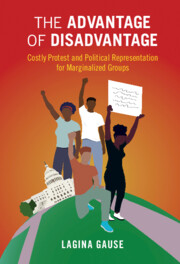 Protesters Shouldn’t Have to Pay a High Price for Lawmakers to Care
LaGina Gause of Political Science published an op-ed in the San Diego Union-Tribune on the subject of her new book, “The Advantage of Disadvantage,” addressing why “costly protests” – which involve protestors suffering physical harm, monetary losses or other losses – are more effective in gaining legislative support. Gause elaborates on why Black people are both more likely to experience the costs of protest and see legislative support for their efforts.
Mayor Gloria Honors Influential 'Women of Distinction' in San Diego
San Diego Mayor Todd Gloria and the City Council recognized, for the first time, 10 San Diego Women of Distinction. Fonna Forman of Political Science and the Center on Global Justice was recognized for her impressive accomplishments and her passion for her work on climate justice, equitable urban development and border ethics. “These highly accomplished leaders,” Mayor Gloria said, “have helped move our city forward and make it better for all of us.” The honor was covered by the San Diego Union-Tribune.
The Misuse of Race in The Search For Disease-Causing Alleles
Amy Non of Anthropology co-authored a commentary in the Lancet highlighting “how theories and beliefs about a biological meaning of race have engendered dangerous misconceptions with implications for disease treatment, research and policy.”
U.S. News Names UC San Diego Graduate Programs Among Top in Nation
The campus is now ranked No. 1 for doctoral students studying behavioral neuroscience, up three places since it was last ranked in 2017. According to the 2023 Best Graduate Schools rankings from U.S. News & World Report, other fields in the Social Sciences also earning top-20 spots in the nation are: econometrics (7), psychology (12), public finance (14), development economics (11), economics (14), labor economics (17), microeconomics (18) and macroeconomics (18).
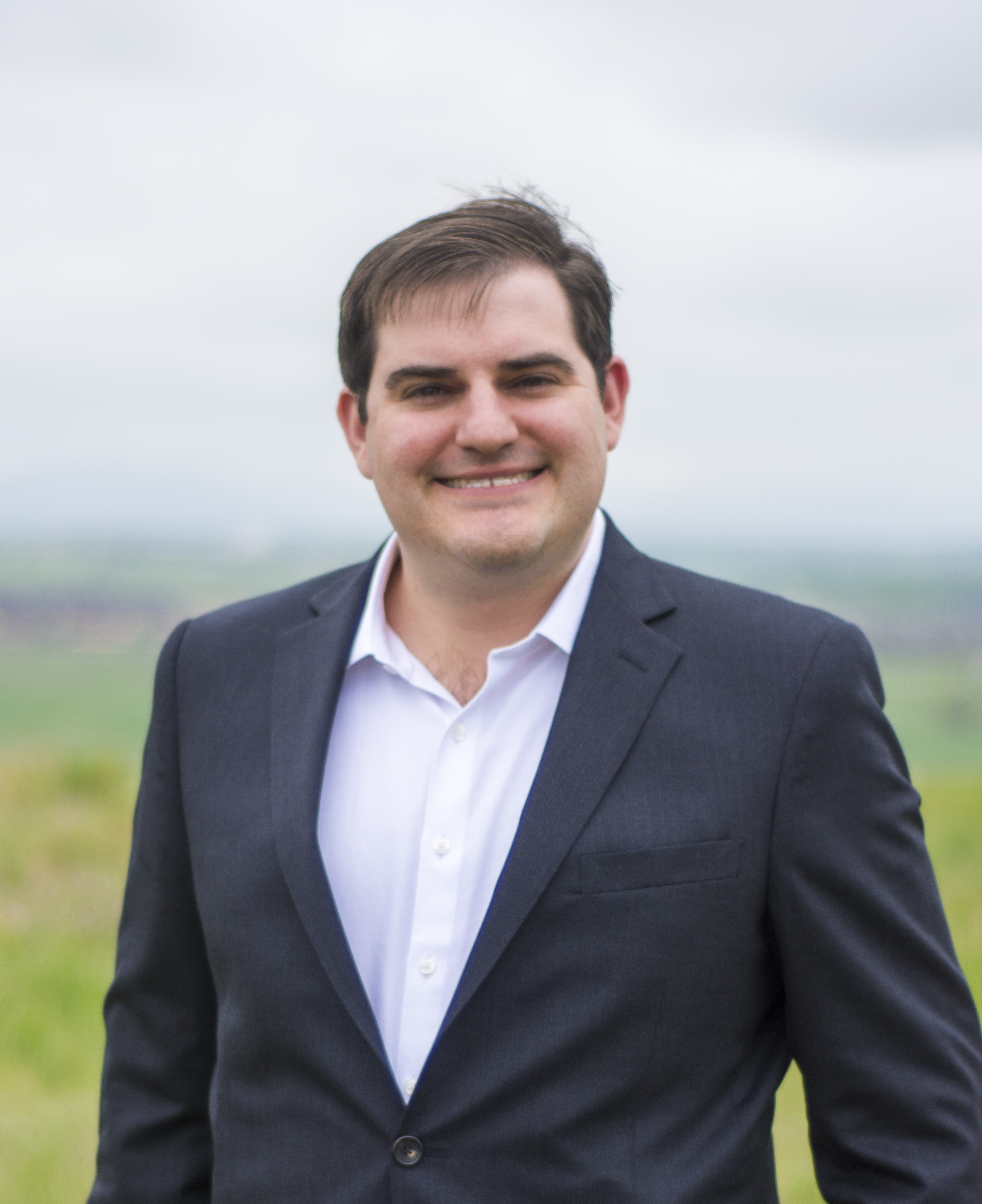 Styler to Give 2022 Legacy Lecture
A campus-wide vote of students has chosen Will Styler of Linguistics to give the 2022 UC San Diego Legacy Lecture, a recognition awarded by the UCSD Scholars Society to “influential and amazing professors.” The selected professor is then given this prompt for their talk: “If this were your last lecture, what would you want to share with everyone?” Learn more about Styler and stay tuned for the event details in Spring Quarter.

How to Turn Your Climate Anxiety Into Climate Activism
Megan Phelps, program coordinator at San Diego 350’s 'Youth4Climate' and staff research associate in the UC San Diego Climate Psychology and Action Lab, joined KPBS’ Midday Edition to talk about how to become a climate activist. The lab – which is focused on moving people from skepticism to belief and from belief to action – is headed by Adam Aron of Psychology.
The Long-Term Impact of COVID-19 on the Future Careers of Women in STEM
The National Academies of Science, Engineering and Medicine convened experts and leaders for a virtual workshop March 23-24, 2022 to inform a national research agenda that ensures academic and federal institutions are prepared to monitor and mitigate the long-term negative impacts of the pandemic on the STEM careers of women – especially women of color. Mary Blair-Loy of Sociology was one of the featured speakers. You can view a video of the workshop at the link above.
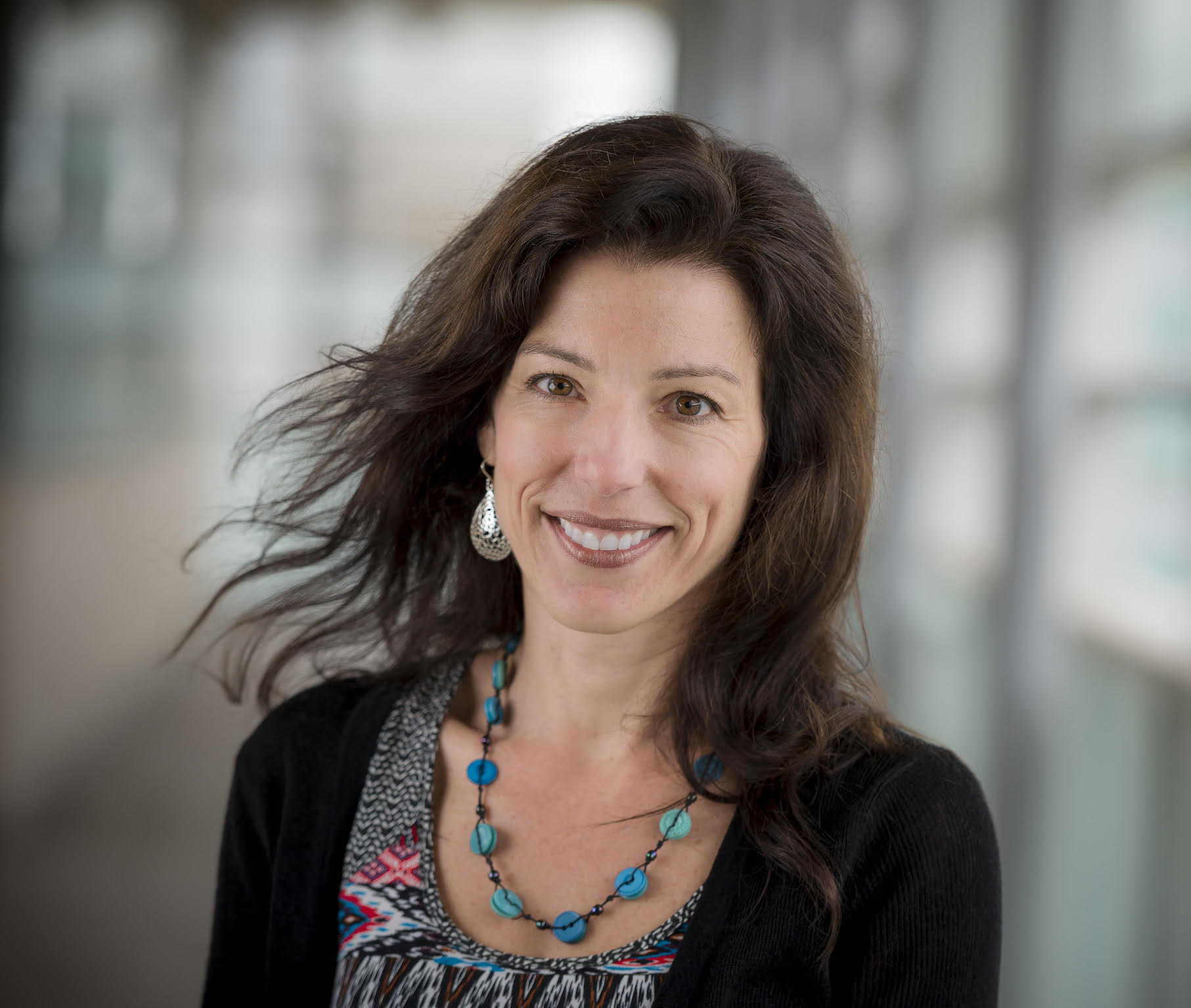 Datnow to Present 2022 Distinguished AERA Lecture
Amanda Datnow of Education Studies will be one of two major speakers at the American Educational Research Association’s annual meeting. Scheduled for April 21-26, the meeting “is the largest annual gathering of scholars in the education research field and is a showcase for groundbreaking, innovative work in a diverse array of subject areas.” Datnow’s lecture will be given on-site at the meeting (this year in San Diego) and also live-streamed on the virtual platform.
El Centro Names Oliva as New Mayor
Political Science alum Tomás Oliva ’07 has been elected the new mayor of El Centro. “There is a part of me that feels I don’t deserve it. This stems from the fact that my parents were immigrants from Mexico. We were a family without means and wealth,” Mayor Oliva told the Desert Review. “And yet, there is a part of that, that says, ‘This is supposed to be where I should be. And I worked hard for it.’”
U.S. and Allies Move to Further Isolate Russia From Global Economy
The Biden Administration took another stab at Russia’s economy by joining Europe and other allies in stripping Russia of permanent normal trade relations. The New York Times reports on computational analysis by Marc Muendler of Economics and a colleague at the University of St. Gallen in Switzerland showing that if G-7 countries imposed a 35-percent tariff, Russia would suffer a loss of over $13 billion.
2022 Cognitive Science Society Fellow
Rafael Núñez of Cognitive Science has been elected a fellow of the Cognitive Science Society for his outstanding research and impact on the cognitive science community. Núñez “investigates embodied cognition, conceptual systems, and abstraction using multidisciplinary methods that range from psycholinguistic experiments to gesture studies and field research with isolated indigenous groups.”
While Red States Debate CRT, Illinois Looks at Curriculum Transparency
A Chalkbeat article about how Republican-backed “transparency” bills could prevent students from learning curricula that address race, gender, sexuality and religion quotes Agustina Paglayan of Political Science: “It’s not just about observing what’s happening in the classroom and giving parents more information, but also about controlling teachers.”
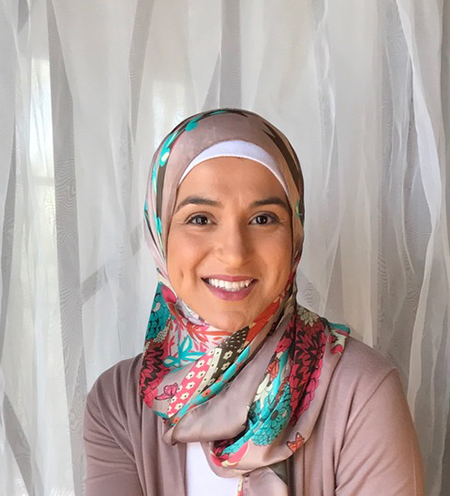 Chancellor’s Scholarship and Fellowship Challenge Exceeds Goal for Students
An additional $15.6 million is now fueling scholarships and fellowships at UC San Diego. Among those giving students the gift of opportunity were Economics alumnus Gary E. Jacobs ’79, and his wife, Jerri-Ann, who grew their support of the Jerri-Ann and Gary E. Jacobs Endowed Fellowship Fund in Social Sciences. This campus story also features fellowship recipient, Communication graduate student Marwa Abdalla. Abdalla’s research emphasizes anti-Black and anti-Muslim racism, Islamic and Muslim media representation, and how legacies of imperialism and Orientalism continue to inform conservative and progressive politics. Undergraduate student Patrick Buenaventura ’25 of Economics is featured as well, as a recipient of a Chancellor’s Associates Scholarship.
In-Depth: Study Says Russia Is Faking its COVID Death Toll
A new analysis of Russia’s COVID death toll proves almost certain that the country has been undercounting its COVID fatalities. Daniel Hallin of Communication weighs in on the subject with ABC10 News. “The legitimacy of Putin’s rule depends on showing himself to be in control and able to handle any problem on his own. So whenever you have a problem that starts to get out of control, the strategy is to cover that up,” Hallin said.
Here’s How State Lawmakers Want to Help Californians Facing High Gas Prices
Russia’s invasion of Ukraine, and the sanctions that followed, have spiked gas prices, combined with the fact that demand for oil has ramped up from pandemic lows faster than supply. As the U.S. turns away from Russian oil, there’s a fundamental reality that we’ll have to make do with less fuel, said James Hamilton of Economics in the San Jose Mercury News. And when it comes to gas prices, Hamilton doesn’t think good news is right around the corner. “I think they’re headed up before they come down.”
 California Gas Tax Holiday Would Split Benefits Between Consumers, Oil Companies
Mark Jacobsen of Economics said California drivers would likely see an even smaller share of the savings from a gas tax holiday. California has higher gasoline purity standards than neighboring states, and there are not as many oil refineries able to produce gas that can be sold here. It would be more difficult for gas producers to flood the state with a new supply, Jacobsen said, meaning that any drop in gas prices would be much less than $0.51 per gallon.
Inflation vs. Recession: The Fed Is Walking a Tightrope
With inflation at a 40-year high, some economists believe the Federal Reserve will go too far in raising interest rates, contributing to an oncoming recession. James Hamilton of Economics spoke on the matter in an interview with The New York Times, stating that at current oil price and supply levels, the effects of the Russian war “are fairly manageable for the American economy.” Hamilton was also quoted and his research on oil shocks and the prospects of a recession were cited in a Yahoo Finance story and a New York Times opinion article, as well as yet another Times piece on the roiling of financial markets.
Gas Prices: Renting a Tesla is Cheaper For This Uber Driver Than Fueling His Jeep
In response to the skyrocketing gas prices, rideshare driver Al Gaines has parked his Jeep Cherokee and pays $400 a week to drive a Tesla instead. James Hamilton of Economics weighs in on the matter in the San Diego Union-Tribune, emphasizing the difficulties people face as they’re forced to spend twice as much on gas than they used to.
California’s Unemployment Rate Drops to 5.4%
California’s employment growth in February brings the state even closer to returning to pre-pandemic unemployment rates. Jeffrey Clemens of Economics speaks on the subject in an interview with Courthouse News Service, stating “The rapid decline in Omicron cases is a clear leading factor behind the February numbers.”
Are Black Voters Really Leaving the Democratic Party?
“Electoral capture is real,” reports The Bulwark, citing research from 1998 co-authored by John Skrentny of Sociology.
Kudos to the First Round of Katzin Fellows!
Three of five doctoral students selected so far for the prestigious Katzin Fellowship for prospective Ph.D. students are from the Social Sciences: Matt Lukacz of Communication, Ifsha Zehra of Communication and Samantha Almonacid of Political Science.
A Heart So Full, Her Chipped Teeth Were an Afterthought
Ethnic Studies alum Alexander Fernandez is featured in a New York Times “Vows” piece, showcasing his and Kyra Friedell’s love story. The two literally bumped into each other at a bar in San Francisco, and you could say that their relationship has been chipper ever since.
 College Education Can Change the Lives of Formerly Incarcerated People. It Changed Mine.
Beto Vasquez, academic coordinator with CREATE (the Center for Research on Educational Equity, Assessment & Teaching Excellence) published an opinion essay in the San Diego Union-Tribune: “Formerly incarcerated individuals will continue to be our neighbors when they are released. As such, it is in our best interest to support them with meaningful opportunities that will allow for upward mobility and positive change.”
Preserving Cultural Heritage in the Digital Age
Subtitled “Sending Out an S.O.S.,” a new book co-edited by Tom Levy of Anthropology “provides readers with a non-technical overview of how archaeologists and other stakeholders are increasingly turning to digital methods to mitigate some of the threats to at-risk cultural heritage.”
 Graduate Students Honored for Inclusive Mentorship
Ethnic Studies doctoral candidate Rochelle McFee, one of five students being inducted into the prestigious Bouchet Graduate Honor Society, is a “force to be reckoned with.” To call her impressive is an understatement, with more than a decade of work towards ending violence and oppression. McFee currently studies “the ways Black girls, Black women, and queer-identified people are codified in the Jamaican legal system and social normativity as violable.”
Impact of Russia's Invasion of Ukraine
Yahoo Finance runs ABC10 conversation with Erik Gartzke of Political Science on the timing and impact of Russia’s invasion of Ukraine.
UC San Diego Celebrates 20th Annual Black History Month
February 2022 marked UC San Diego’s 20th annual Black History Month celebration. Throughout the month, the important contributions of Black students, staff and faculty were recognized and the entire UC San Diego community was invited to join in a series of events that centered on the theme of “Black Health and Wellness.” This campus story highlights and thanks UC San Diego medical pioneers and community healers who are making a difference in the health and wellness of others through their work – including Danielle Raudenbush of Sociology.
 Pandemic Communication in Times of Populism
Daniel Hallin of Communication is part of a research project that was recently granted a T-AP Recovery, Renewal and Resilience in a Post-Pandemic World award. Hallin and team are focusing on pandemic communication in the US, Brazil, Poland and Serbia, and their research “will inform recommendations aimed at building more resilient media organizations that are better equipped to withstand the challenges of future pandemics in divided societies.”
Mexico City Gave Ivermectin to Thousands of Covid Patients. Officials Face an Ethics Backlash.
As COVID-19 rampaged through Mexico City, local officials made the decision to provide medical kits containing ivermectin to Covid patients. Juan Pablo Pardo-Guerra of Sociology wrote a widely shared Twitter thread assailing Mexico City’s work, reports the Washington Post, comparing the distribution of the drug without proof of its effectiveness to the Tuskegee syphilis study on Black men in the 1930s-70s. Pardo-Guerra was also cited in the Washington Post Global Opinions, The Boston Globe, Toronto Star, KGTV and others, and he authored a piece in Nexos.
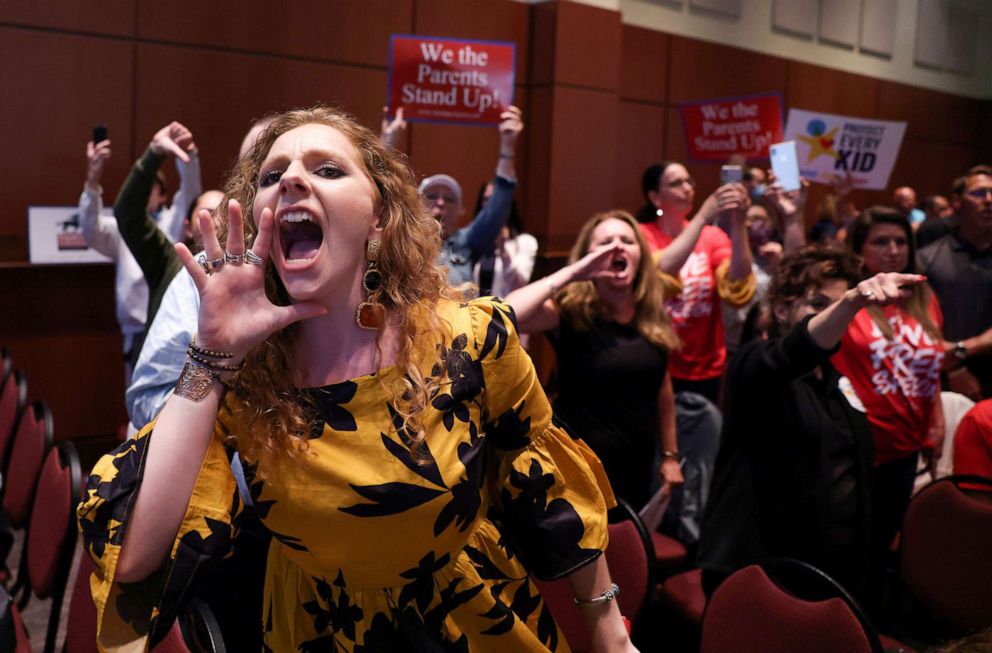 Critical Race Theory Thrust into Spotlight by Misinformation
From September 2020 onward, the vast majority of national news stories about critical race theory came from national conservative news sources, with mainstream news sources and liberal news sources falling behind, according to recent research from UCLA and UC San Diego. The research found there were more than seven stories from conservative news sources for every one from a national liberal media source. The study, coauthored by Mica Pollock of Education Studies, was also covered by CNN and others.
 What If TV Isn’t Bad for Us?
Gordon Dahl of Economics is featured in a “Freakonomics, M.D.” podcast where he speaks about his research from 2009 on the surprising correlation between consuming violent media and a decrease (not increase) in acts of violent crime.
 FAICP: College of Fellows of AICP
Kudos to Sue Peerson of Urban Studies and Planning, who has been elected by peers to the American Institute of Certified Planners (AICP) College of Fellows for her dedicated work in the field of planning and the positive transformation of communities that Peerson has served. The award is the professional organization’s highest honor, and fellows are celebrated for achieving “excellence in professional practice, teaching and mentoring, research, and community service and leadership.” The 2022 class will be inducted into the College of Fellows at the National Planning Conference in San Diego on May 1, 2022.
Indian Americans on List of “100 Most Influential Academics in Government”
Karthik Muralidharan of Economics is featured in India West for his inclusion on Apolitical’s list of the 100 most influential academics in government. Muralidharan is celebrated for “research covering development, public, and labor economics, focusing on enhancing the efficacy of government expenditure in the social sector, such as education, health, and social protection programs.”
 2022 Humboldt Professorship
Angela Yu of Cognitive Science has been selected for the Alexander von Humboldt Professorship for Artificial Intelligence. Yu’s research is focused on the complexities of facial recognition and how the mind processes faces.
2022 RHSU Edu-Scholar Public Influence Rankings
Mica Pollock of Education Studies and CREATE has once again been recognized in Education Week as one of the most publicly influential university-based scholars – scholars who “do the most to shape educational practice and policy.” Being one of the 200 celebrated on the RHSU Edu-Scholar list is an accomplishment in itself, as more than 20,000 scholars in the United States qualify.
 Grow Your Goals with a Staff Scholarship
Like so many others, staff member Amanda Corona found herself dealing with unexpected financial constraints due to the impacts of the COVID-19 pandemic. A UC San Diego alumna, she was working in the Division of Social Sciences as director of alumni engagement when she decided to pursue her doctorate of education in the joint program offered by UC San Diego’s Education Studies with Cal State San Marcos. “As a first-generation Latinx student, I understand the distinction between surviving and thriving in higher education,” said Corona, now director of development in Social Sciences. “My personal experiences give me insight into the need to create supportive, culturally competent climates for students to thrive.” She didn’t want to give up on her dream and successfully sought out a staff scholarship.
Heart to Heart: Seven Couples Share Their UC San Diego Love Stories
Alumni Samantha Bell ’21 and Trevor Tilston ’20 of Political Science, Maria Walker and Anthony Ostia ’20 of Cognitive Science, and Crystal and Jordan King ’17 of Education Studies and Communication share how their love blossomed on campus, and how much it’s grown since.
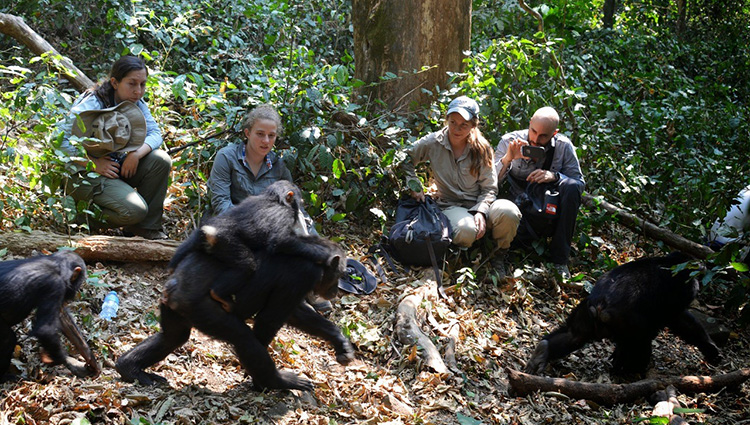 CARTA Maps Humanity's Distinctive Evolution
The Center for Academic Research and Training in Anthropogeny, a collaboration led by UC San Diego and the Salk Institute, has been for more than 20 years seeking answers to where we came from, and what makes us uniquely human. “In short, anthropogeny is concerned with what made us such a strange ape,” says current CARTA associate director Pascal Gagneux of Anthropology and Pathology, “It’s both fascinating and humbling that we don’t have answers to some of the most basic questions about ourselves and how we differ from our closest evolutionary cousins.” Learn more about CARTA history in the story linked above and also check out its long-running public symposium series, hosted by UCSD-TV, which has now been viewed more than 40 million times.
 Omicron Slammed California's Workforce. Was There Another Way?
“There probably weren’t many steps that governments could have taken in real-time in an effort to significantly blunt the [Omicron] wave,” weighed in Jeffrey Clemens of Economics with CalMatters: The story was picked up by KPBS, the Santa Cruz Sentinel, Capital Public Radio and many more.
Ukrainian-Americans in San Diego React to Rising Tension at Ukrainian Border
Erik Gartzke of Political Science and the Center for Peace and Security Studies at UC San Diego weighed in with ABC 10 ahead of the invasion of Ukraine, saying that Russia’s President Putin wants to prevent NATO from making Ukraine an ally.
Preserving Legacy
How the Black Student Union influenced Moorisha Bey-Taylor ’08 of Economics to choose UC San Diego and impacted her career thereafter as an intellectual property lawyer.
I nsurrectionist Chic Is a 'Serious Growth Sector,' Analysts Say
David Pederson of Anthropology was interviewed in Newsweek about this past year’s attack on the Capitol on January 6. “It's a wish for recognition, to be heard, based on the notion that they are less heard than they want to be," said Pederson, who is also currently writing a book that treats the Capitol riots as a “conjuncture of historical tendencies that flow directly through San Diego and Southern California.”
Inflation Inequality: Poorest Americans Are Hit Hardest by Soaring Prices on Necessities
Economics graduate student Jacob Orchard in The Conversation: The fastest rate of inflation in 40 years is hurting families across the U.S. who are seeing ever-higher prices for everything from meat and potatoes to housing and gasoline. But behind the headline number that’s been widely reported is something that often gets overlooked: Inflation affects different households in different ways – and sometimes hurts those with the least, the most.
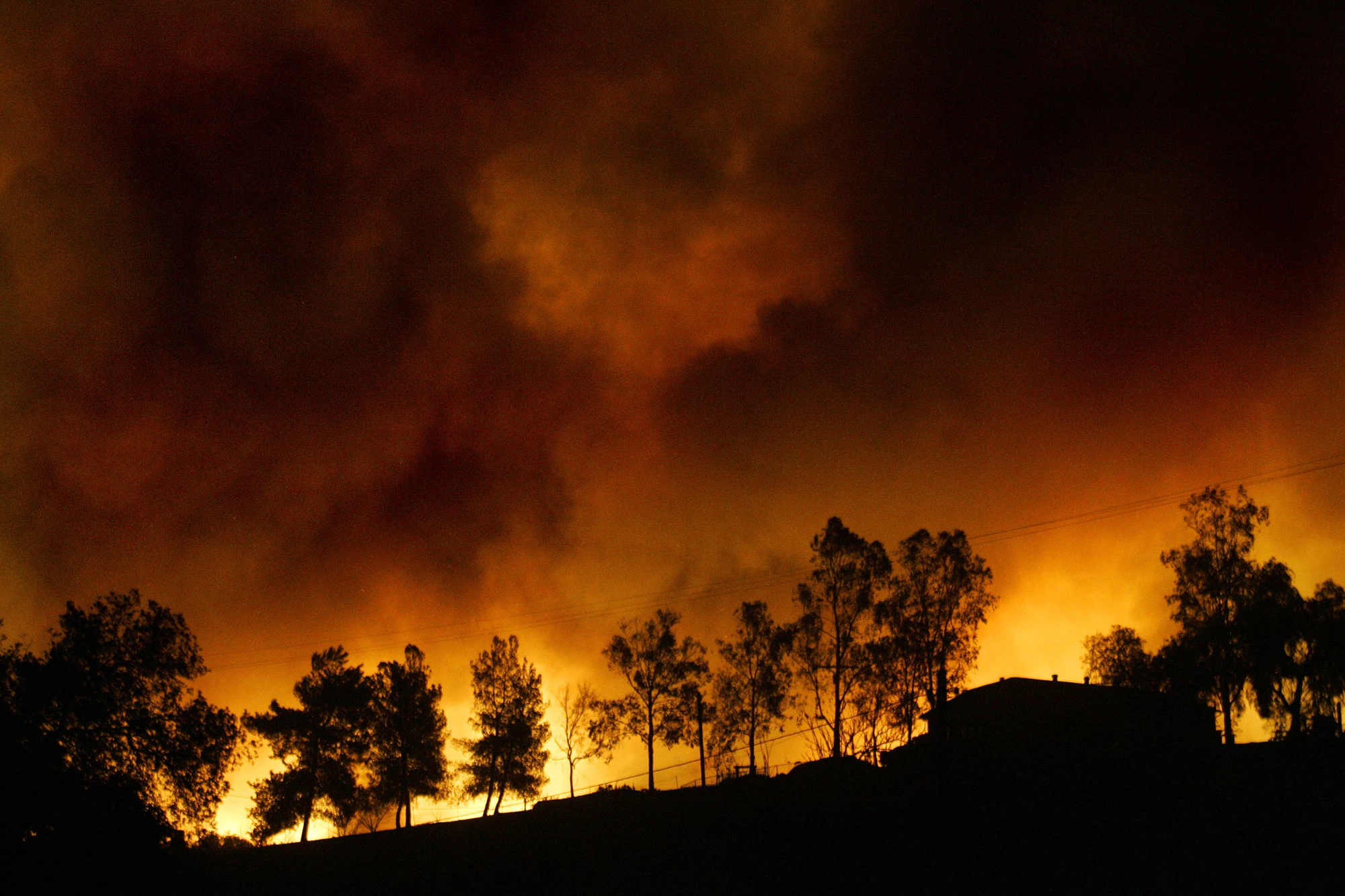 California to Pay for Wildfire Retrofits up to $40,000 per Home, Starting with Rural San Diego
The San Diego Union-Tribune and the Los Angeles Times covered research by Judson Boomhower of Economics showing in an NBER working paper how wildfire building codes matter – in a big way. A home built according to California’s upgraded wildfire building codes is about 15 percentage points, or 40%, less likely to be destroyed in a wildfire than a pre-code home experiencing identical exposure. Remarkably, building a home to modern codes also improves the survival odds of neighboring homes. The New York Times cites the study, and Vox’s “The Weeds” podcast (starting around the 57-minute mark) features Boomhower’s study in-depth.
Progressive Working Families Party Lands in California, and Is Targeting Moderate Democrats
“In order for a third party to show strength, you have to weaken a (major) party by costing it elections,” says Thad Kousser of Political Science in the San Francisco Chronicle.
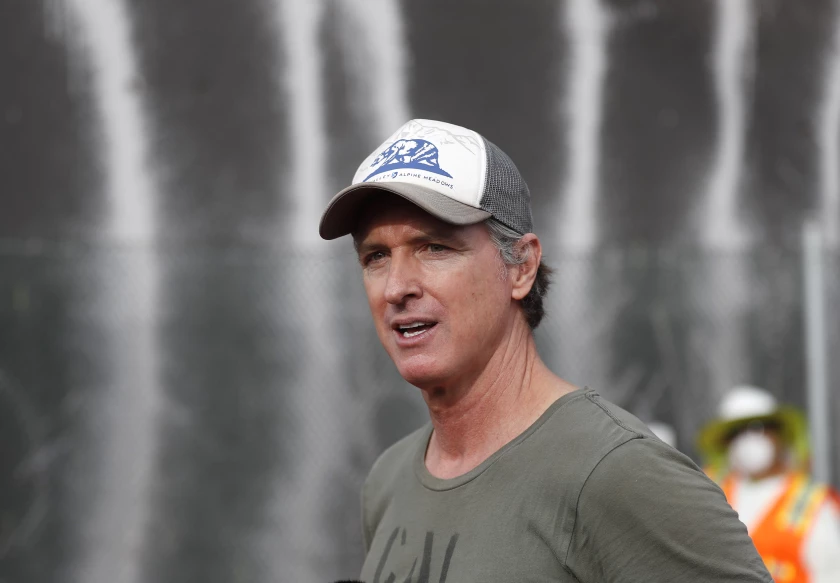 With the 2nd Year of a Projected Budget Surplus, Should California Consider Cutting Taxes?
James Hamilton of Economics provided his expert opinion in the San Diego Union-Tribune on the best use of California’s expected budget surplus. “The cyclicality of California’s revenue sources leads to huge shortfalls when the economy turns down and surpluses when the stock market picks up. When times are good, we should use the surplus for one-time items that will help us weather the next downturn,” stated Hamilton. The Kansas City Star also ran the story.
Biden Hones in on Local Projects After Legislative Failures
Thad Kousser of Political Science spoke about Biden’s strategy to connect himself with local politicians, such as mayors. They are “the most moderate and popular political figures in our country right now,” Kousser told the Washington Examiner. “They are a rare exception to the polarization of American politics.”
Information Disorder
A Washington Post Live discussion about the threat of disinformation in today’s political atmosphere, included content from the Omidyar Network and Political Science alumna Wafa Ben-Hassine, who leads the firm’s efforts related to encrypted messaging platforms and the nature of safe and private online messaging spaces.
Satellites Make It Harder for Countries to Launch Surprise Attacks. That’s in Ukraine’s Favor.
A piece in the Washington Post’s Monkey Cage blog by Erik Gartzke of Political Science and UC San Diego’s Center for Peace and Security Studies.
If Russia Invades Ukraine, What Happens Next?
David A. Lake of Political Science writes in the Washington Post Monkey Cage blog.
Culture Keeper
Protecting and honoring the indigenous history of campus land with Anthropology alumna Eva Trujillo ’20.
Tunnel Vision
Exploring the legendary allure of our campus utility tunnels with alumni Jeff Palitz ’94 of Psychology, Josh Schoenwald ’00 of Cognitive Science, Barbara Denz ’69 of Literature, and Amber Schnaider ’01, Med ’02 of Mathematics and Physics and the Teacher Education Program.
I nstitute for Advanced Study
Christo Sims of Communication won a prestigious fellowship to join the Institute for Advanced Study in Princeton, New Jersey. The IAS, founded in 1930, invites its visiting scholars, or “members,” to freely determine their academic trajectory in an effort to promote academic freedom worldwide in the areas of mathematics, natural science, historical studies, and social science. Sims' book-in-progress, writes the IAS website, “examines how corporations, cities, and states are materially reconfiguring themselves in response to climate catastrophe.”
The Bellagio Center Residency ProgramJanis Jenkins and Thomas Csordas of Anthropology were awarded with a Rockefeller Foundation Bellagio Center residency for their demonstration of professional contributions to their field and their alignment with the beliefs of the Rockefeller Foundation, which works to promote the well-being of humanity, particularly through issues that have a direct impact on the lives of socially and economically disadvantaged populations around the world. They’ve now completed the four-week residency at the Rockefeller Foundation’s renowned Bellagio Center in Italy.
TRITON 5
Economics and History alum Erik Jepsen ’10 shares his perspective as a campus photographer in this Triton Magazine feature: “I love visual storytelling and inspiring people through my photographs. I always aim to capture emotion and pass that on to others.”
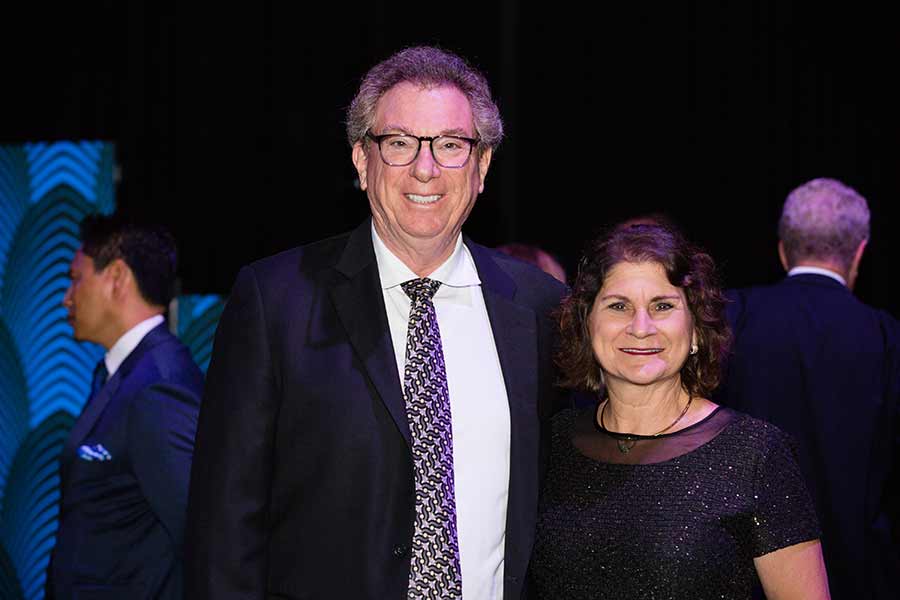 Hitting It Out of the Park with $3M Boost for Scholarships and Fellowships
Longtime campus champions Gary and Jerri-Ann Jacobs renew support for two of their passions: UC San Diego Baseball and the School of Social Sciences. First established in 2006, the Jerri-Ann and Gary E. Jacobs Endowed Fellowship Fund is dedicated to exceptional graduate students in Social Sciences.
Hitting It Out of the Park with $3M Boost for Scholarships and FellowshipsLongtime campus champions Gary and Jerri-Ann Jacobs renew support for two of their passions: UC San Diego Baseball and the School of Social Sciences. First established in 2006, the Jerri-Ann and Gary E. Jacobs Endowed Fellowship Fund is dedicated to exceptional graduate students in Social Sciences.
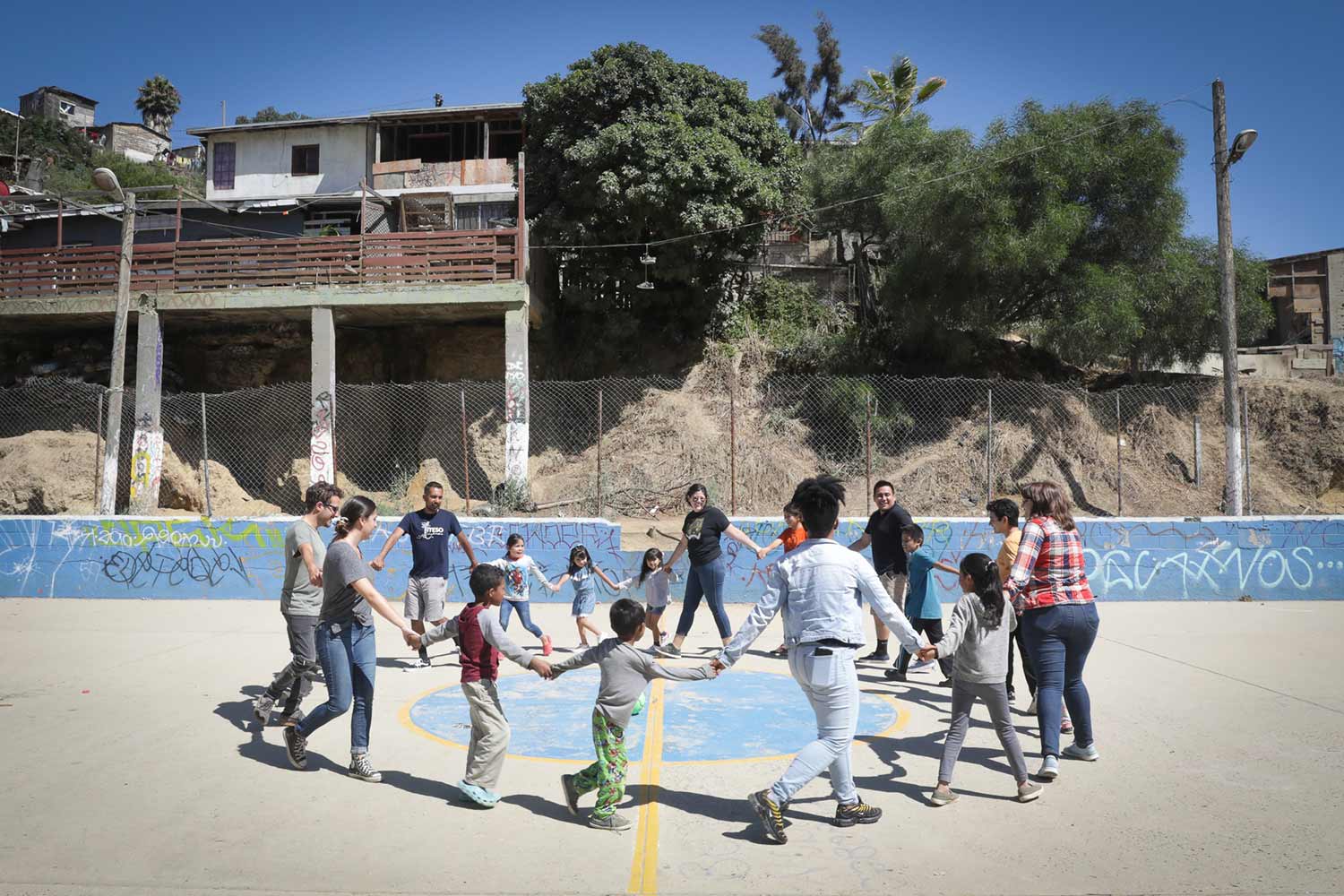 $5 Million Grant Grows Capacity of UC San Diego’s ‘Community Stations’
Support from The Andrew W. Mellon Foundation ensures innovative campus initiative will continue its community-engaged work on both sides of U.S.-Mexico border.